The Battle of Garigliano (915 CE) stands as a turning point in the medieval history of Italy. This monumental confrontation brought together the unlikely alliance of papal, Byzantine, and Lombard forces against the entrenched Muslim (Saracen) raiders who had long threatened the heartland of the Italian Peninsula. The outcome would reshape the balance of power in southern Italy and provide a fascinating example of pragmatic coalition warfare in early medieval Europe.
Context: Centuries of Raiding and Intrigue
For decades prior to the battle, Italy’s Tyrrhenian coast had been plagued by Muslim pirate raids. Saracen bases, first founded by the Aghlabids and later controlled by the Fatimids, dotted the coastline, and at Minturnae near the Garigliano River, formidable fortresses sprang up. These coastal strongholds allowed the raiders to launch deep forays, sacking towns, devastating the countryside, and even threatening Rome itself. Their influence was such that the divided local rulers – Duchies of Gaeta, Naples, and Amalfi – sometimes alternated between resistance and opportunistic alliances with the Saracens, depending on shifting political needs.
Daily life in southern Italy before and during the time of the Garigliano fortress was marked by tension and unpredictability. Fear of raids shaped everything from the layout of towns to farming cycles. As recounted in the chronicles, monasteries and cathedrals saw their treasures hidden and communities uprooted.
The Muslim Presence in Southern Italy
Following their dramatic conquest of Sicily (827–902), the Muslim Aghlabids pushed into mainland Italy, exploiting the power vacuum created by the strife between native Christian powers. The presence of Saracen mercenaries in southern Italian politics became an accepted, if dangerous, reality. Raids and plundering became so frequent that by the late 9th century, even revered monastic centers like Monte Cassino and Farfa were not spared, suffering repeated sackings and destruction.
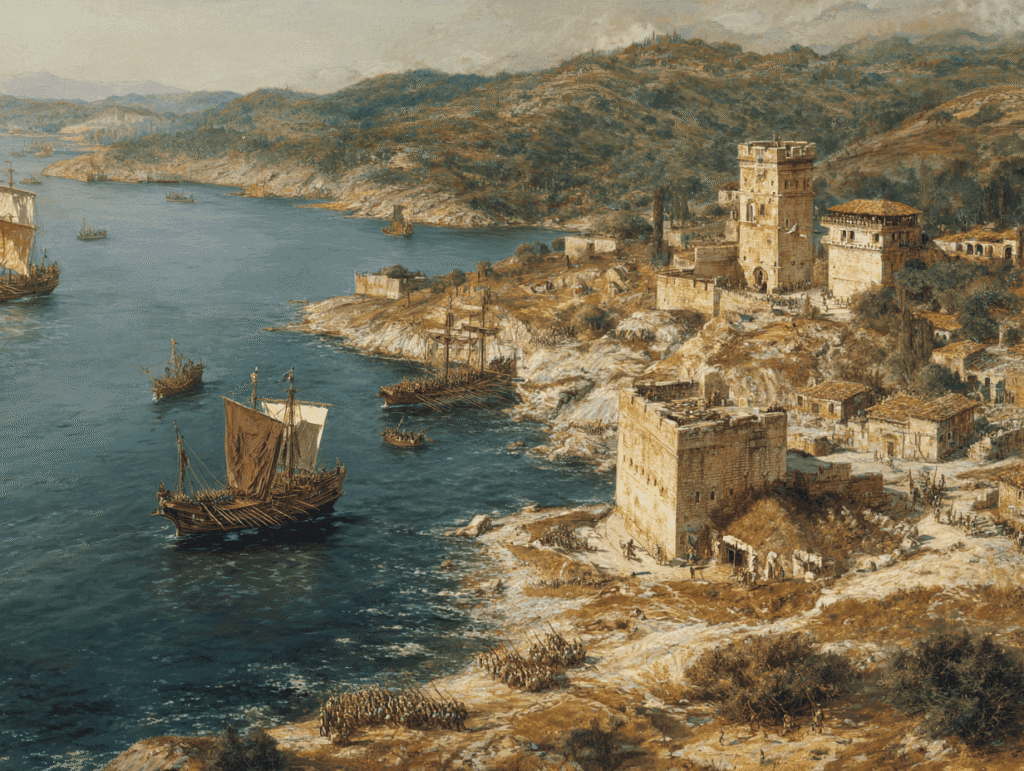
With the Fatimid dynasty’s rise in North Africa and the displacement of the Aghlabids in 909, Muslim power in southern Italy was invigorated, and their fortresses became even more entrenched.
Papal Leadership: John X’s Vision for Unity
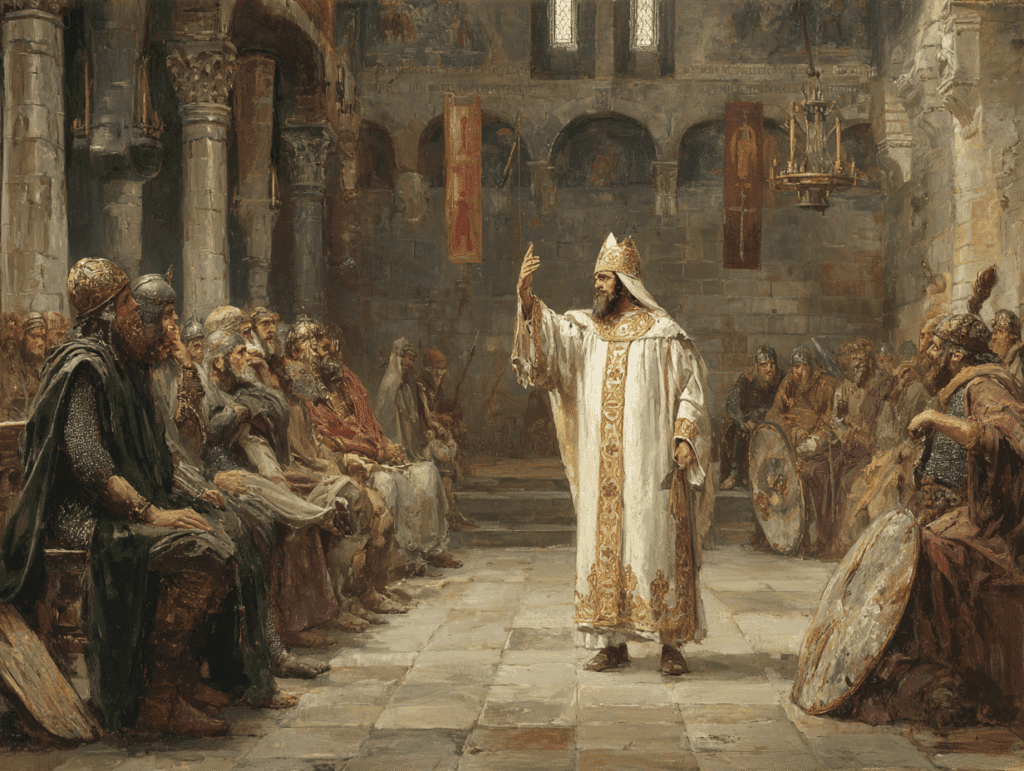
Pope John X, recognizing the existential threat the Saracen stronghold posed, not only to papal territories but to the entire Italian Peninsula, embarked on a campaign of unprecedented coalition-building. He successfully negotiated a broad alliance, rallying the Lombard princes of Benevento, Capua, and Salerno, as well as the rulers of Naples and Gaeta.
Perhaps most crucially, John X also secured Byzantine participation. The eastern empire, eager to reassert its influence in southern Italy, sent troops from Calabria and Apulia under the seasoned general Nicholas Picingli, strategos of Bari. Berengar I, King of Italy, was persuaded to dispatch a supporting force led by Alberic I of Spoleto and Camerino, adding heft to the coalition.
The Christian League Assembles
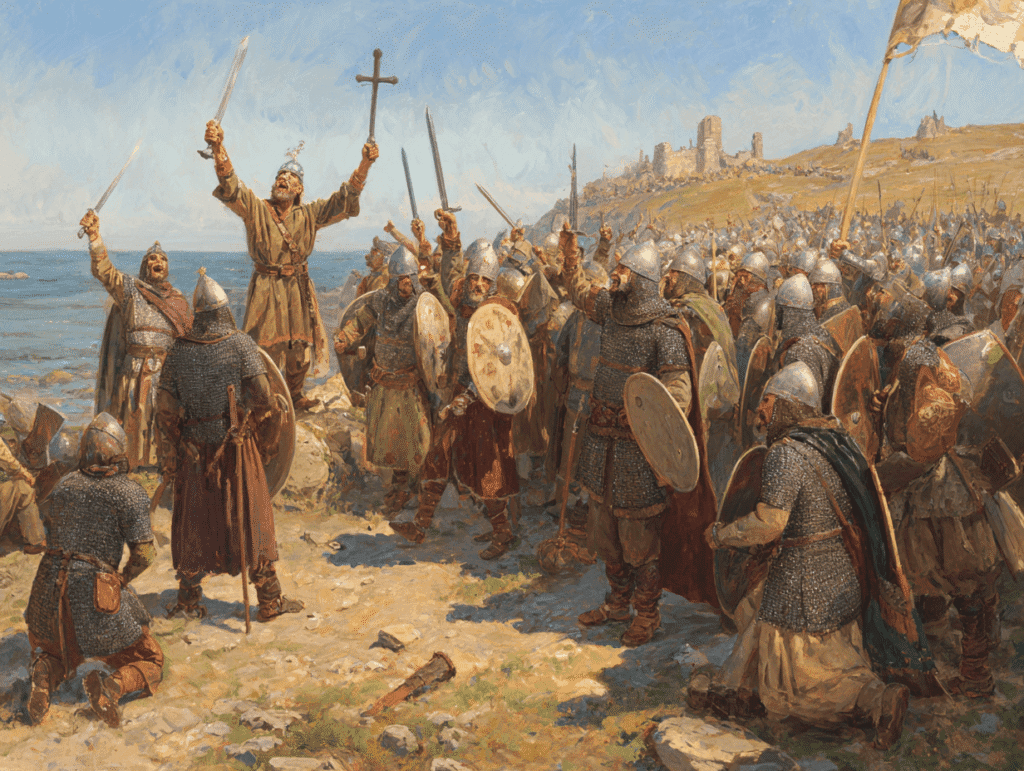
By mid-915, this vast Christian league stood poised to strike. Its composition was a snapshot of Italy’s fragmented political landscape:
- Papal forces assembled from Lazio, Tuscany, and Rome.
- Byzantines marched from the south, with naval support to blockade the coast.
- Lombard princes contributed their local armies from Benevento, Capua, and Salerno.
- Greek and Latin South Italian princes like John I of Gaeta and Gregory IV of Naples joined, having set aside past rivalries for the greater good.
- Military leadership was shared between Pope John X, Nicholas Picingli, and Alberic I.
This tremendous diversity, viewed by some as a weakness, turned out to be a formidable strength: amalgamating the military traditions, tactics, and resources of Western and Eastern Christendom.
The Campaign Begins: Early Engagements
The opening actions of the campaign unfolded as allied forces moved north, seeking to disrupt Saracen raiding parties wherever they could. Skirmishes at places like Campo Baccano and the regions of Tivoli and Vicovaro saw quick Christian victories, which startled the Saracens and forced them to abandon their outlying positions. The raiders consolidated their strength within the main fortress at Garigliano, setting the stage for a prolonged siege.
Siege of Garigliano: Three Months of Attrition
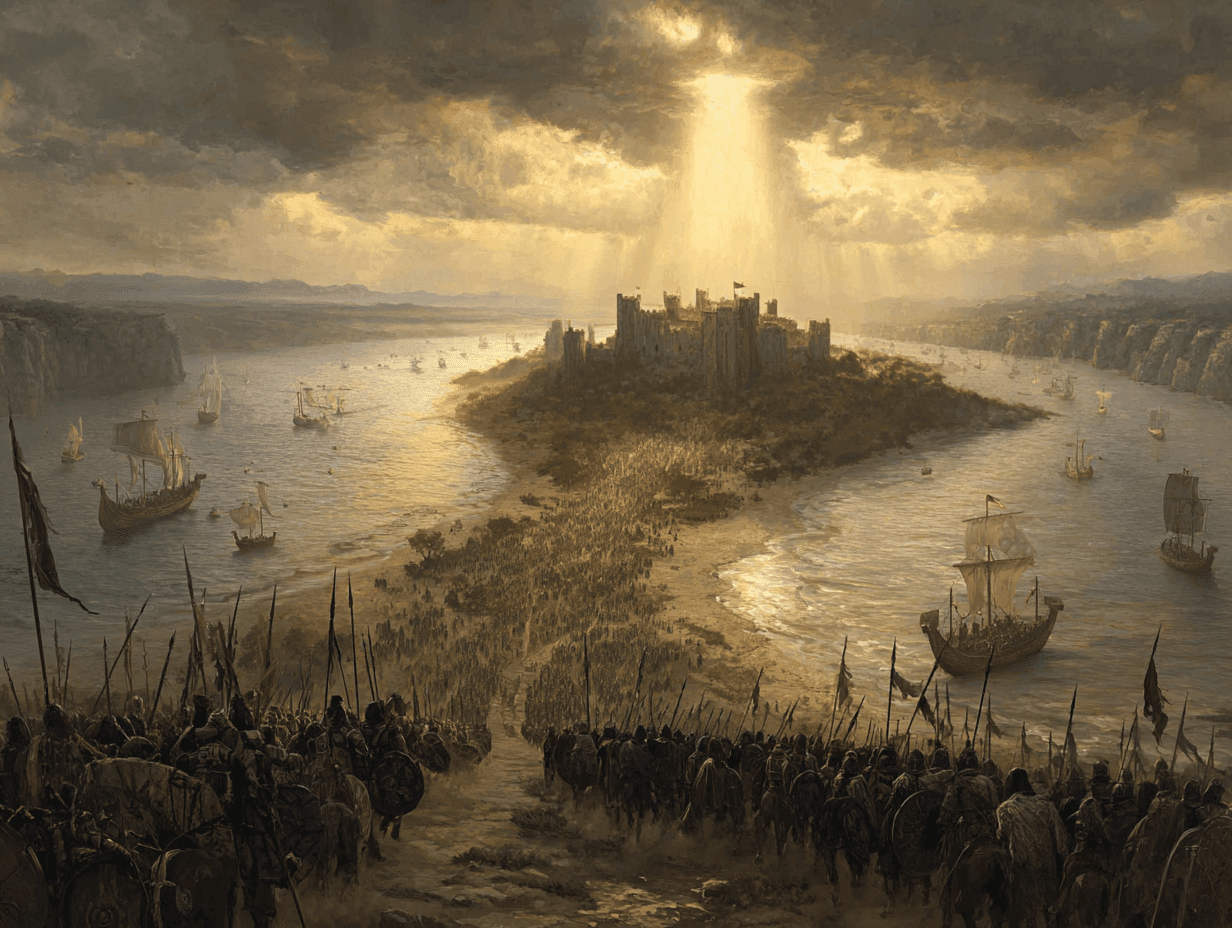
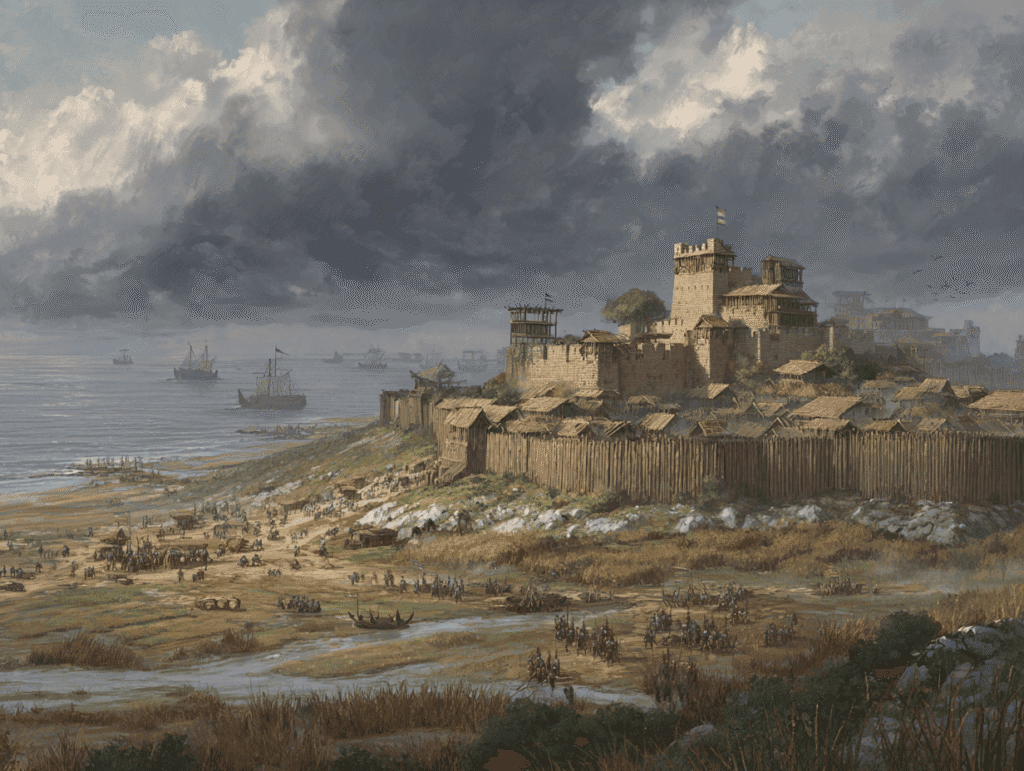
The heart of the campaign was the three-month siege of the Garigliano stronghold, beginning in June and ending in August 915. The site of the Saracen kairuan (fortified camp) has never been fully pinpointed by archeologists, but contemporary chroniclers paint a vivid picture of a daunting, well-supplied fortification, bolstered by decades of loot and plunder.
- The Byzantine fleet blockaded the mouth of the river and prevented escape or resupply by sea.
- The land-based Christian contingents systematically destroyed Saracen crops, isolated their camp, and repelled attempted sorties.
- Harassment and pressure by Alberic and Landulf’s Lombards kept the defenders constantly on edge.
The defenders, cut off from reinforcements in Sicily or North Africa, quickly fell into dire straits. As food ran out and hope faded, the once-dauntless raiders faced starvation and disease.
The Final Assault and Complete Rout
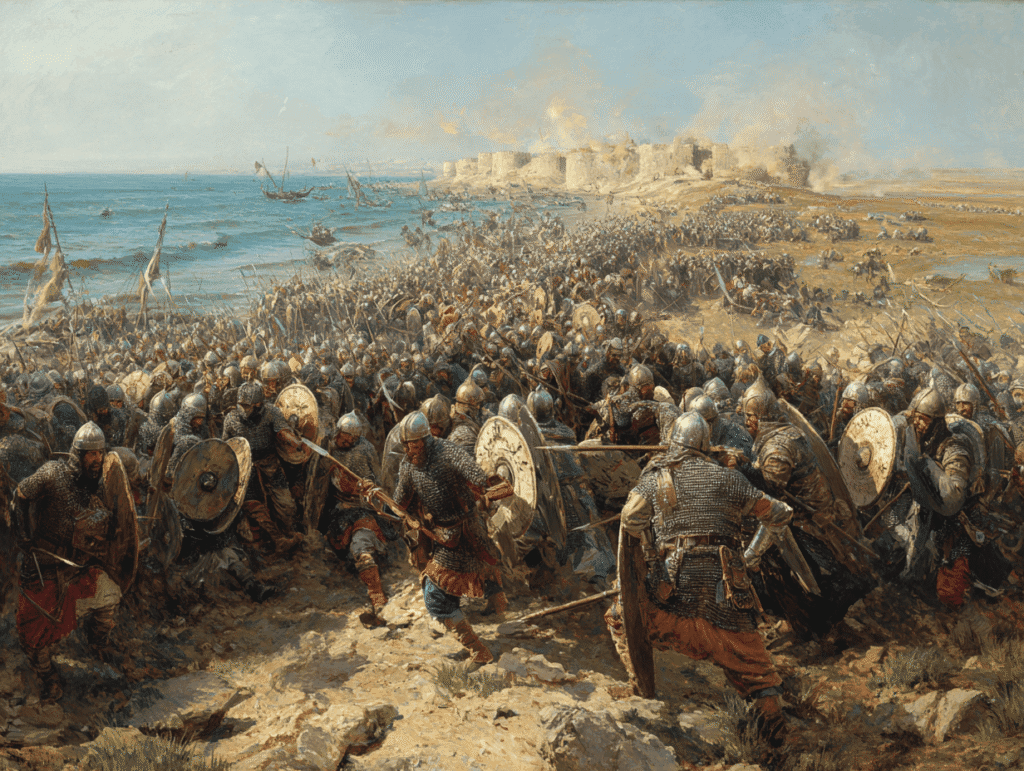
In August 915, sensing the noose tightening, the Saracen garrison made a desperate bid to break out toward the coast and escape by boat to Sicily. Their sally, however, was anticipated and blocked by the disciplined Christian league. The chronicles report that nearly all who tried to escape were either killed in battle or captured and executed – a sobering end to three decades of Saracen terror in central Italy.
Aftermath: Rewards and Realignment
The victory at Garigliano had enormous repercussions:
- Pope John X gained enormous prestige, affirming the papacy’s capacity to lead Christendom not only spiritually but militarily.
- Berengar I was rewarded with papal support, eventually being crowned as Holy Roman Emperor – a testament to the interplay of military and spiritual authority.
- Alberic I’s reputation soared, enabling his family’s future prominence in Roman affairs.
- The Byzantine Empire emerged as the dominant player in southern Italy, securing its foothold for decades to follow and strengthening Byzantine culture and influence in the region.
- Local rulers, such as John I of Gaeta, expanded their territories and received imperial honors, particularly the prestigious title of patricius, aligning themselves more closely with Byzantium.
The Legacy of the Battle
The Garigliano campaign did not end the broader struggle between Christendom and Islam in southern Italy, but it did decisively halt the northward advance of Saracen camps on the mainland. Subsequent raiding became sporadic and far less effective, and cultural power in Campania and Lazio began to gravitate back toward Christian polities.
The significance of the battle goes beyond the immediate military victory, and the end of the last major Saracen stronghold on mainland Italy. It showcased the ability of deeply divided Christian powers – Papal, Lombard, Greek, and Latin – to assemble a functional, mutually beneficial alliance in the face of existential threat. This pragmatic coalition, uniting interests that at many times were openly antagonistic, set a precedent for later alliances in the region and inspired similar efforts at unity across Christendom.
The Battle in Historiography
Medieval chroniclers were quick to depict the victory at Garigliano as divinely sanctioned and heroic. Later historians have seen it as the last, vital stand that preserved central Italy from full-blown conquest during a period when the Mediterranean world was deeply interconnected, yet riven by violence and contesting faiths.
Modern scholarship highlights how the alliance at Garigliano mirrored broader trends in both the fragmentation and occasional cohesion of post-Carolingian Europe. The tactical acumen displayed by the Christian league, especially in the coordinated blockade by land and sea, foreshadowed campaigns to come.