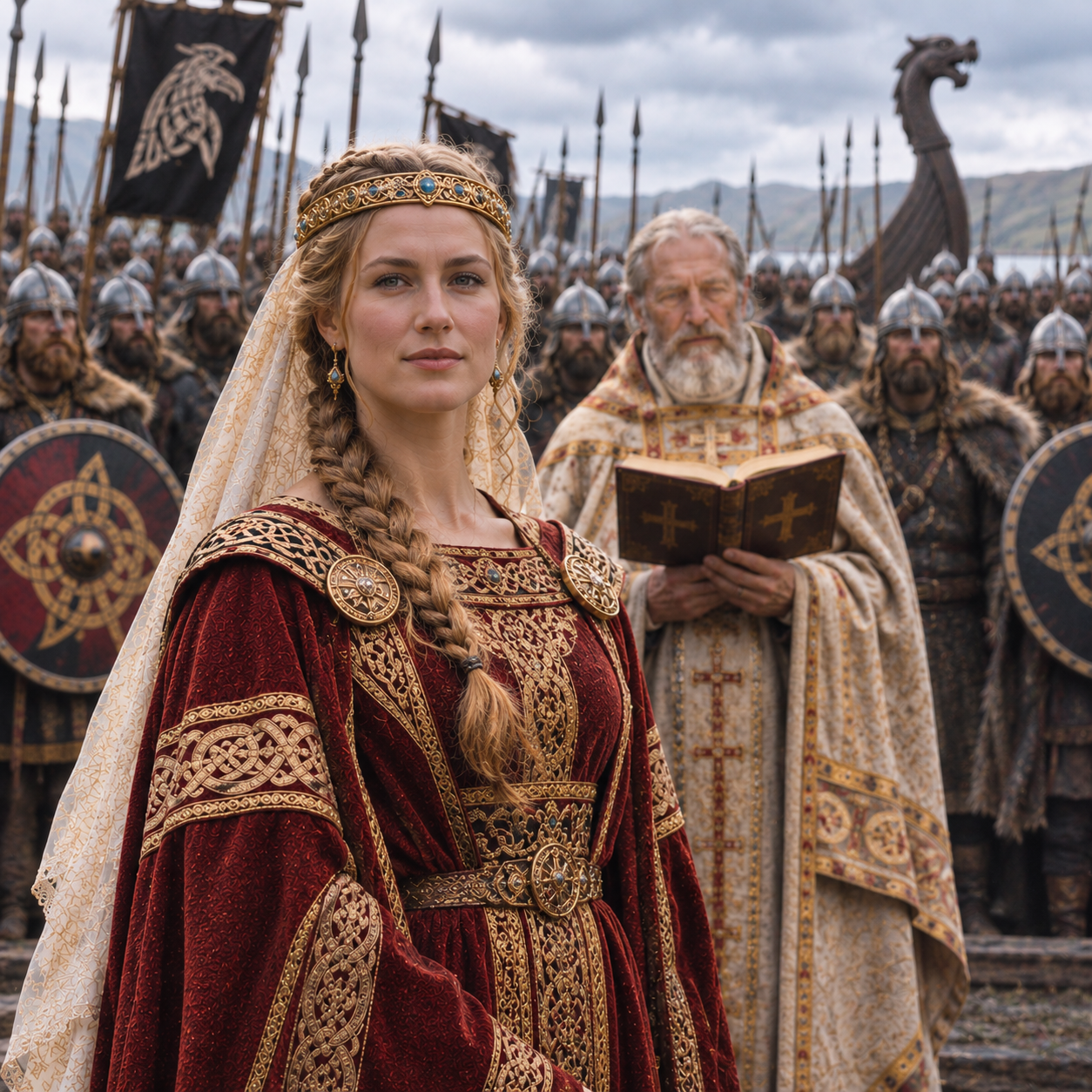
In the shadow of the Norman Conquest, as the ashes of Anglo-Saxon England smoldered, a young princess named Gytha of Wessex began a journey that would see her cross the breadth of Europe and become a pivotal figure in the royal dynasties of both East and West. Her story, little known in the English-speaking world, is one of resilience, diplomacy, and the enduring legacy of a lost kingdom.
Another Victim Of The Battle of Hastings
Born around 1053, Gytha was the daughter of Harold Godwinson, the last Anglo-Saxon King of England, and his consort Edith the Fair (also known as Edith Swanneck). Her father’s ascent to the throne in 1066, following the death of Edward the Confessor, marked the high point of the Godwin family’s power. Yet, within a year, disaster struck at Hastings. King Harold fell, his brothers perished, and the Norman invaders swept across the land, extinguishing the old English order.
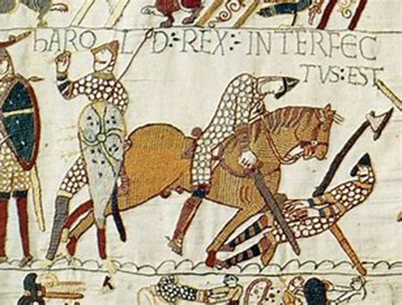
For Gytha and her siblings, the conquest was not just a national catastrophe but a personal one. Their world was upended, their lands seized, and their futures uncertain. The new Norman regime was ruthless in its suppression of the Godwin family, forcing many into exile. It was in this crucible of loss and displacement that Gytha’s remarkable journey began.
From Refugee to Royal Bride: The Road to Kiev
Two years after Hastings with the Norman’s tightening their iron grip on England, Gytha, along with her brothers Godwin and Edmund, fled England. Their first refuge was their relative Count Baldwin in Flanders, before moving on again.
It was to Denmark, and to King Sweyn Estridsson, King Harold’s cousin, that they turned, seeking not only sanctuary but the hope of restoration. The price for such aid was not simply allegiance or gratitude. It is likely, as some sources suggest, that they offered their sister Gytha as a diplomatic pawn – a bargaining chip to be played in the intricate game of northern alliances. In the brutal calculus of dynastic survival, royal daughters were often the currency of power.
Danish Intervention
These royal exiles hoped Sweyn might be persuaded to strike again at the Normans, whose rule was hated across the land. If, as seems plausible, the siblings had already reached Denmark by 1069, their presence and entreaties may have played some part in Sweyn’s decision to send a formidable fleet to England that summer. The Danish king saw in the chaos an opportunity – a fleeting chance to seize the Anglo-Scandinavian crown before William the Bastard’s grip became unbreakable.
The scale of the Danish intervention was impressive. Between 240 and 300 ships entered the Humber in north east England, their crews joining forces with English rebels – Maerleswein, Gospatric, and Edgar the Ætheling, the last English claimant. The Anglo-Saxon Chronicle, usually so terse, bursts with excitement: “with all the Northumbrians and all the people, riding and marching with an immense host, rejoicing exceedingly.” For a brief moment, as historian Marc Morris notes, it seemed as if Norman rule was doomed.
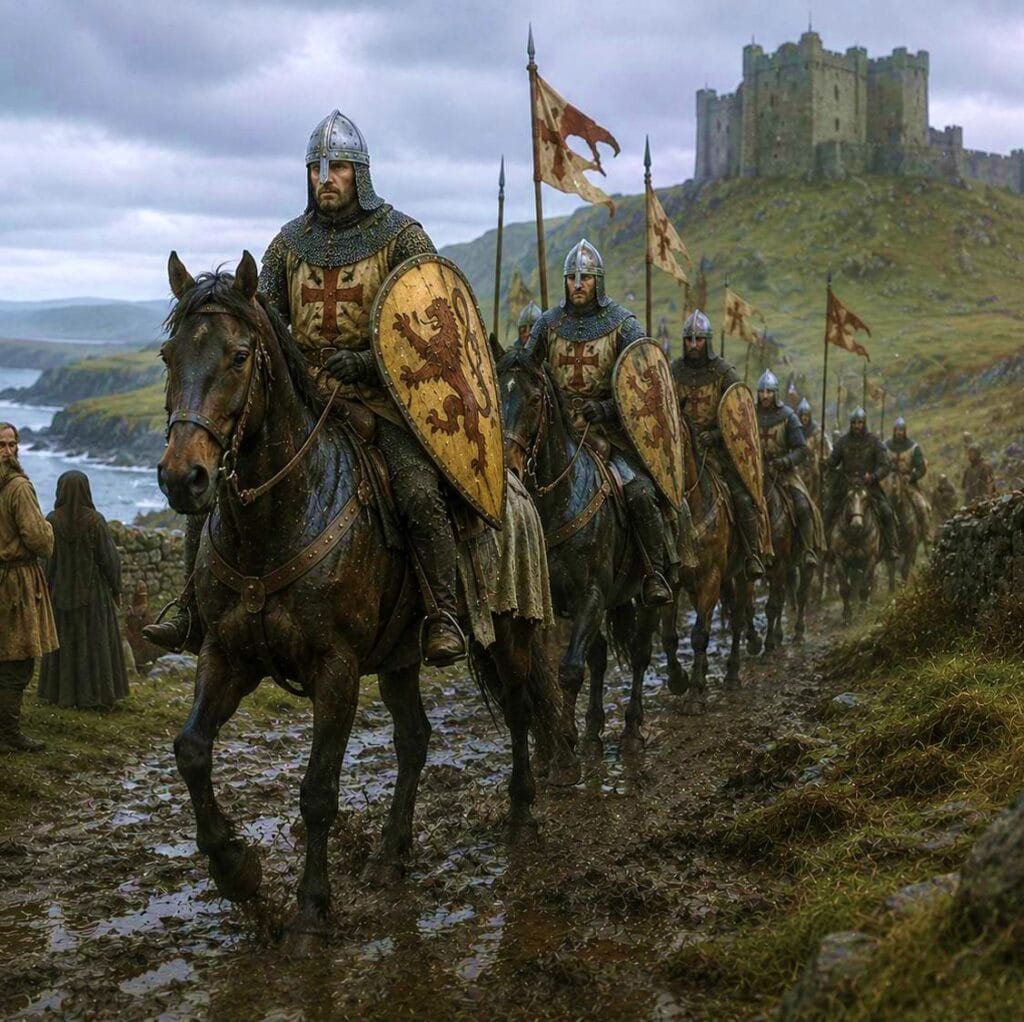
But hope proved short-lived. William, relentless as ever, returned with his army. Unable to defeat the Danes in open battle, he resorted to bribery. The Danish war leader, Earl Asbjorn, accepted a handsome payment to withdraw – an act that left chroniclers seething. The Danes endured a desperate winter in England, awaiting Sweyn’s return, but by 1070, they had sailed home, their ambitions spent.
After this, Sweyn’s interest in English affairs waned. Despite further pleas from desperate English exiles, he would not risk another campaign. William, ever pragmatic, continued to buy Danish neutrality. For the young princes, Godwine and Edmund, all hope of restoration was gone and indeed their fate is unknown from this point in history.
A New Beginning For Gytha
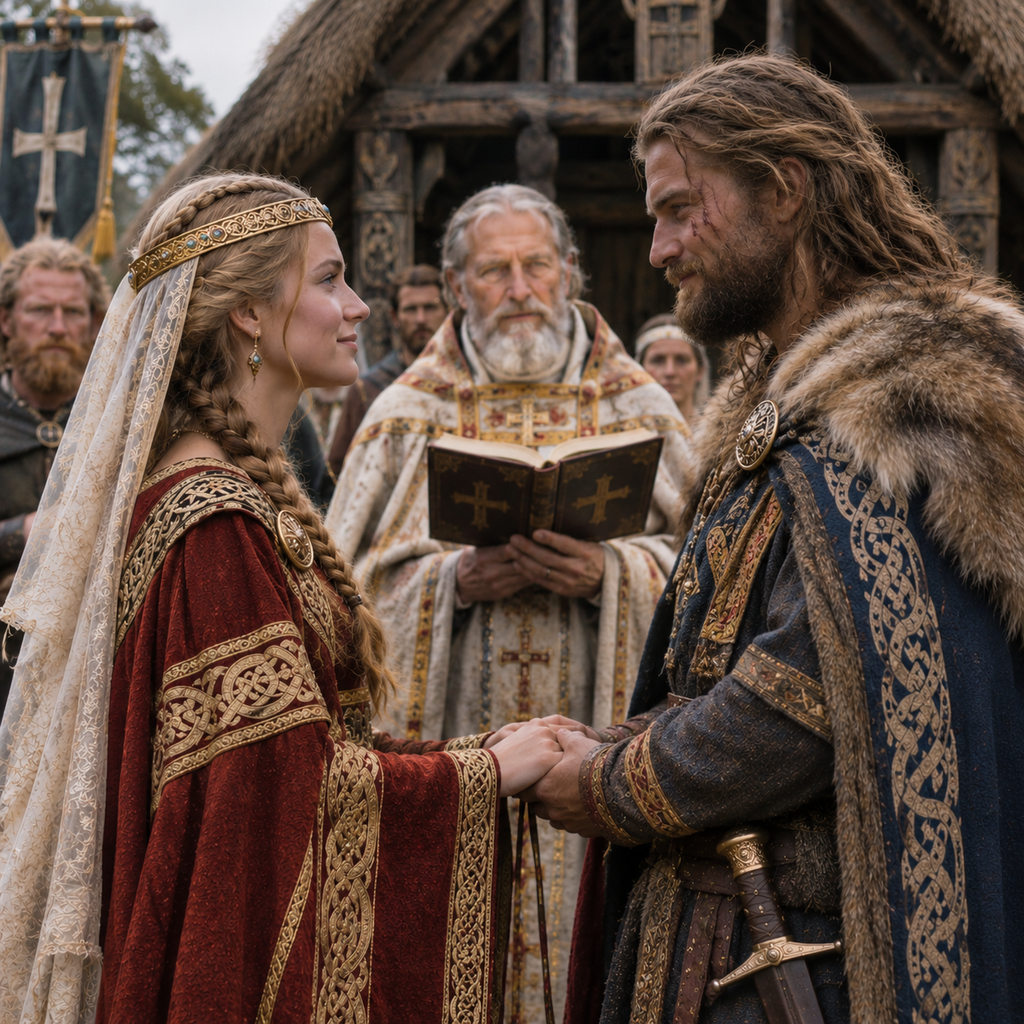
Gytha, however, remained a valuable asset. Around 1074 or 1075, Sweyn arranged her marriage to Vladimir Monomakh, prince of Smolensk. For Sweyn, it would help form an alliance against the Poles whose lands lay between the Danes and Kievan Rus. For Vladimir, it was a match of rare advantage – an alliance with the Danish king and a wife of royal English blood, strengthening his hand against the Poles. For Gytha, too, it was a fortunate union: Vladimir was young, wealthy, and by all accounts, handsome. Thus, in the shifting tides of exile and ambition, the fate of Harold’s children was sealed – not on the battlefield, but in the quiet calculations of dynastic power
The marriage was as much a diplomatic alliance as a personal union. The world Gytha entered was both familiar and alien: the Kievan Rus’ were descended from Scandinavian Varangians, their courts steeped in Norse and Slavic traditions, their politics as tumultuous as any in Europe. Yet, Gytha and Vladimir shared a common tongue – likely Norse or Danish – and a heritage of warrior kingship.
Life in the Kievan Rus’: Power, Intrigue, and Family
Gytha’s new home was a realm in flux. The Kievan Rus’ was a patchwork of principalities, each ruled by a member of the Rurikid dynasty, with Kiev (now th caputal of Ukraine) as the glittering, contested prize. Vladimir, though initially prince of Smolensk, would rise through the ranks: first to Chernigov (1078–1094), then to Pereyaslavl (1094–1098 or 1107), and eventually, after Gytha’s death, to the throne of Kiev itself.
Despite the political instability, Gytha’s life as a princess of Rus’ was marked by both privilege and peril. The court was wealthy and cosmopolitan, with connections stretching from Byzantium to Scandinavia. Vladimir was a renowned warrior, a builder of churches, and a ruler who governed through councils and courts reminiscent of Anglo-Saxon England. Gytha, for her part, bore him a large family – possibly as many as eight sons and three daughters.
Her eldest son, Mstislav, born in Novgorod in 1076, would become one of the most celebrated rulers of the Kievan Rus’, known in the Norse world as Harold, after his English grandfather. Through her children, Gytha became the matriarch of a dynasty that would shape the destinies of Russia, Poland, Hungary, and even, in time, Western Europe.
A Bridge Between Worlds: Language, Faith, and Identity
Gytha’s adaptation to her new life was eased by her upbringing. As a member of the Godwin family, she was no stranger to political intrigue or cultural diversity. Her father’s court had been a melting pot of English, Danish, and Norman influences. In Kiev, she found echoes of the same—a court where languages mingled and alliances shifted with the tides of fortune.
Vladimir himself was a polyglot, reputed to speak five languages, including Norse, thanks to his Swedish grandmother. This linguistic dexterity allowed Gytha and Vladimir to communicate with ease, and perhaps even to maintain a sense of shared heritage in a foreign land.
Religion, too, played a central role in their lives. The Kievan Rus’ had embraced Christianity in the previous century, and Vladimir was a devout Christian, a founder of churches, and a patron of the faith. Gytha, raised in the Christian traditions of England, would have found solace and purpose in the religious life of the court.
Though the sources are often silent on the details of Gytha’s personality, glimpses emerge from the chronicles. She was, by all accounts, resilient and adaptable – a survivor of conquest and exile who carved out a new life at the heart of a foreign court. Her ability to navigate the complexities of the Kievan Rus’ speaks to her intelligence and diplomatic skill. Indeed, the very fact that Gytha’s memory persisted in the chronicles of both East and West attests to her significance.
Legacy: The Anglo-Saxon Bloodline in the East and Beyond
Gytha’s life came to an end on 7 May 1107, before her husband reached the pinnacle of his career as Grand Prince of Kiev in 1113. Yet her legacy endured. Her son Mstislav succeeded Vladimir as Grand Prince, ruling until 1132. Through Mstislav’s daughter Euphrosyne, who married King Géza II of Hungary, Gytha became an ancestor of King Edward III of England via Isabella of France, thus linking the royal houses of England and Russia.
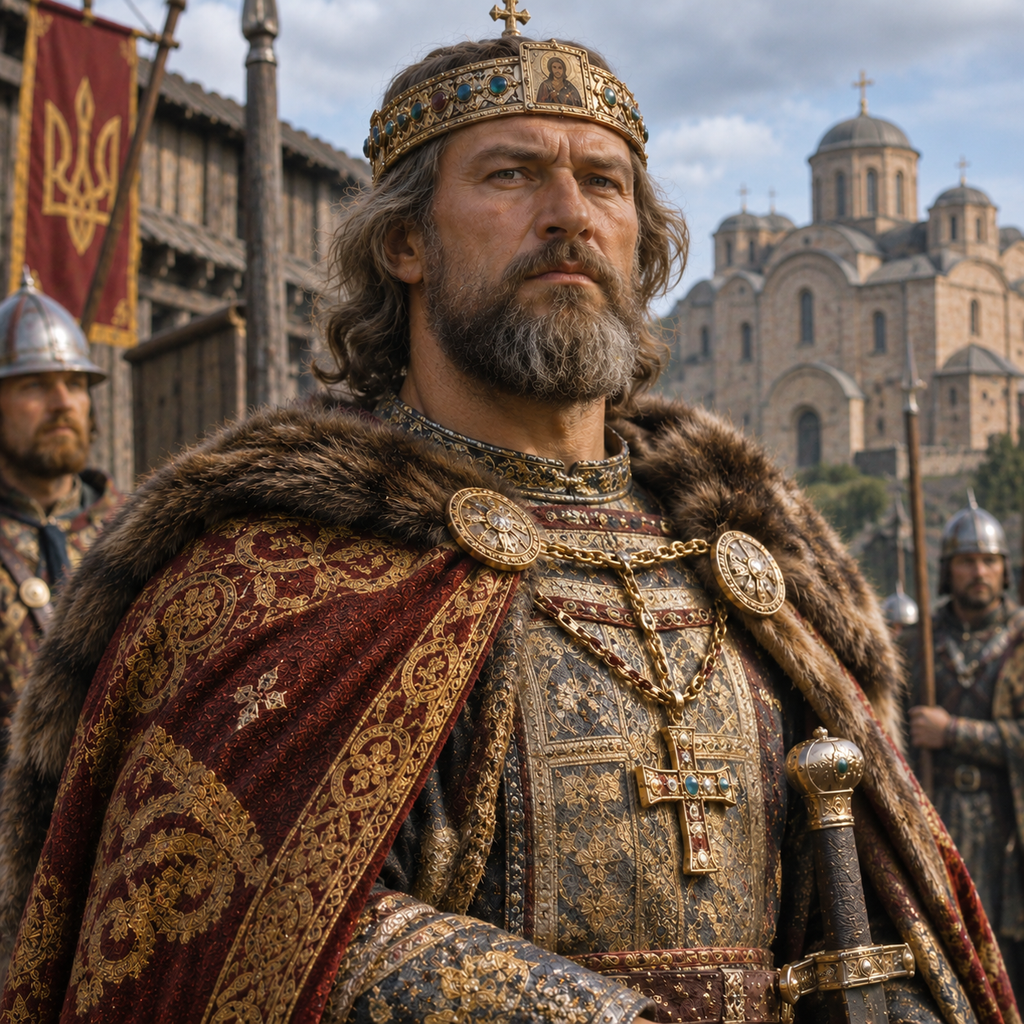
The blood of Harold Godwinson, extinguished on the fields of Hastings, found new life in the courts of Kiev and, through dynastic marriages, in the royal families of Denmark and Britain. The current queens of both Denmark and Great Britain are ultimately descended from Gytha, a testament to the enduring power of her lineage.