The Viking Age, spanning roughly from the late 8th century to the 11th century, has become synonymous with violent raids, seafaring exploration, and a warrior ethos grounded in honor, blood, and reputation. But while most imagine Vikings brandishing axes on violent raids, less attention is paid to their executions and ritualized killings – both real and legendary. Among these, the most infamous is the brutal ritual execution ritual known as the Blood Eagle.
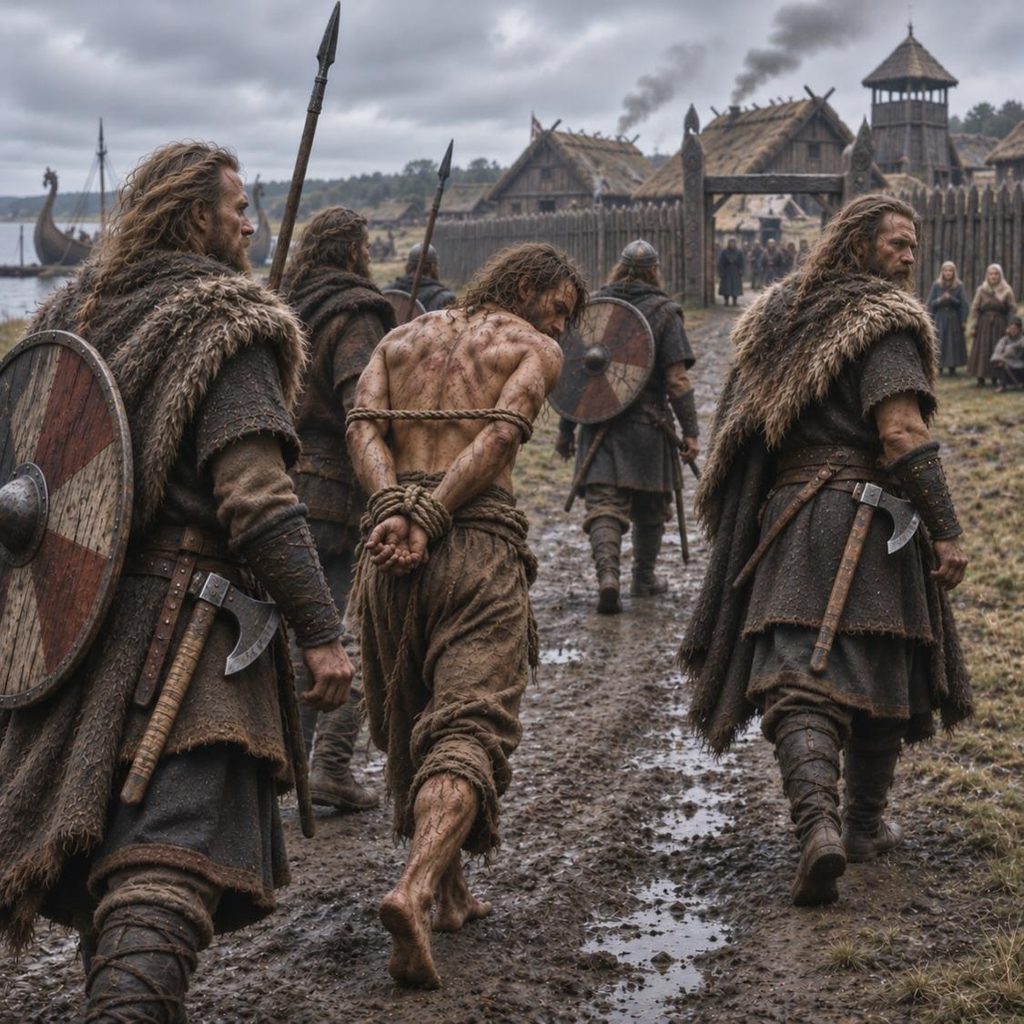
Death, Honor, and Justice in Viking Society
In early medieval Scandinavia, justice was not centralized in royal courts but enacted at local and regional assemblies known as the Thing. Here, disputes could be resolved through compensation payments (wergild) or, when reconciliation failed, through violence and legal executions.
Punishments such as banishment, mutilation, outlawry, or death were central features of Viking justice. What makes Viking executions stand out in comparison to other medieval cultures, however, is their blending of law, warfare, and ritual. Killing was rarely just about ending a life – it was about sending a message.
- Criminals might be stoned, drowned, or hanged.
- Gross traitors or oath-breakers could be tortured in ways that deliberately mutilated the body.
- Captives taken in war might suffer creative executions designed to terrify others and deny the victim a place in Valhalla.
The line between law, religion, and spectacle blurred. The Norse believed in an afterlife where a warrior’s courage at death determined his fate. For this reason, how an enemy or criminal died mattered. Some deaths were staged as humiliations to bar the victim from Valhalla. Others might be ritual offerings to the gods.
Sacrificial Killings vs. Executions
Distinguishing between religious sacrifice and judicial execution in Viking culture is difficult because they often overlapped.
In sources such as Adam of Bremen’s 11th-century descriptions, we read of grand sacrifices at the temple of Uppsala in Sweden. Here, animals and humans were hanged in sacred groves dedicated to Odin – the god of war and death. These “sacrifices” may well have included condemned criminals or war prisoners, turning acts of execution into gifts to the gods.
The act of hanging had particular resonance. Odin himself was said to have hung for nine nights on Yggdrasill, the world-tree, while seeking wisdom. Ritual hanging, then, might serve as a direct dedication of the victim to the Allfather.
At the same time, vengeance-inspired killings often carried spiritual significance. An execution could be vengeance not just for the living, but for the dead – an offering of blood to maintain family honor and cosmic balance.
Viking Methods of Execution
While the sagas are filled with colorful and often exaggerated descriptions, historical sources and archaeology help reveal some of the forms of execution used or feared among Vikings.
- Hanging: Common for criminals and ritual sacrifices, especially associated with Odin.
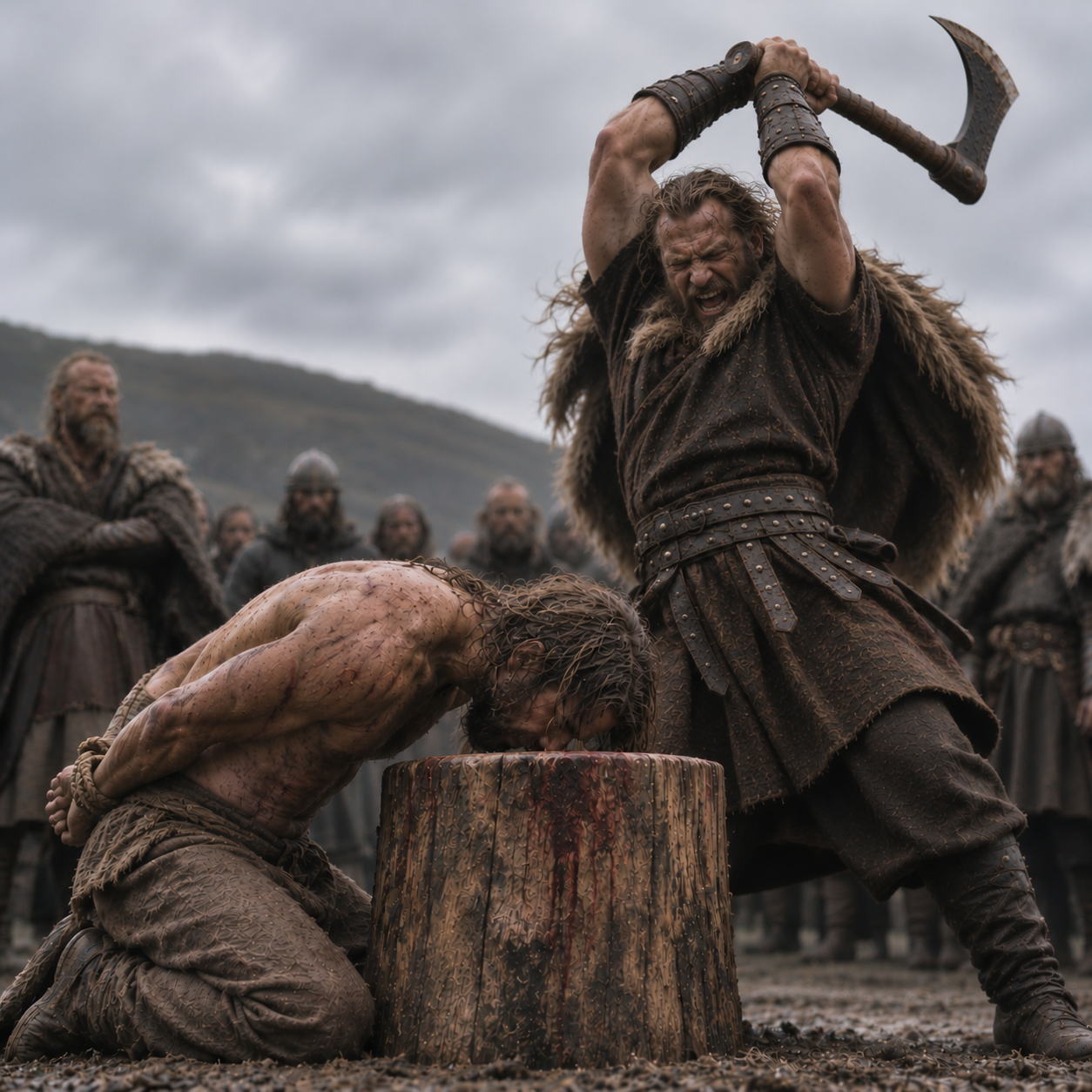
- Beheading: Swift yet dramatic, suitable for high-status captives and traitors. Archaeologists at sites like Ridgeway Hill in England have uncovered Viking-era mass graves of decapitated men.
- Burning: Sometimes used to purge criminals or rivals; linked with cleansing symbolism.
- Drowning: Often used against women accused of witchcraft or adultery.
- Stoning and crushing: Communal acts where the dishonor of the condemned was emphasized by the crowd.
- Torture-and-display executions: Victims might be bound, mutilated, or nailed to wooden structures as a form of religious or political intimidation.
And then there was the Bloody Eagle – the most infamous of all.
The Bloody Eagle: Legend or Reality?
The Bloody Eagle represents the extreme of Viking ritual killing, equally terrifying in its descriptions and controversial in its historicity. Most references to it appear in later Old Norse sagas written centuries after the Viking Age, which raises doubts about its literal truth. Yet its imagery has proven unforgettable.
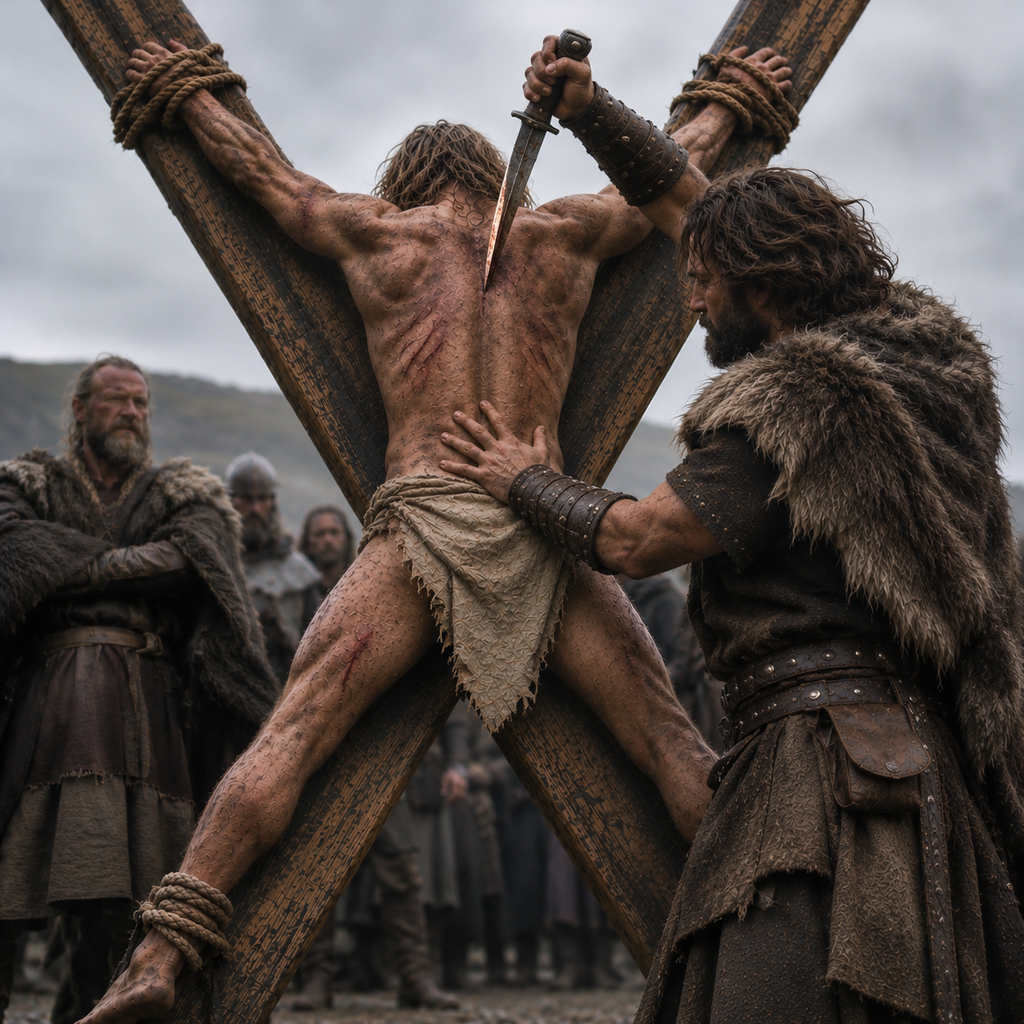
According to the sources, the executioner cut open the back along the spine, breaking through the ribs and pulling them outward in the shape of wings. The lungs were then drawn out and spread over these “wings,” creating the ghastly appearance of a bloodied eagle.
To undergo this torment alive was thought to prove extraordinary agony, yet also said to reflect the executioner’s ritual power over body and spirit.
Literary Accounts
The main references to the ritual appear in medieval Icelandic sagas such as:
- Orkneyinga saga: Describes Earl Torf-Einar performing the Blood Eagle on Halfdan Long-Leg in revenge for his father’s death.
- Stóra Egils saga: Contains a poetic reference alluding to the ritual.
- The saga of Ragnar Lothbrok and his sons: The most famous case, where Ívarr the Boneless and his brothers allegedly carved the Bloody Eagle onto King Ælla of Northumbria, who had killed Ragnar.
What unites these accounts is that the Blood Eagle was always said to be used not on common criminals, but on noble enemies – kings, jarls, and great warriors – making it a form of ritual revenge.
Symbolism of the Blood Eagle
Even if exaggerated or symbolic, the Blood Eagle’s imagery resonated with Norse cultural values.
- Shaming the enemy: The act dehumanized and humiliated a rival, denying them an honorable death.
- Religious sacrifice: The eagle may have invoked Odin’s power. Odin’s animal was often a raven, but the eagle, as a bird of prey, carried similar associations of carrying the soul to the otherworld.
- Wings of death: Unfurling ribs like wings may have symbolized a grotesque parody of ascension, mocking the victim’s chances of reaching Valhalla.
- Revenge: Executing the Blood Eagle upon one’s enemy repaid blood-debts in the most horrific way possible, deterring resistance.
Cultural Parallels
Whether real or not, the ritual fits into a wider pattern of performative executions across cultures.
- The Celts were said to cut open the skulls and display them as war trophies.
- The Romans practiced crucifixion, a death reserved for rebels and slaves intended as both punishment and spectacle.
- The Assyrians, famed in Viking sagas as distant ancestors of kings, boasted of flaying enemies alive and displaying their skins.
The Blood Eagle, then, may have been a Viking-age expression of the same ancient idea: that execution could serve as both vengeance and theater, magnifying the ruler’s authority through cruelty.
Other Ritualized Viking Executions
The Blood Eagle tends to overshadow other Viking execution rituals, but sagas and historical texts preserve additional lurid accounts.
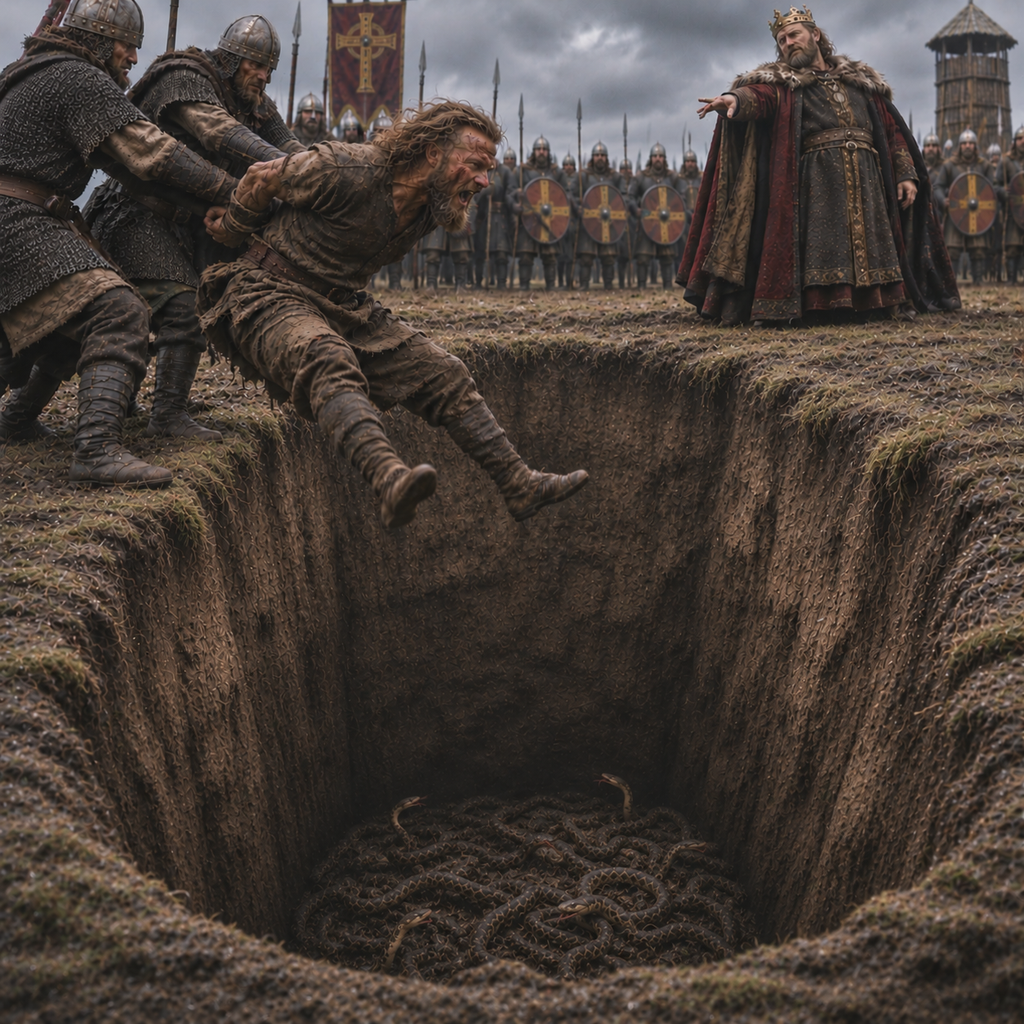
- The Pit of Snakes: Ragnar Lothbrok himself was said (in later saga tradition) to have been executed by King Ælla of Northumbria by being thrown into a pit of venomous serpents. The gruesome image fit saga storytelling, but archaeological evidence is absent.
- Slow Deaths in Battle Captivity: Some victims were supposedly bound, cut, and kept alive to prolong suffering before a crowd.
- Combination Hangings and Spear Rituals: Prisoners were hanged and simultaneously pierced, evoking both the gallows of Odin and the spear he carried, Gungnir.
These acts were more than cruelty: they reinforced cosmological symbolism. To die by fire, noose, or spear was to enter directly into the territory of the gods – or, in the case of dishonor, to be forever denied it.
Terror as Political Theatre
Execution rituals in the Viking Age were a form of political propaganda. Their gruesomeness was meant to echo down the generations. Victims like Ælla or Halfdan Long-Leg became infamous examples of what happened when one crossed Viking rulers.
Terror stories also spread across Christian Europe, magnifying the Viking image as savage heathens – an image that ironically increased their aura of invincibility. Medieval chroniclers were quick to seize upon tales like the Bloody Eagle, which confirmed their view of Scandinavians as God’s enemies.
Within Viking society, however, such violence was not random barbarity. It was targeted, ritualized, and often codified by honor-shame dynamics.
Conclusion
Viking execution rituals show us a society where death was not private but public ritual, binding together beliefs about law, honor, vengeance, and religion. Whether through hangings in sacred groves, burnings, beheadings, or legends like the Blood Eagle, execution was transformed into a performance of power.
The infamous Blood Eagle, whether fact or myth, reflects the Viking drive to elevate vengeance into symbolic art – reminding both enemies and descendants that to betray or oppose their kindred carried unimaginable consequences.
In the end, the truth of the ritual matters less than its enduring legacy. The idea of a man’s chest split open into grisly wings has outlived the sagas themselves, becoming a symbol of the terrifying extremes of Viking justice and their cultural obsession with death, honor, and eternal memory.