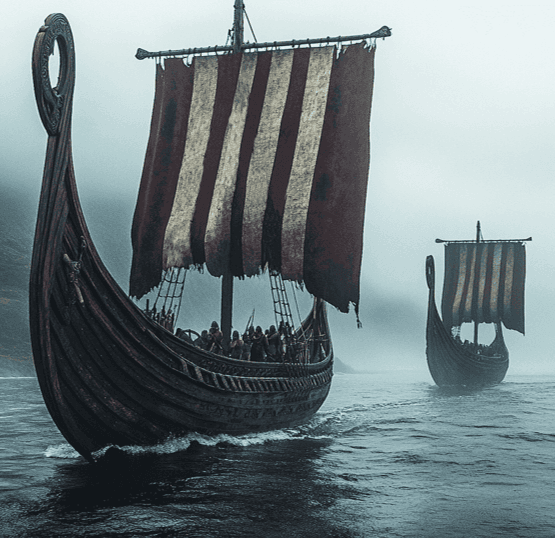
For centuries, the Viking has been cast as history’s great northern predator: a longship crewed by axe-wielding marauders bursting out of the sea to burn monasteries, terrorize villages, and vanish with silver, slaves, and plunder. It is a dramatic image, and a partially true one. But it is also an incomplete one. If we strip away the noise of legend and later prejudice, a more complicated picture emerges – one in which the Viking Age was not just an era of raids, but an age of merchants, migrants, colonists, craftsmen, and empire-builders.
That raises a provocative question: was the Viking Age more about trade and settlement than raiding?
The answer, in the broadest historical sense, is yes. Raiding made the Vikings infamous, but trade and settlement made them historically transformative. The violence grabbed attention. The commerce and colonization reshaped the map.
The Problem with the Viking Stereotype
The popular Viking image owes as much to medieval fear and modern imagination as to actual Norse behavior. The first great Viking raid on the monastery of Lindisfarne in 793 shocked Christian Europe and left a deep scar in the historical memory. Monks who saw their churches burned and their relics stolen had every reason to describe the attackers as savage heathens. Their accounts helped create the enduring image of the Viking as a bloodthirsty sea-raider.
But that image reflects the perspective of the victims more than the full reality of Norse society. The people we call Vikings were not a separate race or a nation devoted only to destruction. They were Scandinavians from Denmark, Norway, and Sweden whose world included farming, fishing, shipbuilding, trading, feasting, exploration, and warfare. “Going Viking” was an activity, not an ethnicity. A man could raid one year, trade the next, and settle permanently thereafter.
That flexibility is one reason the Viking Age was so powerful. It was not a single-minded campaign of plunder. It was a broad northern expansion of people, goods, and influence.

Raiding Was Real, But It Was Not Everything
None of this means raiding should be minimized. On the contrary, raiding was a crucial part of the Viking Age. It brought wealth quickly, allowed ambitious leaders to build followings, and opened the door to wider expansion. Early raids on monastic centers in Britain, Ireland, and along the Frankish coast were catastrophic for local communities and deeply destabilizing.
Raiding also had strategic value. It revealed weaknesses in coastal defenses, exposed rich targets, and gave Norse war leaders valuable intelligence about local politics and trade routes. Some raids were probably opportunistic, but others were carefully planned. In many cases, raiders were not simply smashing and grabbing; they were testing the system, learning where money flowed, and determining where settlement or tribute might be possible later.
Yet raiding alone cannot explain the scale or duration of Viking activity. If the Norse had only wanted loot, they could have raided for a generation and faded into history like many other seaborne warbands. Instead, they created lasting settlements, formed trading networks stretching across continents, and inserted themselves into the political life of Europe. That broader impact suggests a much larger historical purpose than piracy.
Trade Was the Viking Engine
The Viking Age was built on movement, and movement meant trade as much as war. Scandinavia itself was rich in some resources and poor in others. Timber, iron, furs, amber, walrus ivory, and skilled seafaring gave the Norse important assets. But luxury goods, silver, textiles, wine, spices, and prestige items had to be acquired through exchange.
That need helped drive an immense network of commerce. Viking traders moved across the North Sea, into the Baltic, down Russian rivers, through the Byzantine world, and even into the Islamic caliphates. Norse merchants traded in silver, silk, glass, weapons, amber, furs, slaves, and many other goods. In effect, the Vikings became middlemen of the medieval world, connecting distant regions that had little direct contact with one another.
This trade was not a minor side project. It was central to Norse expansion. A raiding economy can generate sudden wealth, but a trading economy generates steady power. It encourages the growth of towns, markets, and political authority. It rewards reliable routes, protection, and long-term planning. It turns scattered voyages into networks.
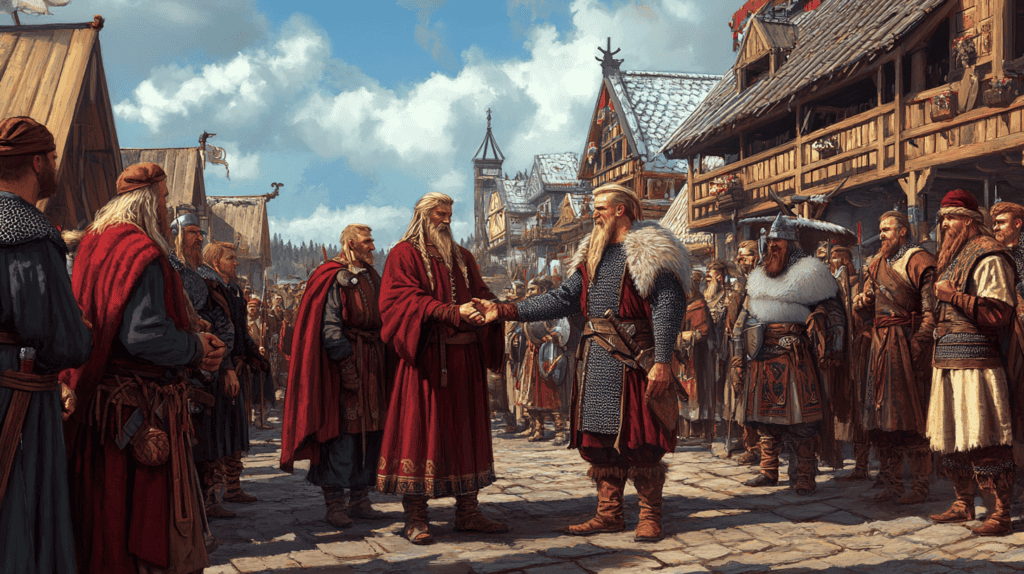
That is exactly what we see in the Viking Age. Places such as Hedeby, Birka, Kaupang, and later Dublin became major trading centers. These were not temporary encampments for plunderers. They were commercial hubs where people came to buy, sell, craft, repair, and store goods. Their existence reveals a society capable not just of violence, but of organization and specialization.
The Longships Carried More Than Warriors
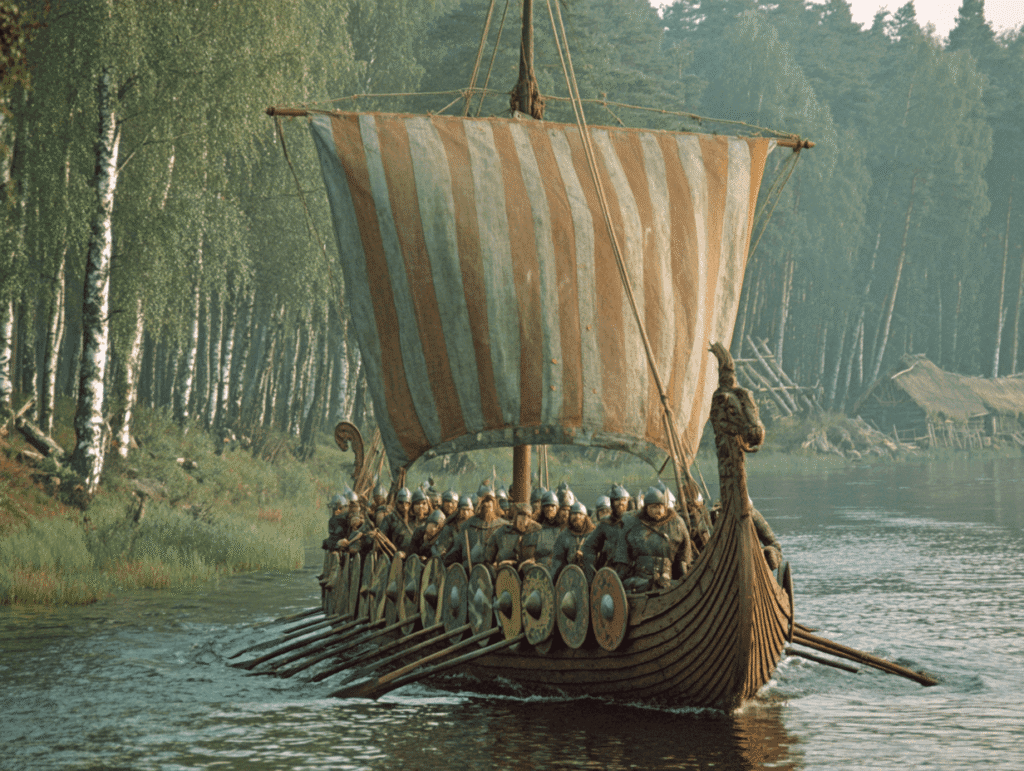
The longship is often treated as a weapon of terror, and it certainly was that. But it was also a remarkably efficient transport system. Shallow drafts allowed ships to move through rivers and coasts with ease, opening both inland raiding routes and commercial corridors. The same design that made surprise attacks possible also made trade practical.
A ship that could cross the North Sea, enter a river, and be hauled around obstacles was a dream vessel for a maritime people. It enabled travel where roads were poor and overland transport was slow. It also encouraged versatility. These ships could carry merchants, settlers, explorers, and fighters. Their usefulness went far beyond warfare.
That versatility helps explain why Norse expansion reached so many places. The Vikings did not simply strike and retreat. They moved people. Families, craftsmen, farmers, and chieftains all followed routes first opened by adventurers and traders. Commerce created the channels; settlement filled them.
Settlement Changed the Story Entirely
If raiding made the Vikings feared, settlement made them consequential.
The Norse did not merely loot foreign shores and return home. They established lasting communities in the British Isles, Ireland, Normandy, Iceland, Greenland, and elsewhere. Some settlements began through force, others through negotiation, and many through a mix of both. But once established, they became permanent parts of the political and cultural landscape.
Take Dublin, for example. It began as a Viking stronghold and evolved into one of the most important urban centers in Ireland. York, too, became a major Norse settlement and commercial city. Normandy was created through the settlement of Scandinavian elites in northern France, while Iceland became a uniquely Norse society founded by migrants rather than conquerors. In Greenland, Norse settlers pushed the limits of medieval colonization into an extreme environment.
These settlements mattered because they outlasted the raids. A raid might devastate a monastery in a single morning, but a settlement alters land use, local power structures, language, law, religion, and trade patterns for generations. That is a very different kind of historical impact.
Settlement also required adaptation. Raiders can remain outsiders; settlers cannot. Once Norse groups established themselves in foreign lands, they had to negotiate with local populations, absorb influences, and build durable institutions. Over time, many adopted Christianity, local customs, and new political forms. In doing so, they became less like roaming raiders and more like founders of hybrid societies.
Violence and Commerce Were Not Opposites
One of the most important things to understand about the Viking Age is that raiding and trading were not separate worlds. They were often part of the same system.
A Viking expedition might begin as a trading voyage, turn into a raid, and later end in settlement. A trader might be attacked by rivals, become a warrior, and then negotiate tribute or a fixed market. Norse leaders could threaten violence to secure trade advantages, and they could use wealth gained from trade to finance raids or settlements. The boundaries were fluid.
This is why the question is not really whether the Viking Age was about raiding or trade, but how those activities reinforced one another. Violence could open opportunities. Trade could fund military power. Settlement could secure routes. Raiding could lead to tribute, tribute could lead to political influence, and political influence could then be converted into trade protection or landholding.
In the early medieval world, force and commerce were often intertwined. The Vikings understood this better than most. They were opportunists in the fullest sense: they sought profit wherever it could be found, whether through exchange, intimidation, conquest, or colonization.
Why the Raiding Image Survived
If trade and settlement were so important, why do the Vikings remain famous mainly as raiders?
Part of the answer is source bias. Most surviving written accounts were produced by monks, clerics, and chroniclers in lands attacked by the Norse. These writers were not neutral observers. They remembered the burning of churches, the killing of religious communities, and the theft of sacred objects. Their accounts are vivid because the trauma was real.
There is also a deeper cultural reason. Raiding is more dramatic than trading. A market leaves fewer emotional scars than a massacre. A shipload of furs and silver does not lodge itself in memory as powerfully as a coastal monastery in flames. The violence was narratively irresistible, and later writers amplified it.
Modern pop culture has done the rest. From romanticized sagas to television dramas and video games, the Viking is often presented as a warrior first and almost exclusively. That makes for better storytelling, but not always better history.
The Case for Trade and Settlement
So, was the Viking Age more about trade and settlement than raiding?
If we are asking which activity did more to shape the long-term historical legacy of the Vikings, then yes, trade and settlement were more important. They created cities, linked regions, generated wealth, spread culture, and altered the political geography of Europe. Raiding was spectacular, but commerce and colonization were structural.
If we are asking which activity made the Vikings memorable to their contemporaries, then raiding clearly stands out. It terrified Europe and helped define the early Viking image. But terror is not the same as historical significance. The Vikings’ most enduring impact came not from the monasteries they burned, but from the routes they established and the communities they founded.
This is what makes the Viking Age so fascinating. It was an age of contradictions. The same people who attacked Christian monasteries also built trading emporia. The same ships that carried warriors also carried merchants and settlers. The same culture that inspired fear also produced law codes, art, exploration, and new forms of political power.
The sea was their highway, but the destinations were many. Some voyages ended in plunder. Some ended in market stalls. Some ended in farms, towns, dynasties, or new homelands. That variety is precisely what makes the Viking Age so rich and so difficult to reduce to a single label.

Conclusion
The Vikings were raiders, yes – but they were much more than raiders. The Viking Age was driven by a complex blend of violence, enterprise, migration, and adaptation. Raiding launched the age into infamy, but trade sustained it, and settlement transformed it.
So if the question is whether the Viking Age was more about trade and settlement than raiding, the most honest answer is this: in terms of long-term historical importance, absolutely. The raids made the headlines. Trade and settlement made the history.
That is why the Viking Age still matters. It was not simply an age of destruction. It was an age of movement, connection, and reinvention – and the North Sea world that emerged from it was far larger, richer, and more complicated than the old barbarian stereotype allows.