In 1013, the greatest city in Western Europe fell to an army of Berber warriors. Córdoba – now part of Spain but then the glittering capital of the Umayyad Caliphate, once home to hundreds of thousands of people, vast libraries, and some of the finest architecture in the Islamic world – was besieged for two and a half years by the forces of Sulayman ibn al-Hakam. When the city finally surrendered in May 1013, it was not spared. The Berber army sacked Córdoba, burned its suburbs, massacred officials and scholars, and reduced one of the wealthiest cities in Europe to a shadow of its former self. This was not a foreign conquest – it was a civil war within the Islamic world, a conflict that would mark the beginning of the end for the Caliphate of Córdoba and reshape the future of al-Andalus.
The Golden Age of Córdoba
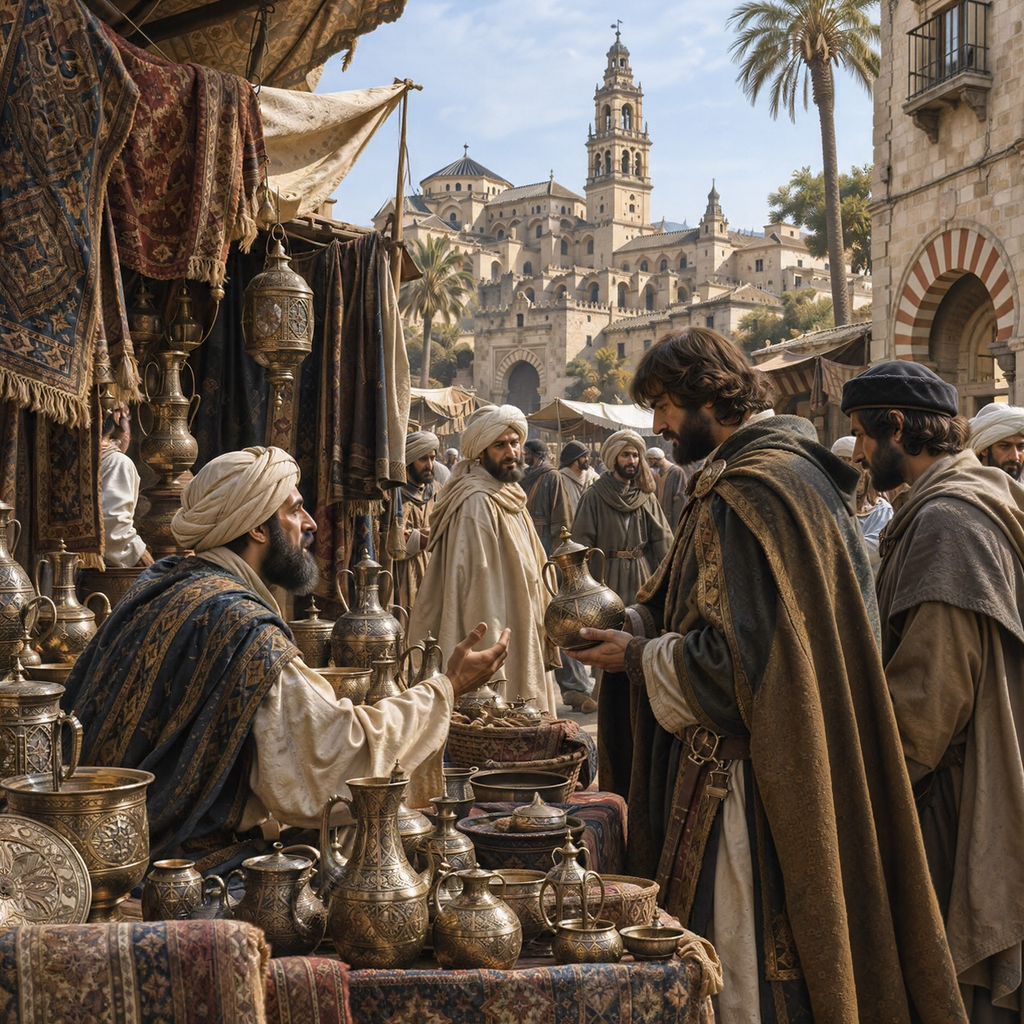
To understand the catastrophe of 1013, one must first understand what Córdoba had been. Under the Umayyad Caliphate, Córdoba was the largest and most sophisticated city in Western Europe, a center of learning, culture, and commerce that rivaled Baghdad and Constantinople. Its libraries held hundreds of thousands of manuscripts; its scholars made groundbreaking advances in medicine, astronomy, mathematics, and philosophy; its architecture – including the Great Mosque of Córdoba – was among the most magnificent in the world. The city was home to Muslims, Christians, and Jews living side by side, a rare example of religious coexistence in the medieval world.
The caliphate reached its zenith under the rule of Almanzor (al-Mansur), the powerful chamberlain who effectively ruled on behalf of the caliph Hisham II. Almanzor’s campaigns against the Christian kingdoms of the north – Barcelona in 985, León in 988, and the pilgrimage site of Santiago de Compostela in 998 – brought the caliphate to the peak of its power. But Almanzor’s death in 1002, followed by the death of his son Abd al-Malik in 1008, shattered the delicate balance that had held the empire together.
The Fitna: Civil War Erupts
The death of Almanzor’s heirs opened the door to chaos. Sanchuelo, Almanzor’s second son, tried to force Caliph Hisham II to name him as heir, provoking a revolt by the Umayyad family and the Quraysh aristocracy of Córdoba. Sanchuelo was killed, and in the ensuing power struggle, Hisham II was deposed and replaced by Muhammad II al-Mahdi, a great-grandson of the former caliph Abd al-Rahman III. But the new caliph’s grip on power was weak.
The Berber troops – many of them from North Africa, recruited by Almanzor to serve in the caliphate’s army – felt betrayed by the new regime. They fled Córdoba and set up camp at Calatrava, where they proclaimed Sulayman ibn al-Hakam, a cousin of the deposed caliph, as their candidate for the throne. Sulayman, seeking to reclaim power, forged an alliance with Count Sancho García of Castile, a Christian ruler who saw an opportunity to profit from the chaos. In exchange for border fortresses and a share of the booty, Sancho provided Sulayman with Castilian troops.
The First Conquest: 1009
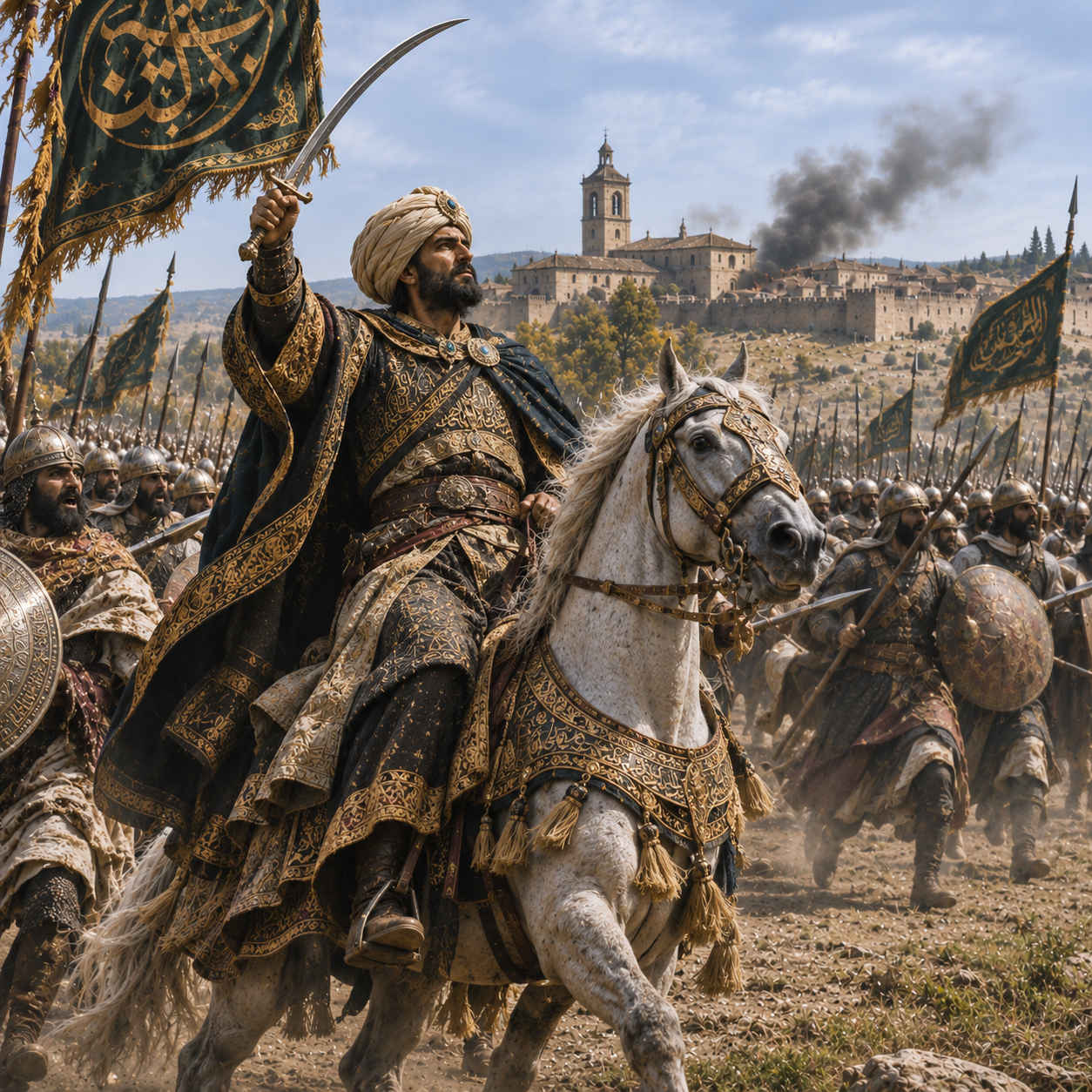
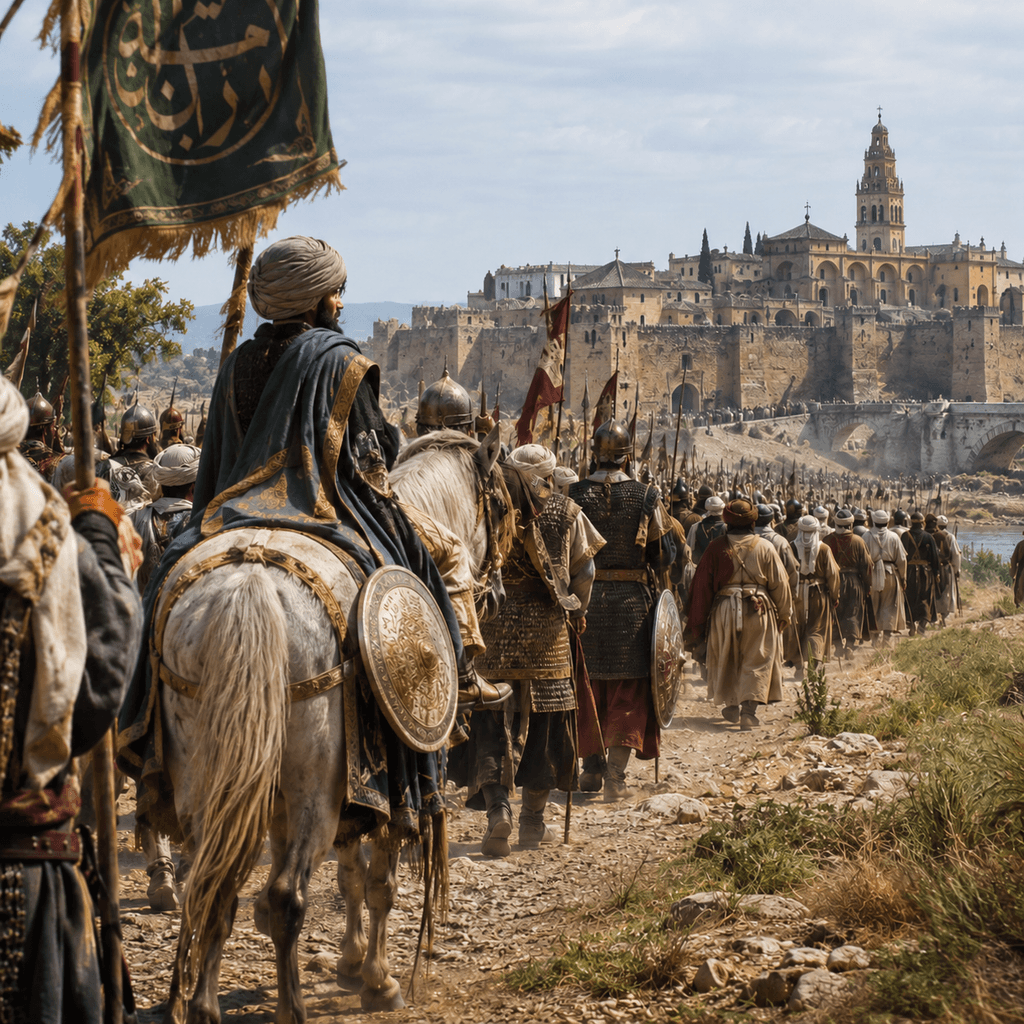
In November 1009, Sulayman’s Berber-Castilian army marched on Córdoba. They defeated Muhammad II’s forces at the Battle of Alcalá de Henares on 5 November, and then again at the bridge over the Guadalquivir River at Alcolea on 8 November. On 9 November, Sulayman entered Córdoba and proclaimed himself caliph with the title “al-Musta’in bi-llah” (“He Who Seeks God’s Help”). He freed Hisham II from imprisonment and briefly reinstated him as caliph, but within days, Sulayman deposed him again and took the throne for himself.
The victorious Berber and Castilian troops sacked the city, looting homes and buildings in a preview of the devastation to come. But Sulayman’s grip on power was short-lived. In May 1010, Muhammad II defeated Sulayman’s Berber army at the Battle of Aqbat al-Bakr, forcing Sulayman to flee to Algeciras. Muhammad II was later assassinated by his own mercenaries, and Hisham II was restored to the throne – though real power remained in the hands of others.
The Siege: Two and a Half Years of Starvation
Four months after the Battle of Guadiaro, in November 1010, Sulayman and his Berber forces returned to Córdoba and began a siege that would last two and a half years. They established their base at Madinat al-Zahra, the magnificent palace-city built by Almanzor just outside Córdoba, which they had already sacked and looted. From this stronghold, the Berbers launched raids on the surrounding countryside, cutting off supply lines and extorting money from nearby towns.
The siege was brutal. The Berbers destroyed the part of the city that lay beyond the old Roman walls, leaving the suburbs in ruins. Food became scarce as the blockade tightened, and famine began to grip the population. Hisham II, who had taken a more active role in defending the city, encouraged the people of Córdoba to resist. But the city was exhausted, its resources depleted, and its defenses weakening by the day.
The Final Assault: May 1013
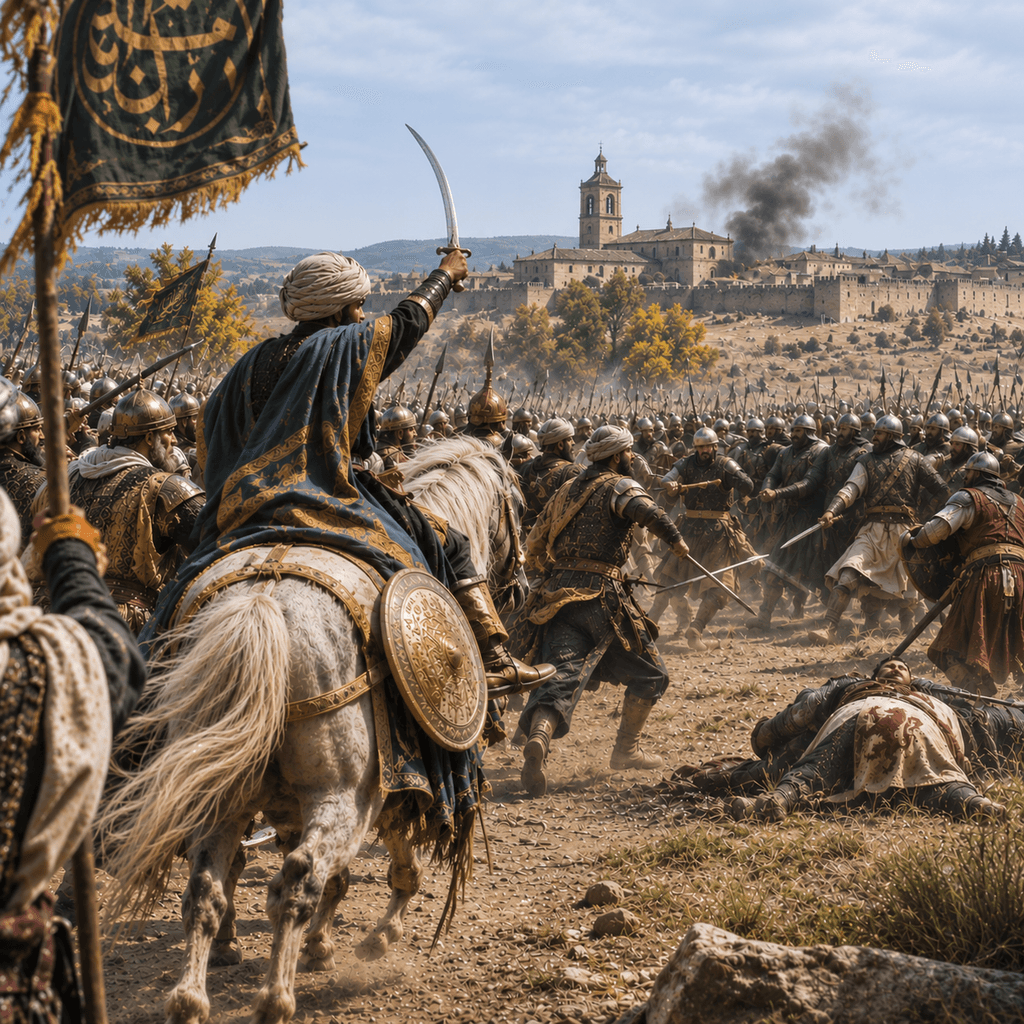
On 11 May 1013, the garrison of Córdoba launched a final, desperate sortie to break the siege. It failed. The Berber army broke through, and the city surrendered. What followed was one of the most brutal sacks in medieval history.
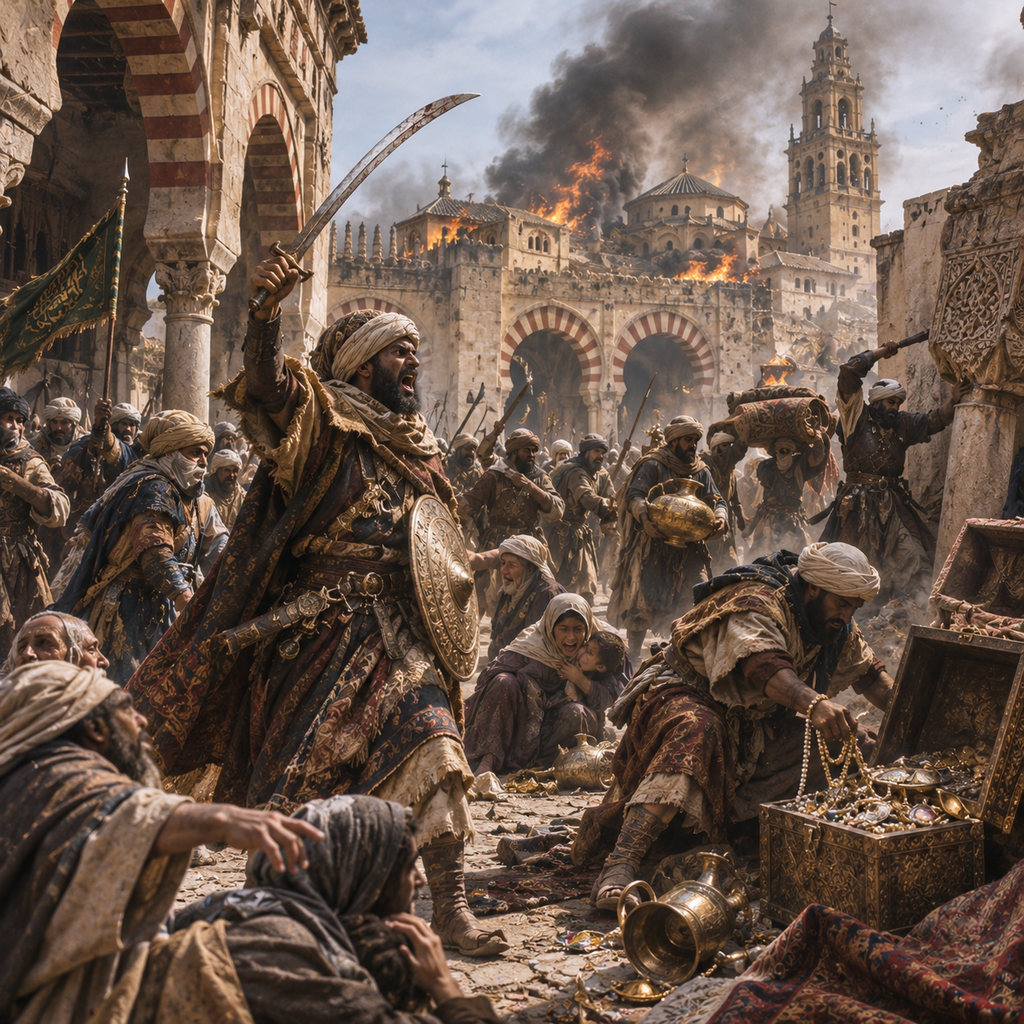
The Berber troops pillaged the city, burning houses and destroying buildings. They massacred many of the inhabitants, including government officials and scholars. The wealthiest citizens were stripped of their possessions and reduced to poverty. Many fled the city to escape the violence. The Jewish community was expelled, with many fleeing to Granada, where they would find refuge under the rule of Samuel ibn Naghrillah. Hisham II, the caliph who had presided over the city’s final defense, was murdered – or, in some accounts, simply disappeared without a trace.
Sulayman al-Musta’in was restored to the throne the day after the sack. But his victory was hollow. The caliphate was broken beyond repair. The provinces – Seville, Badajoz, Valencia, Murcia, Saragossa, Denia – had already broken away, declaring independence as rival taifa kingdoms. Sulayman handed out governorships to Berber chiefs as rewards, but he could not reassemble the empire. In 1016, he was overthrown and assassinated by Ali ibn Hammud, and the cycle of violence continued.
The Legacy of the Sack
The sack of Córdoba in 1013 was not the end of the Caliphate of Córdoba—that would come in 1031, when the last Umayyad caliph abdicated and the caliphate was formally dissolved. But it was the moment the empire’s power was truly broken. The destruction of Córdoba, the murder of its caliph, and the dispersal of its people marked the end of an era. The city that had once been the jewel of the Islamic world was left in ruins, its libraries burned, its palaces looted, its people scattered.
The sack also had lasting consequences for the Jewish community of al-Andalus. The expulsion of Jews from Córdoba forced many to flee to other cities, including Granada, where they would build new communities and continue to contribute to the cultural and intellectual life of the region. Samuel ibn Naghrillah, a Jewish scholar and statesman, would rise to become vizier of Granada, a testament to the resilience of a people uprooted by violence.
A Turning Point in History
The fall of Córdoba in 1013 was a turning point in the history of al-Andalus. It marked the end of the unified Caliphate of Córdoba and the beginning of the taifa period, a fragmented era of rival kingdoms that would last until the Almoravid conquest in the late 11th century. The sack of Córdoba was not just a military defeat – it was a cultural and political catastrophe that reshaped the future of the Iberian Peninsula.
Sulayman al-Musta’in, the man who led the Berber army to victory, is remembered as both a conqueror and a destroyer. He seized the throne through force and betrayal, but he could not hold it. His victory at Córdoba was a pyrrhic one, a triumph that shattered the very empire he sought to rule. The story of Sulayman al-Musta’in and the sack of Córdoba is a reminder that even the greatest empires can fall – not to foreign invaders, but to the ambitions and betrayals of those within.