
Constantinople, the glorious “New Rome” that rose on the strategic meeting point of Europe and Asia, stands as one of history’s most spectacular achievements in urban planning, architecture, and imperial ambition. The building of Constantinople transformed a modest Greek colony into a dazzling metropolis destined to dominate the medieval world, shaping the fate of empires and civilizations for centuries.
Choosing Byzantium: The Vision of Constantine
In the shadowy dawn of the 4th century CE, the Roman Empire teetered between old traditions and new horizons. Emperor Constantine the Great, wary of Rome’s political intrigue and logistical failings, sought a fresh start for his imperial power. His gaze settled on Byzantium: a town with centuries-old Greek roots, perched on the Bosphorus amid sea and land, promising unbreakable defense and unmatched access to the riches of Asia and Europe.
Constantine’s vision was grand and pragmatic. Here he would anchor an imperial city fit to challenge Rome itself, bristling with palaces, baths, forums, and the very heartbeat of Christian power. Byzantium’s existing walled city offered the perfect skeleton for rebirth, but the transformation would be nothing short of monumental.
Laying the Foundations
Building began in 324 CE, frenzy driving every stone. Constantine commandeered craftsmen, artists, and engineers from across the empire. Resources flowed: marble pillaged from fallen temples, columns and statues brought from Athens, Pergamum, and beyond. Urban planners laid out a city in 14 regions, emulating Rome’s structure but crafting a distinctly new identity: Christian and cosmopolitan.
A network of colonnaded avenues radiated from the new Great Palace and Hippodrome, through circular forums and branching, straight-line arteries. The Mese – the central avenue – became the backbone of city life, threading together bustling markets, administrative halls, and triumphal monuments.
The Hippodrome – a vast arena for chariot races – anchored the city’s social life. Across its length, rulers staged dazzling celebrations to mark the city’s formal consecration on May 11, 330 CE. On that day, after six feverish years of building, Constantinople officially overtook its ancient predecessor, Byzantium.
Defending the New Capital
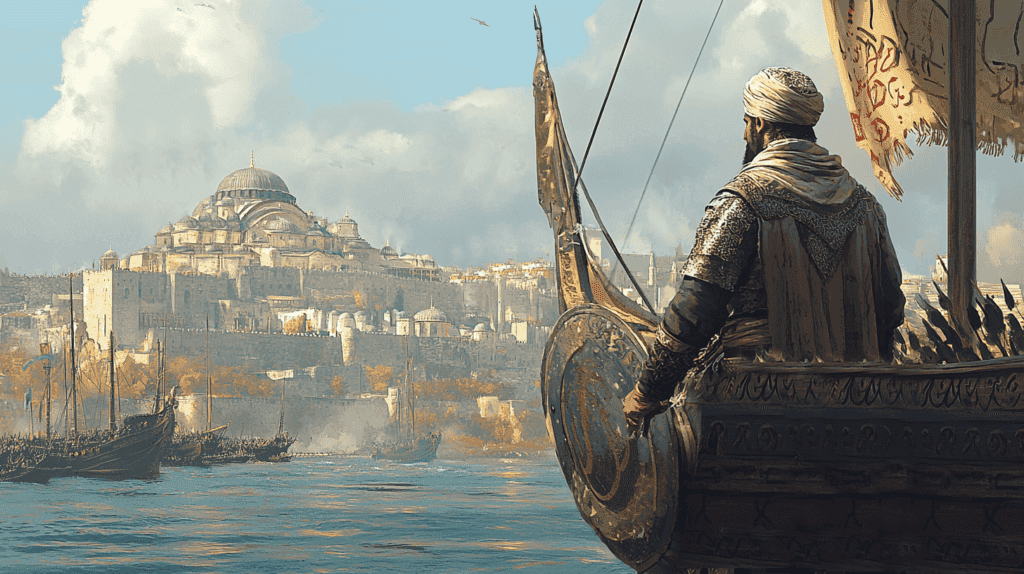
Constantinople’s geography set its destiny: easily defended from the sea, exposed from the land. Constantine’s first city walls soon grew obsolete as population surged and urban space spilled outward. A new, audacious solution arose: the Theodosian Walls, completed around 405 CE under the direction of the Praetorian Prefect Anthemius.
These formidable triple-layered fortifications, stretching from the Sea of Marmara to the Golden Horn, became legendary. First came a broad moat, then a low outer wall, a taller second wall, and finally a vast inner wall which was up to 6 meters thick and crowned by 96 defensive towers. This wall withstood sieges for a millennium, making Constantinople nearly invincible.
Infrastructure and Innovation
A city of Constantinople’s scale demanded ingenuity. Engineers constructed aqueducts to supply water, enormous underground cisterns to store it, and expanded granaries to feed a swelling population: sometimes estimated between 250,000 and a million. The famed grain shipments from Egypt, subsidized to deliver up to 80,000 daily rations, became the lifeblood of the city, matching Rome’s celebrated annona system.
Luxury flourished alongside necessity. Public baths, modeled on Roman grandeur, dotted the city. Theatres and circuses entertained citizens, while Christian churches and monasteries soon multiplied, supplanting the old pagan gathering places. Constantinople pulsed not merely as an administrative center but as a vibrant hub of social and cultural innovation.
The Christian Metropolis
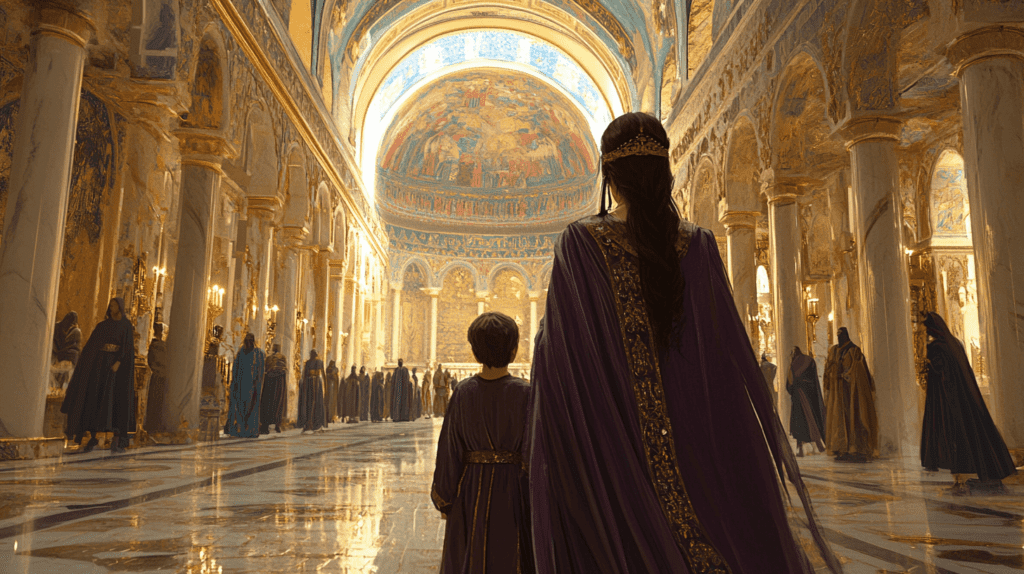
Constantine’s embrace of Christianity marked a sea change. Churches grew in stature, not only as religious sanctuaries but as centers for charity, hospitals, hostels, and even local governance. Stately basilicas, like Hagia Sophia (later famously rebuilt by Justinian), soared above the city’s skyline, their domes embodying the spiritual ambitions of the empire.
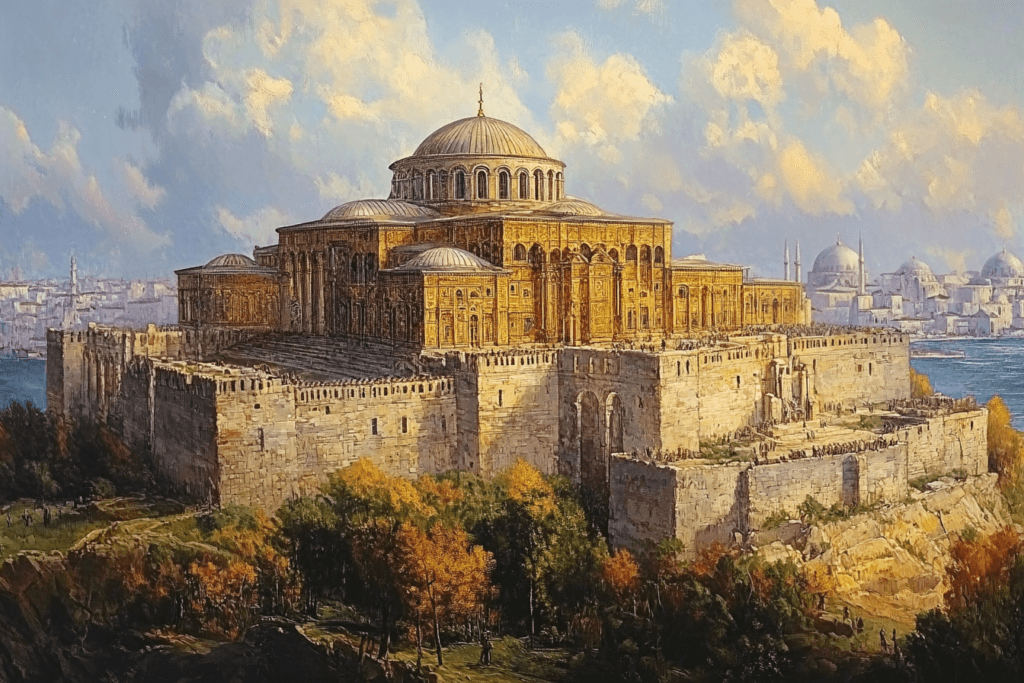
Over the 5th century, as Christian influence intensified, churches and monasteries multiplied within the city’s ramparts. The ancient bathhouses faded, replaced by the neighborhood church, now the nucleus of local life and welfare.
Urban Expansion and Diversity
Three major phases defined Constantinople’s urban growth:
- The Constantine period (324–405): expansion and Roman town planning set the city’s bones.
- The Theodosian era (405–450): dramatic extension of fortifications, creation of cemeteries and monasteries in new, semi-urban districts.
- The post-450 period: Christianization of city space, social services rooted in religious institutions.
The city’s districts flourished with diversity: artisans, scholars, clergy, soldiers, and merchants crowded its bustling neighborhoods. Marketplaces brimmed with spice from India, silk from China, grain from Africa, and myriad goods from every corner of the known world.
The Glory and Legacy of Constantinople
Constantinople grew into one of the world’s great capital: a font of imperial power, religious authority, and untold wealth. Palaces dazzled with golden mosaics, statues glimmered from every square, and the city’s formidable silhouette became a challenge and a marvel for friend and foe alike.
The city withstood assault after assault, sheltering civilization through centuries of tumult: the Western Roman collapse, Hunnic invasions, and the rise of Islam. It became the crown jewel of the Byzantine Empire, outshining Rome itself in art, innovation, and might.
Even as centuries rolled on and empires shifted, Constantinople’s legacy endured. Whether as the bastion of Christian rule or the prize coveted by Ottomans in 1453, its architecture, urban planning, and cosmopolitan culture shaped the medieval world, leaving footprints still visible today in the heart of modern Istanbul.
The building of Constantinople redefined what a city could be. Constantine’s vision and the genius of later Byzantine architects cultivated not just a capital, but a living symbol – a crossroads where East met West, ancient met modern, and pagans became Christians.