In the early fourth century, the Roman Empire stood at a crossroads. For nearly three centuries, Christianity had endured periods of brutal persecution, its followers marginalized, imprisoned, and sometimes executed for their faith. In 313 AD, a transformative decree known as the Edict of Milan marked a dramatic turning point – not only for Christians but for the concept of religious liberty itself.
Persecution
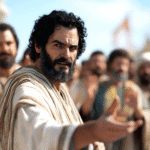
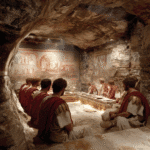
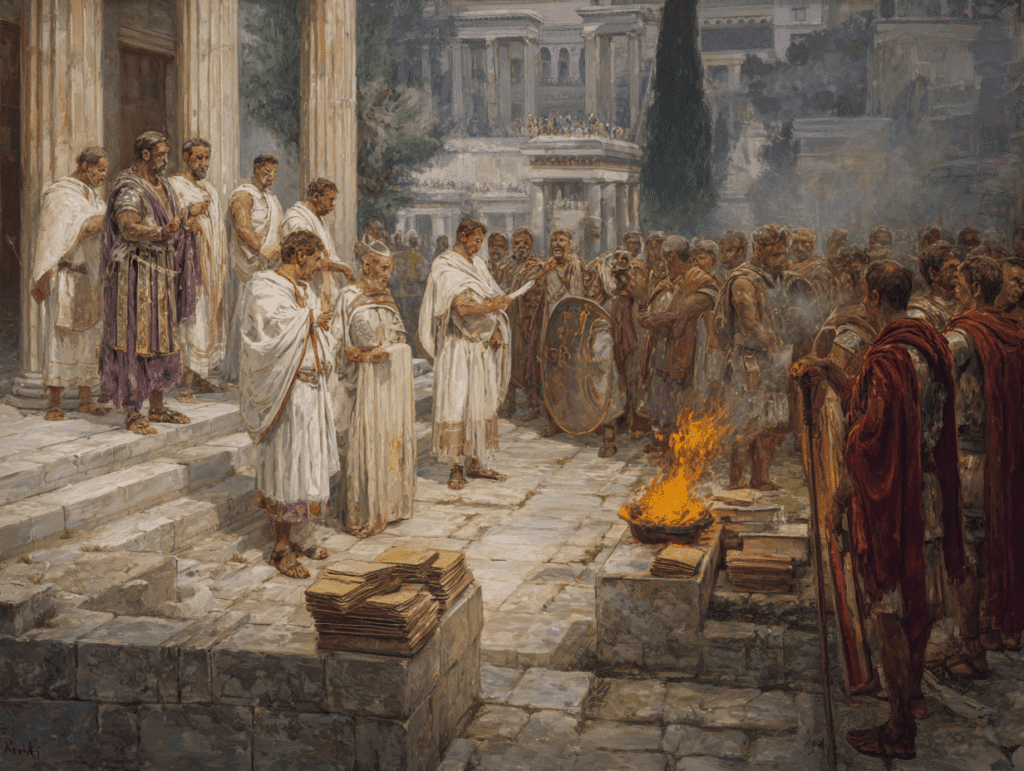
From its inception, Christianity was viewed with suspicion by Roman authorities. Labeled a religio illicita (an illicit cult), Christians were often scapegoated for disasters, accused of subversion, and targeted by imperial edicts, especially under emperors like Nero and Diocletian. The Great Persecution, launched by Diocletian in 303 AD, was the most systematic attempt to eradicate Christianity, involving the destruction of churches, burning of scriptures, and imprisonment or execution of believers.
Power Struggles and the Battle of Milvian Bridge
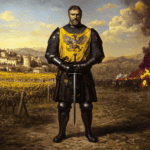
The early fourth century was a time of chaos in the Roman world. The power-sharing system known as the Tetrarchy, established by Diocletian, had crumbled, leaving several contenders vying for the imperial throne. Constantine, ruling Britain, Gaul, and Spain, was determined to challenge Maxentius, the self-proclaimed emperor of Italy and Africa. Despite being outnumbered – Constantine commanded around 40,000 troops to Maxentius’s 100,000 – the stage was set for a dramatic showdown near Rome, at the Milvian Bridge, a vital crossing over the Tiber River.
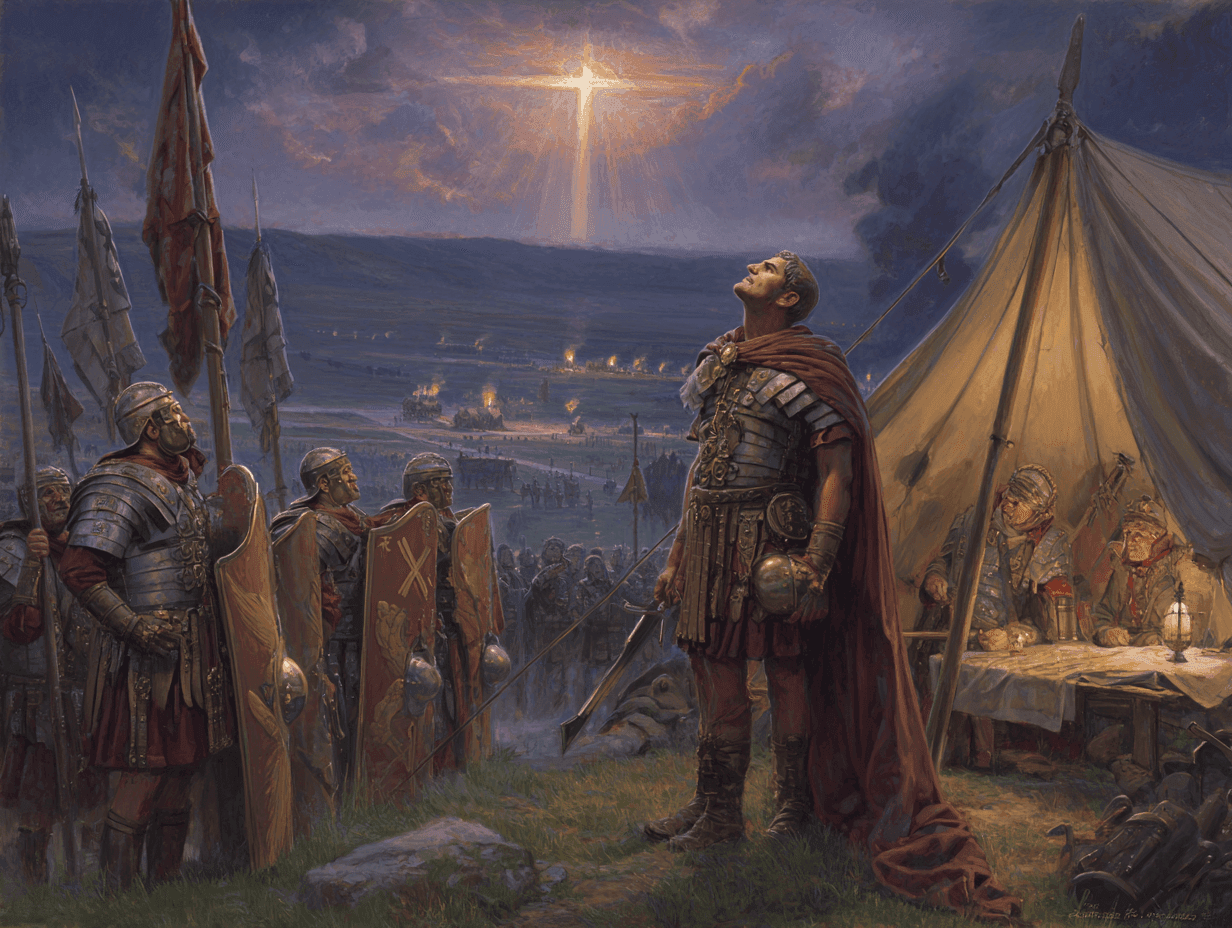
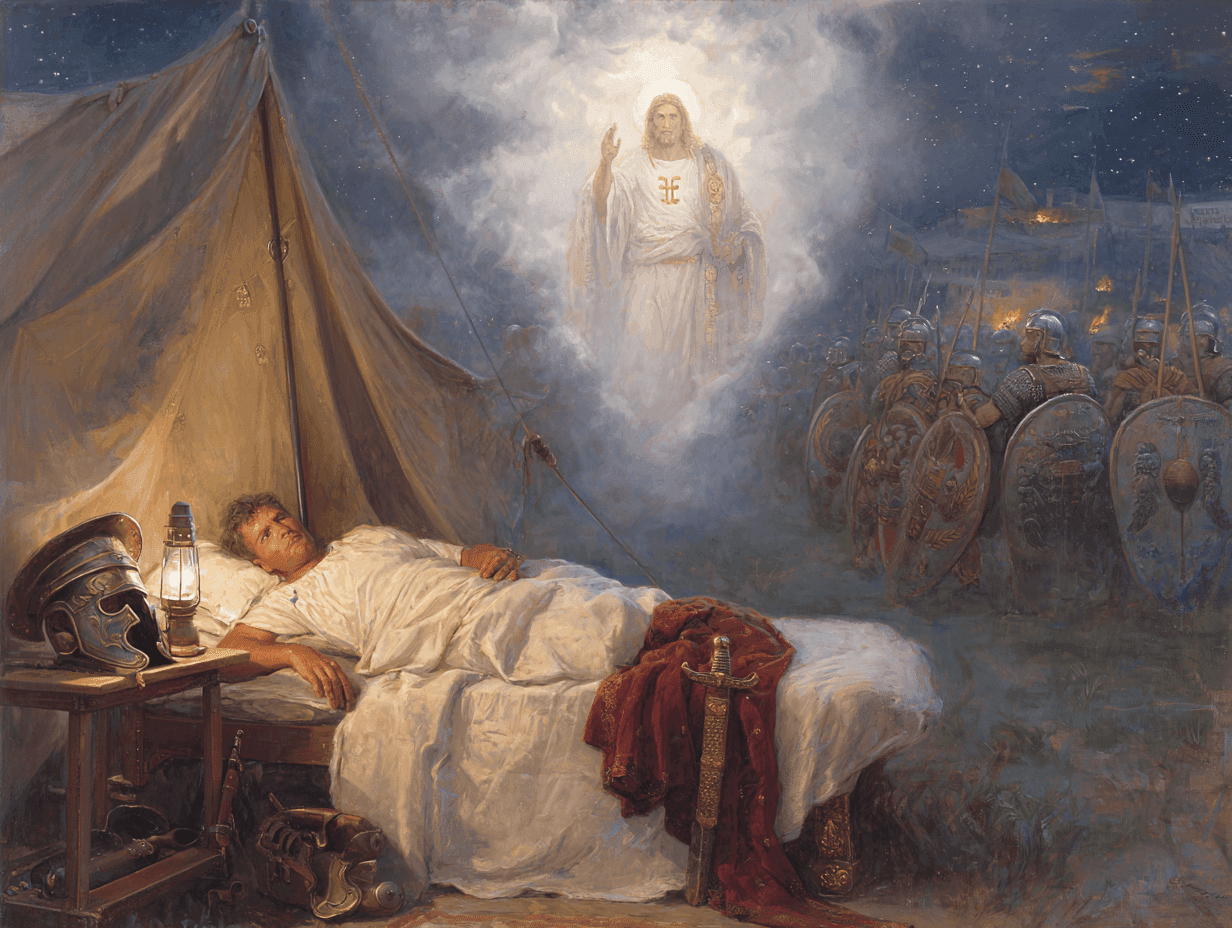
The battle’s enduring fame owes much to the legend that Constantine experienced a divine vision on the eve of combat. According to Christian chroniclers Eusebius and Lactantius, Constantine saw a cross of light above the sun, accompanied by the words “In this sign, conquer.” That night, he dreamed that Christ himself instructed him to mark his soldiers’ shields with the Christian symbol, the Chi-Rho. Inspired, Constantine ordered these emblems painted on his standards, believing he was fighting under divine protection.
Maxentius, perhaps emboldened by omens, oracles and numerical superiority, left the safety of Rome to meet Constantine in open battle – a surprising decision, as he had previously succeeded by holding out behind the city’s walls. The two armies met on the plain above the Tiber. Constantine’s cavalry struck first, breaking through Maxentius’s horsemen. As the infantry pressed forward, Maxentius’s forces began to fall back toward the river despite their numerical advantage.
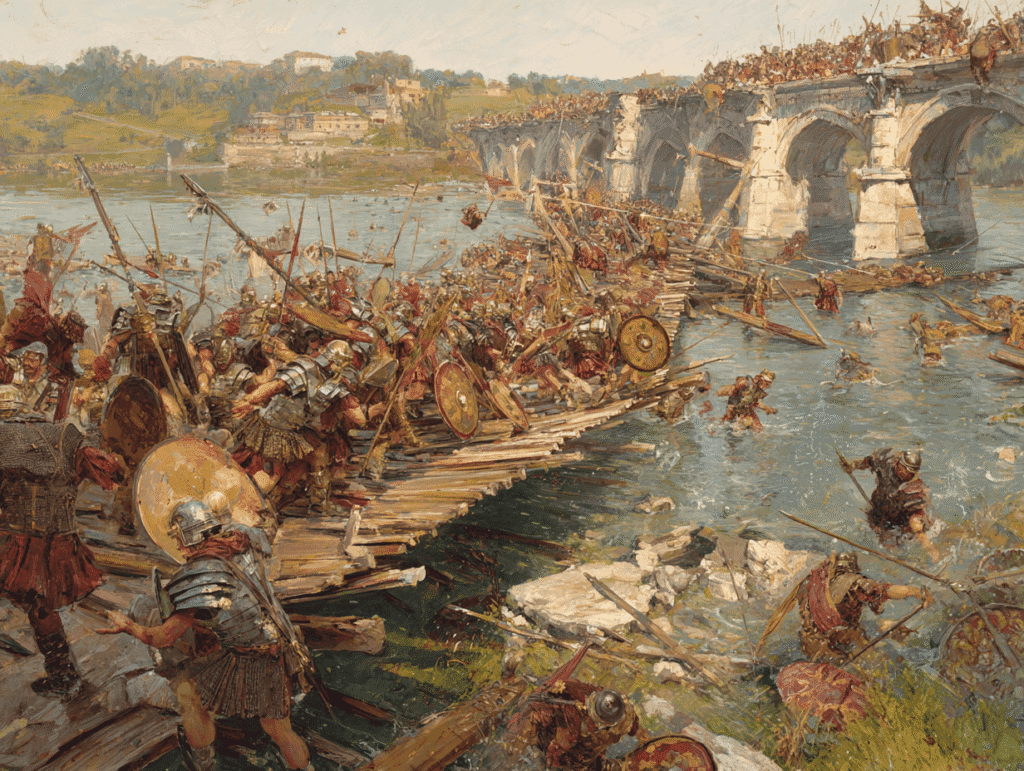
The retreat turned into a rout. Maxentius’s troops, desperate to escape, crowded onto a hastily constructed pontoon bridge beside the Milvian Bridge. The structure collapsed under the weight, plunging soldiers into the river. Maxentius himself drowned in the Tiber, his body later fished out, decapitated, and his head paraded through Rome as a grim trophy.
Constantine’s victory was total. He entered Rome as the undisputed ruler of the Western Roman Empire, marking the end of the Tetrarchy and the beginning of a new era. The battle’s significance, however, extended far beyond military or political triumph.
The Edict of Milan: Content and Context
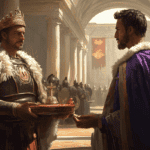
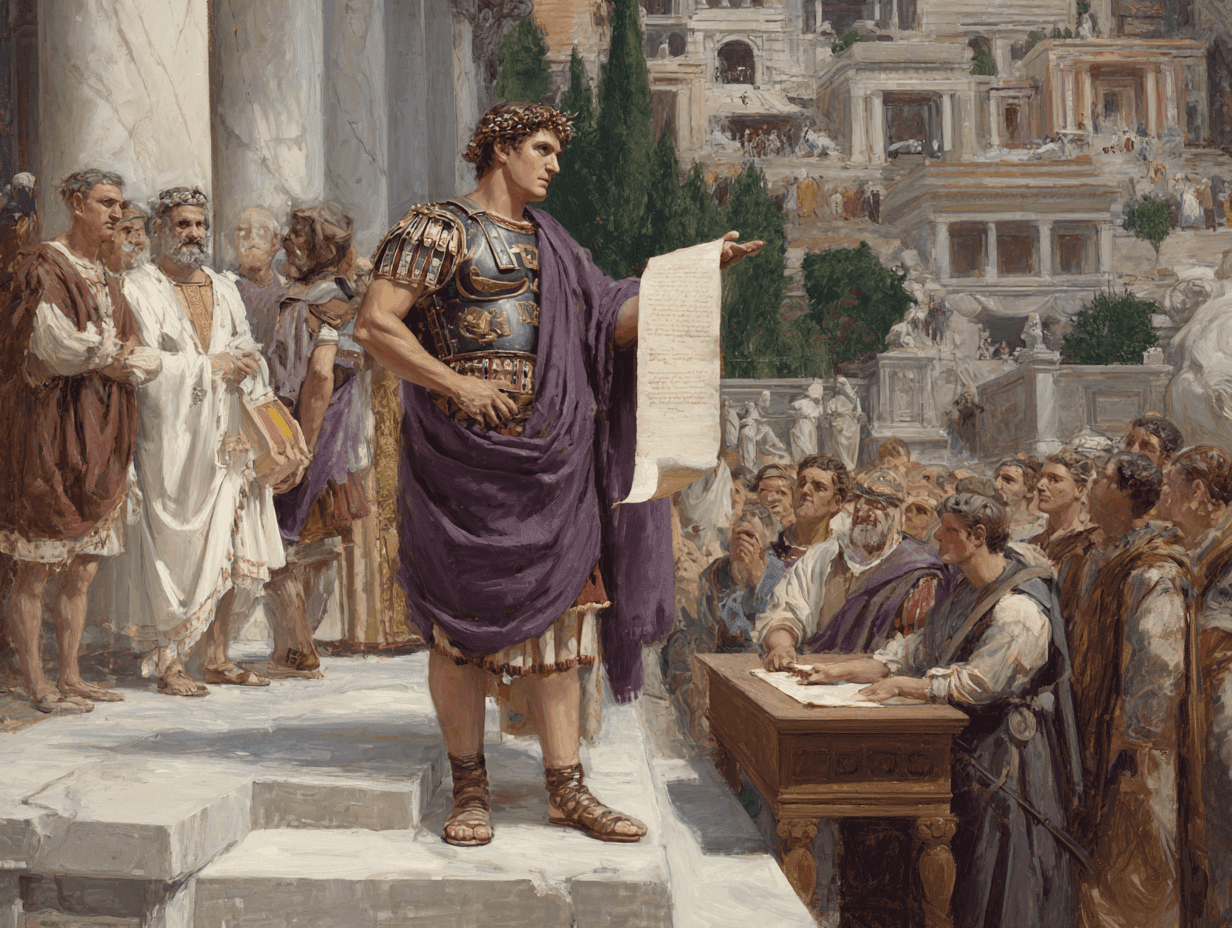
In February 313 AD, Constantine, now the Western Roman Emperor, met with Licinius, the Eastern Emperor, in Milan (Mediolanum). Their meeting coincided with Licinius’ marriage to Constantine’s sister, Constantia, symbolizing both political alliance and a shared vision for the empire’s future. The outcome was a joint proclamation, commonly referred to as the Edict of Milan, though it was more accurately a letter or communiqué than a formal edict.
Key Provisions
The Edict of Milan was revolutionary in several respects:
- Religious Freedom: It granted “both to the Christians and to all people the uninhibited right of following the religion which each desires,” establishing a general policy of religious tolerance.
- Restoration of Property: All properties confiscated from Christians during the persecutions were to be returned, including places of worship and private homes.
- Legal Recognition: Christianity was recognized as a lawful religion, ending its status as an illicit cult and protecting its adherents from further persecution.
- Universal Application: The edict’s provisions applied not only to Christians but to all religious groups within the empire, reflecting a broader commitment to civic harmony and religious coexistence.
The Text and Its Authors
Authorship and Authenticity
The Edict of Milan was issued jointly by Constantine and Licinius, as confirmed by contemporary historians Eusebius and Lactantius. Both emperors actively participated in drafting and promulgating the document, ensuring its application across their respective domains. While some scholars debate whether it was a formal “edict” or a rescript (imperial letter), its legal and practical effects were clear and immediate.
Licinius’ version of the edict, in particular, emphasized that true faith could not be compelled by force – a principle articulated by the Christian philosopher Lactantius, who argued that “God wishes to be adored by people who are free”. This idea would resonate throughout Western thought, establishing a foundation for the concept of religious liberty.
Immediate Impact
End of Persecution
The Edict of Milan marked the official end of state-sponsored persecution of Christians in the Roman Empire. Christians were released from prisons, and their leaders emerged from hiding to reclaim their communities and rebuild their churches.
Restoration and Growth
The restoration of confiscated property allowed Christian communities to recover economically and socially. Churches were rebuilt, and Christian worship became a public, legally protected activity. Constantine himself would go on to sponsor the construction of grand basilicas and support the church financially.
Religious Pluralism
Importantly, the edict did not establish Christianity as the official state religion – that would come later under Emperor Theodosius. Instead, it created a pluralistic environment in which all religions could be practiced freely, provided they did not threaten public order or imperial authority. This was a remarkable departure from the traditional Roman expectation that citizens participate in state cults as a demonstration of loyalty.
Long-Term Significance
The Edict of Milan fundamentally altered the religious landscape of the Roman Empire. Christians, once a persecuted minority, now enjoyed imperial favor and legal protection. Within a few decades, Christianity would become the dominant religion of the empire, shaping its laws, culture, and institutions.
Despite its groundbreaking nature, the Edict of Milan was not an unqualified guarantee of religious freedom. The freedoms it granted were conditional; religious practices were expected to support the stability of the Roman state. Moreover, the edict’s humane provisions were sometimes ignored or undermined in practice, especially as Christianity gained ascendancy and later emperors imposed restrictions on pagan worship.
The edict also marked the beginning of a complex relationship between church and state. While it protected religious freedom, it also entangled the Christian church with imperial power. Bishops and emperors would increasingly collaborate – and sometimes clash – over theological and political matters, setting the stage for centuries of church-state interaction.
The principles embodied in the Edict of Milan – especially the idea that faith should not be coerced – echoed through Western history. Though often ignored or violated in subsequent centuries, the edict’s commitment to religious liberty influenced later developments, from the Reformation to the Enlightenment and the modern concept of human rights.
Quotations from the Edict
“When I, Constantine Augustus, as well as I, Licinius Augustus, fortunately met near Mediolanum (Milan), and were considering everything that pertained to the public welfare and security, we thought… that it was proper that the Christians and all others should have liberty to follow that mode of religion which to each of them appeared best…”