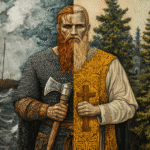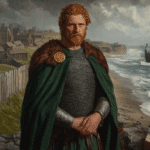
In the annals of Scandinavian history, few figures stand as tall or as enduring as Saint Olaf II Haraldsson, better known simply as Olaf or Saint Olaf. His life, death, and eventual canonization are intertwined with the development of Norway’s identity, the spread of Christianity in Scandinavia, and the powerful transformation of a pagan world into a Christian one.
The Rise of Olaf II Haraldsson
To understand the significance of the Battle of Stiklestad, one must first understand the man at the heart of the story: Olaf II Haraldsson. Born around 995 CE in Norway, Olaf’s early life was marked by the turbulence of Viking raids, internal strife, and the slow yet steady conversion of Scandinavia to Christianity. Olaf’s father, Harald, was a nobleman who ruled a region of Norway, and Olaf’s mother was a Christian princess, which played a crucial role in shaping Olaf’s own future.
In the early 1010s, Olaf traveled across Europe, joining various Viking expeditions that took him as far as England and Normandy. During this time, he not only gained experience in battle but also established himself as a leader among other young warriors. This period of Olaf’s life in foreign lands was crucial in shaping his worldview and military outlook. It is believed that during this time, Olaf learned the art of governance and battle tactics from influential Viking leaders and even Christianized monarchs, such as the rulers of England.
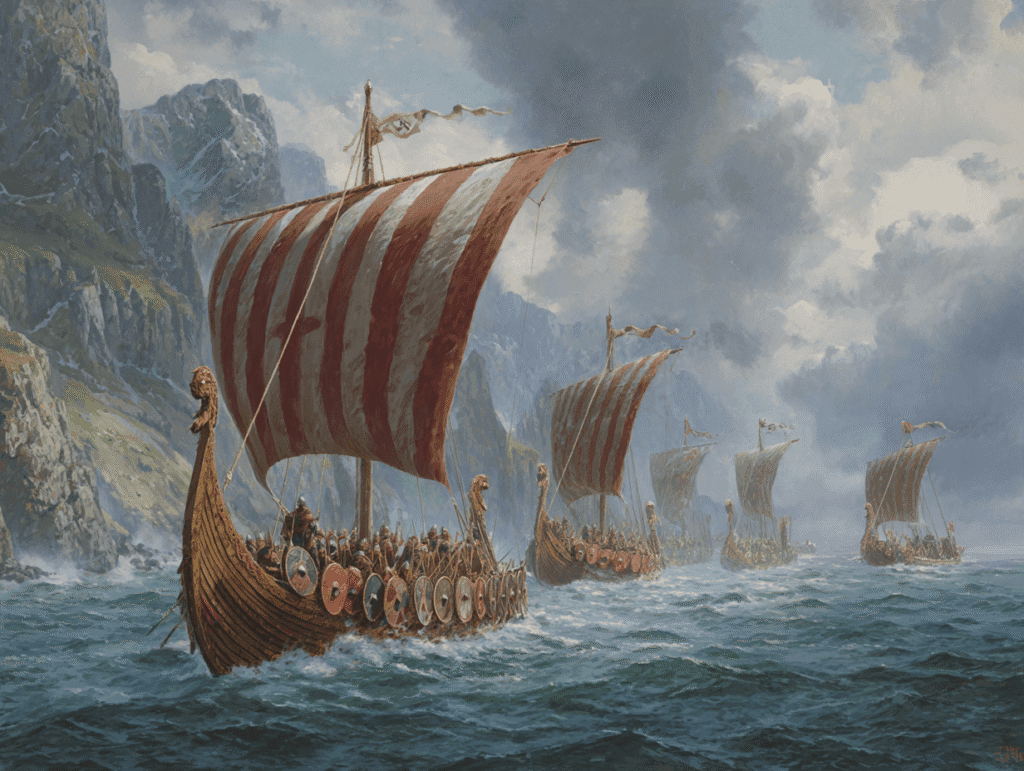
Olaf’s first significant military role came in 1013, when he joined the Viking army of his distant relative, the famed Danish king Sweyn Forkbeard. Sweyn had ambitions to conquer England and secure a Viking stronghold there, and Olaf participated in these campaigns, fighting against Anglo-Saxon forces. His leadership and fierce combat abilities in these engagements earned him respect among his fellow Vikings and helped lay the foundation for his future ambitions in Norway.
Upon returning to Norway, Olaf sought to solidify his power by both conquering and unifying the fractured kingdom. His ambitious vision involved converting his subjects to Christianity, a process that would clash with the deeply rooted pagan beliefs of many Norwegians.
Olaf’s Reign and Christianization of Norway
Olaf’s reign as king of Norway (1015-1030) was marked by his fierce determination to impose Christianity upon his kingdom. In the process, he earned the nickname “Olaf the Saint” long before he was formally canonized by the Church. While some of Olaf’s subjects welcomed Christianity as the new faith, many were resistant, preferring the older Norse gods and their traditional customs. Olaf’s aggressive tactics in promoting Christianity led to numerous conflicts with the pagan aristocracy and even his own allies. His reign saw the establishment of churches, the construction of monasteries, and the Christianization of key regions, but it also sowed the seeds of rebellion.
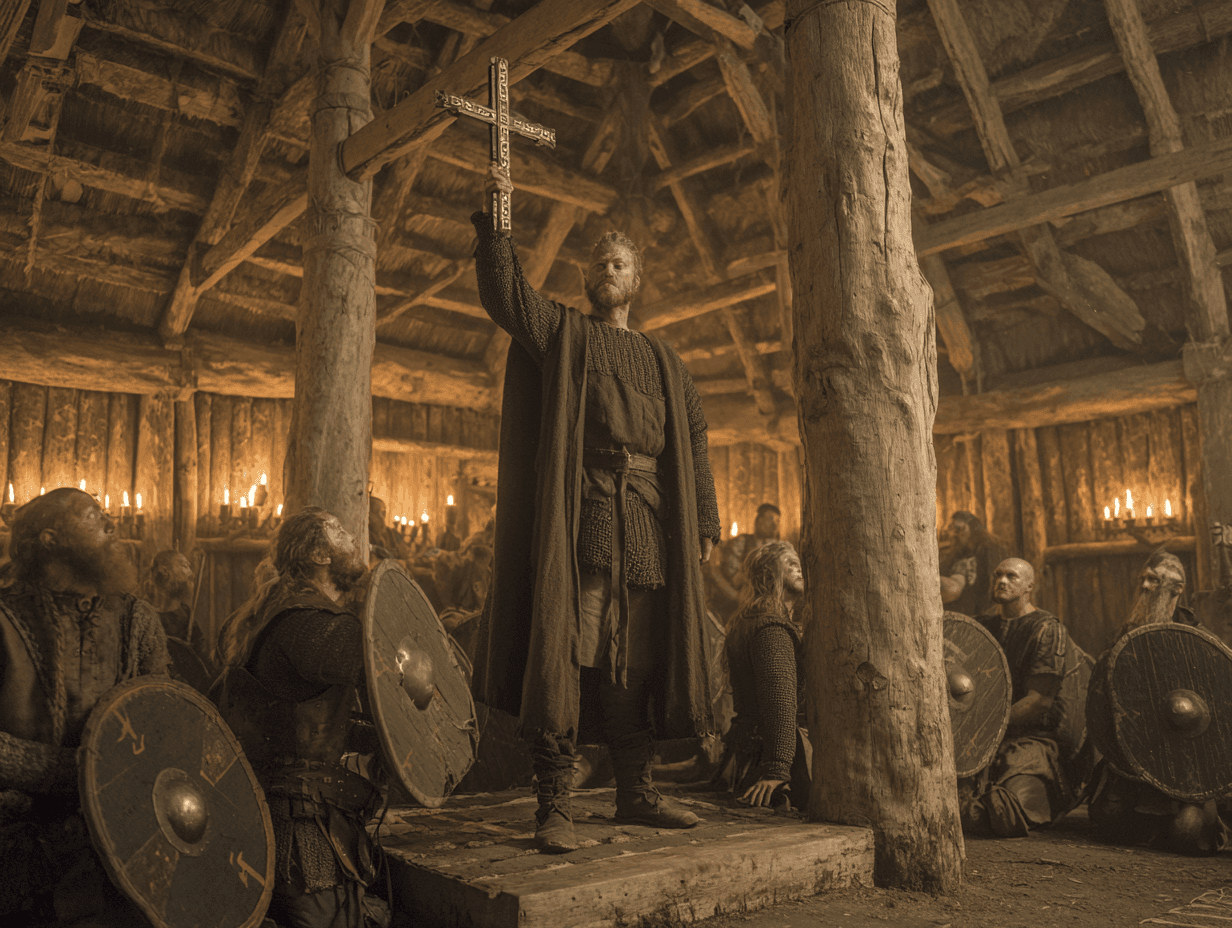
The king’s efforts to impose Christianity, including the destruction of pagan shrines and the forced conversion of peasants, led to widespread resentment. The reactionary forces that opposed Olaf’s rule were made up of various factions: the nobility who had much to lose under his centralized Christian monarchy, the old Norse religious leaders, and even some of his former allies. His power began to wane in the face of growing opposition; Olaf’s zealousness in converting Norway would prove to be both his greatest strength and his eventual undoing.
The Events Leading to Stiklestad
In 1028, Olaf II Haraldsson was forced into exile in Russia after he was overthrown by a coalition of Norwegian nobles and their allies. This exodus would prove to be a turning point in Olaf’s life. His exile did not lead him to abandon his goals of reclaiming his throne. Instead, it fueled his ambition to return to Norway and reconquer it, this time as a martyr for the Christian faith.
In 1029, Olaf returned from exile, supported by an army of Vikings, mercenaries, and loyalists. His return was not met with the triumph he had hoped for, as the Norwegian nobles and their Scandinavian allies had already consolidated their power under the leadership of the Danish king, Canute the Great, who was also king of England and Denmark. Canute’s empire represented a significant threat to Olaf’s ambitions, and Canute’s influence had reached Norway, where his rule was solidified by his control over key parts of the country. Olaf’s return to Norway thus marked the beginning of a period of open rebellion and political upheaval.
A series of skirmishes and battles ensued, with Olaf’s forces engaging those of the local nobles and Canute’s supporters. The situation was dire for Olaf, who faced growing opposition from the very people he had once ruled. Despite his efforts to rally the people around him, Olaf’s army, which had once seemed invincible, began to falter. The final confrontation was inevitable.
The Battle of Stiklestad
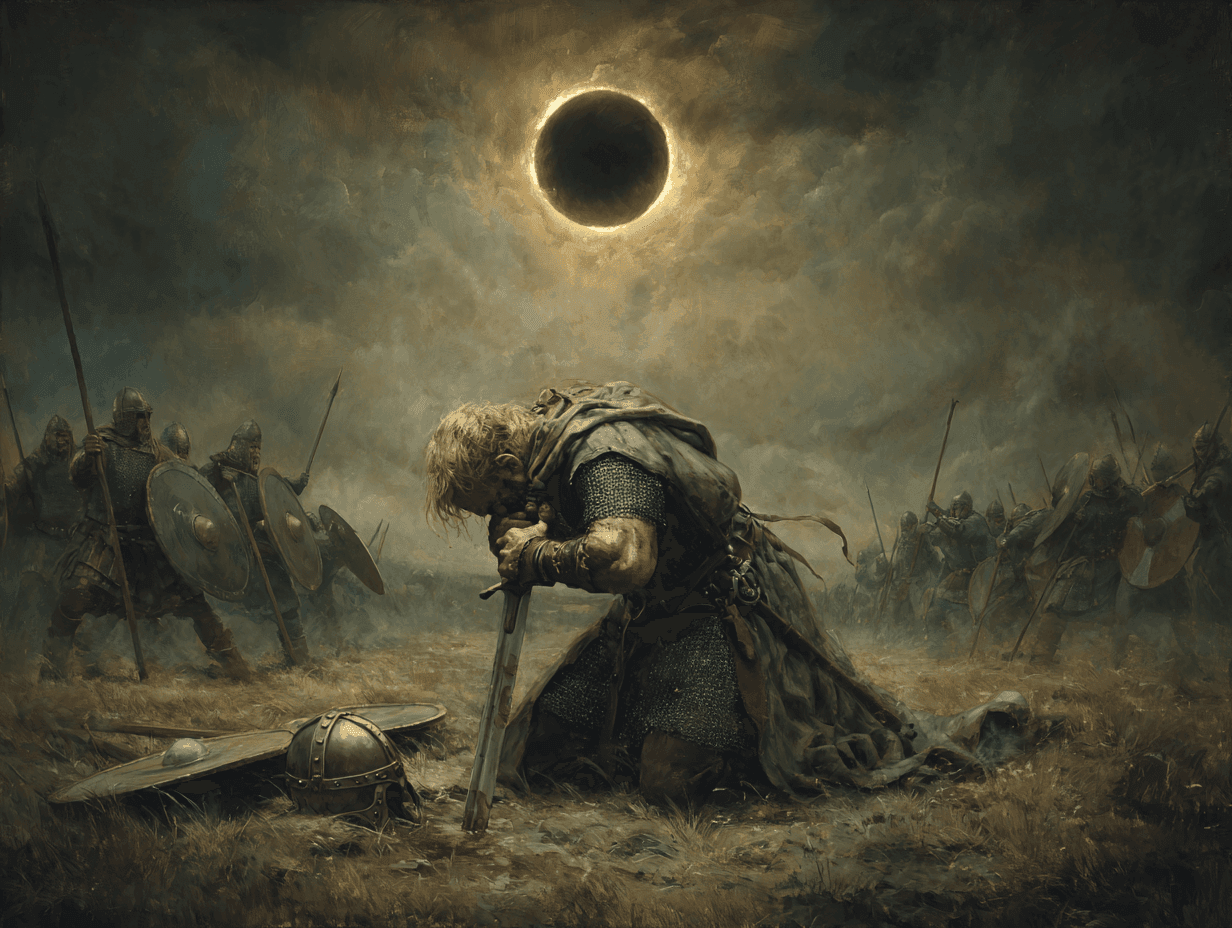
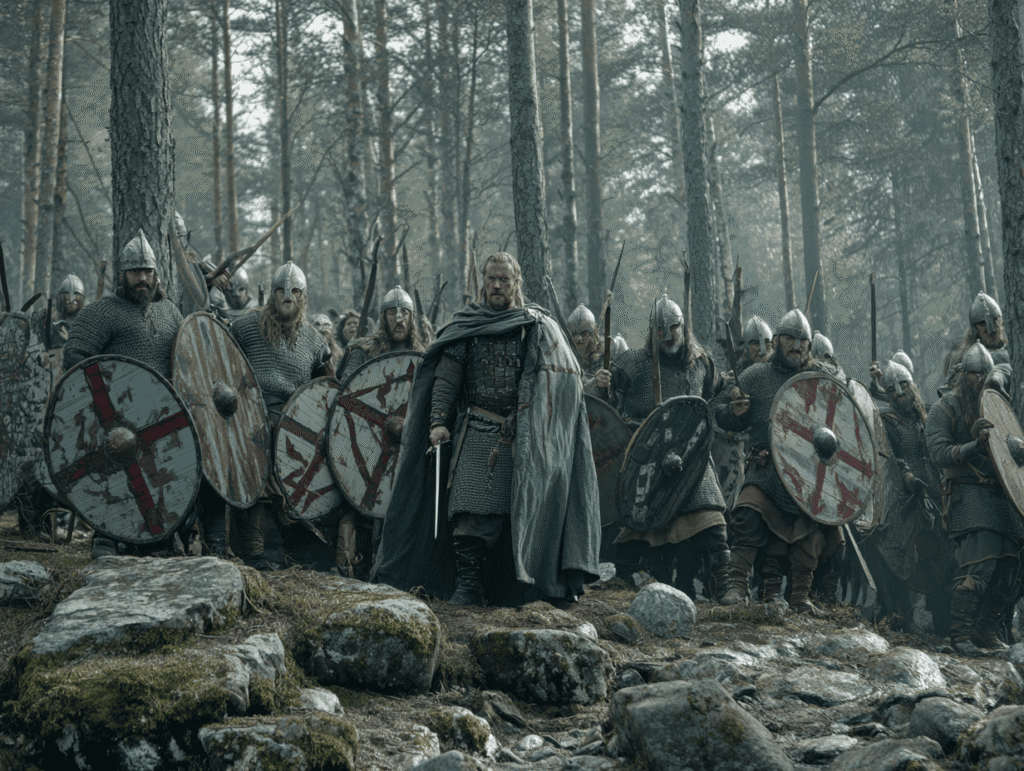
On the 29th of July 1030, Olaf and his forces faced off against a much larger army at the Battle of Stiklestad, a conflict that would become a turning point in Norwegian history. The battle took place in a small village in central Norway, where Olaf’s forces clashed with the combined forces of the Norwegian nobility, led by the jarl (duke) Svein, and the armies loyal to King Canute. The outcome was devastating for Olaf and his men.
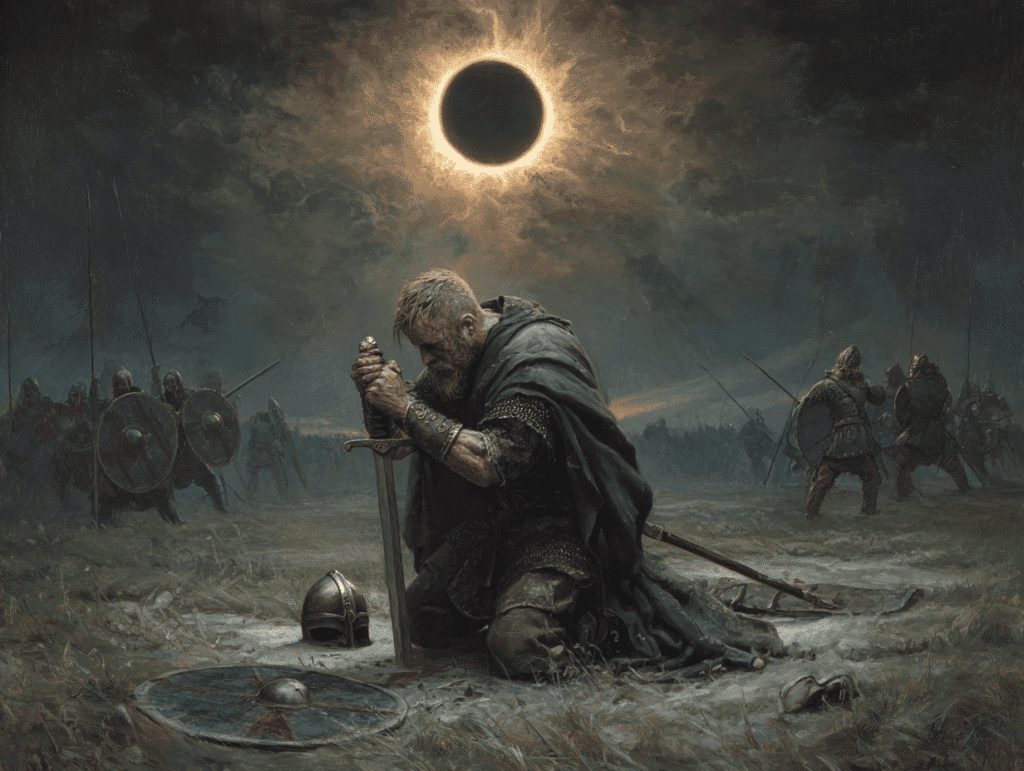
Olaf’s forces were heavily outnumbered and outmatched by the opposition. The battle was fierce, with Olaf himself fighting bravely at the front of his men. According to sagas and later accounts, Olaf’s legendary bravery inspired his soldiers, but it could not prevent the inevitable. Despite their valiant efforts, Olaf’s forces were defeated, and Olaf himself was killed in battle. His body was left on the battlefield.
The battle marked the end of Olaf’s reign and his brief attempt at reclaiming the throne. His death was a blow to his supporters and the Christian cause in Norway. But in the days that followed, something remarkable happened: Olaf’s death began to take on a new significance.
Olaf’s Canonization and Legacy
Although Olaf was defeated at Stiklestad, his death marked the beginning of a powerful new phase in his life: his transformation into a martyr and saint. Following his death, miracles were reported at his tomb, and his followers began to venerate him as a holy figure. His body was exhumed and found to be incorrupt, further fueling the belief in his sanctity. His tomb became a pilgrimage site, and the movement to canonize him gained momentum.
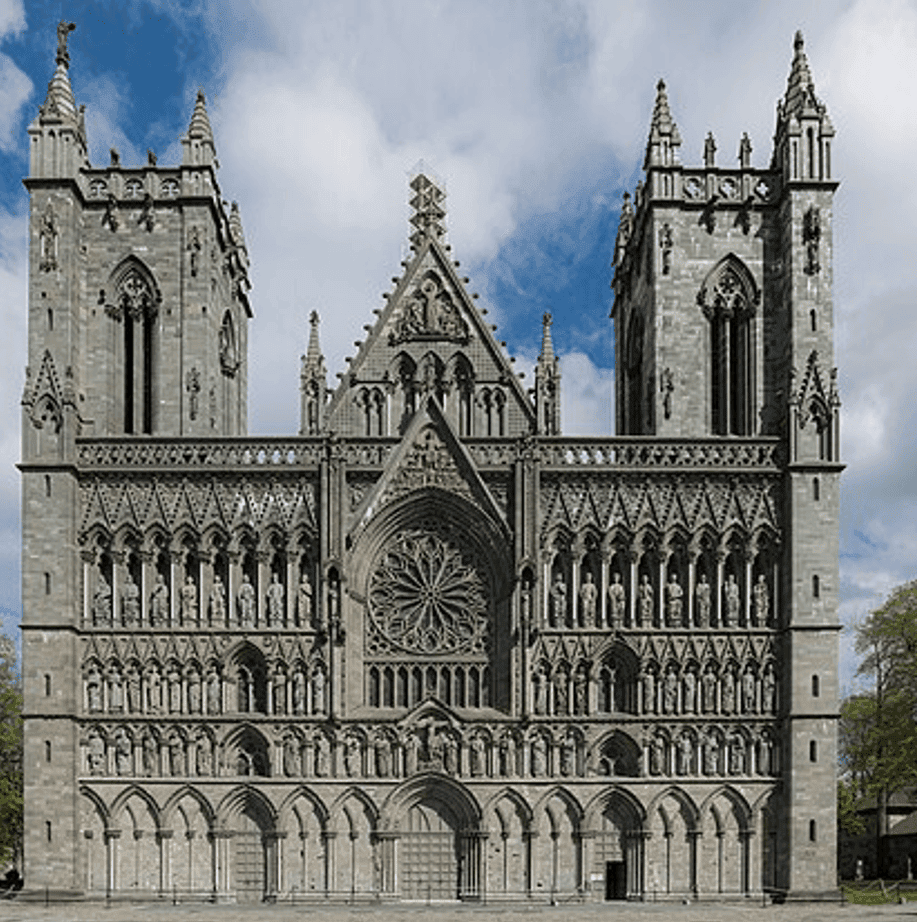
In 1031, just one year after his death, Olaf II Haraldsson was officially declared a saint by the pope, and his canonization spread throughout Europe. His legacy grew exponentially, and he became one of the most revered saints in Scandinavia. The transformation of Olaf from a king who had been overthrown and killed in battle to a saint with a cult following was nothing short of extraordinary.
The impact of Olaf’s canonization was profound. Norway, once a land divided by paganism and Christianity, now saw its Christian identity fully cemented, with Olaf as its patron saint. Over the centuries, Olaf’s legacy continued to grow. He became a symbol of national unity and a representation of the ideal Christian king. His death at Stiklestad, though tragic, paved the way for the widespread acceptance of Christianity in Norway and the gradual Christianization of Scandinavia.
Moreover, Olaf’s influence extended far beyond Norway. He became a symbol of Christian kingship and an inspiration to other European monarchs who sought to emulate his combination of religious zeal and political ambition. His image appeared in churches across Europe, and his feast day on July 29th became an important religious observance in many parts of Christendom.