The Vikings profoundly shaped the development of Ireland, leaving a legacy that touched every aspect of Irish society from the late eighth to the twelfth centuries. Their impact extended far beyond the image of marauding invaders, fundamentally transforming Ireland’s cities, economy, culture, and even genetics.
The First Viking Encounters
The Viking Age in Ireland began with sudden, violent raids on monastic settlements and coastal communities starting in 795 CE, targeting the wealth concentrated in isolated religious centers. Irish monasteries were the prime marks – repositories of illuminated manuscripts, gold, and treasure. The initial assaults sent shock waves through the fragmented political landscape of early medieval Ireland, which was then a patchwork of rival kingdoms and church lands.
The surprise attacks and hit-and-run tactics were devastating. Irish sources, like the Annals, report scenes of terror and destruction – churches torched, monks slaughtered or enslaved, relics plundered. Yet these early Viking forays marked only the beginning of far-reaching transformation.
From Raiders to Settlers: Founding the First Towns
By the mid-ninth century, Viking ambitions in Ireland extended beyond pillage. They began to establish fortified encampments known as longphorts, which evolved into permanent settlement sites. Dublin, Waterford, Cork, Limerick, and Wexford all began as Viking foundations – making them the first genuine towns in Ireland, as prior Irish society was overwhelmingly rural, with population focused on farmsteads, ringforts, and monastic sites.
- Dublin emerged around 841 CE as the principal Hiberno-Norse town, growing rapidly into one of the most important urban centers in all of the British Isles.
- Waterford followed in 914, representing another key node in the Viking trade network.
- Cork, Limerick, and Wexford similarly rose as major commercial ports, facilitating exchange throughout Europe and integrating Ireland into the broader Norse world.
These new towns brought unprecedented changes – urbanism itself, new crafts and technologies, and a population mix that fostered innovation and hybridity.
Ireland’s Economic Revolution
Prior to the Viking Age, Ireland’s economy was dominated by cattle-based agriculture, rural exchange, and barter – there was little large-scale commerce or coinage. The Vikings introduced:
- Urban trading markets linking Ireland to Scandinavia, Britain, and beyond.
- Standardized weights and measures, as well as the use of coinage, especially in Dublin.
- Silver, gold, silk, and luxury goods from as far afield as Byzantium.
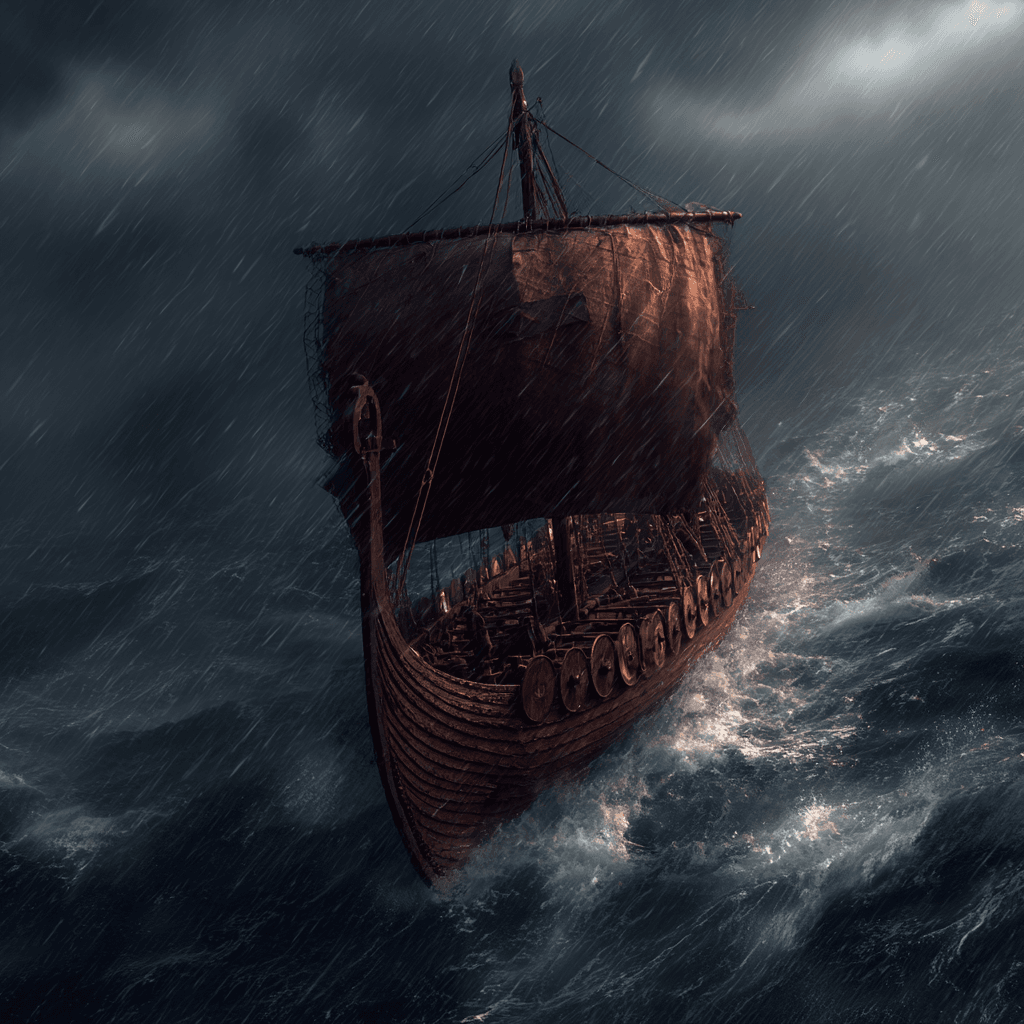
The introduction of Norse shipbuilding, particularly the longship, revolutionized Irish communication and maritime activity. Norse vessels navigated the Irish Sea, establishing trade routes and ties with European and even Islamic markets.
Over time, Ireland’s economy became commercialized and outward-facing, moving from a system of localized power to one with international reach. The rise of these urban centers and trading hubs laid the infrastructure for later Irish economic development.

Political Upheaval and Hybrid Identity
Viking influence on Irish politics was disruptive but ultimately transformative. Norse incursions amplified the rivalries among Irish kings, sometimes weakening native rulers but also offering them new opportunities:
- Alliances between Norse rulers and Irish kings were common—Dublin kings frequently played local factions against one another.
- Norse-Gaelic dynasties arose, blending Irish and Scandinavian kingship models. Notable figures like Sitric Silkenbeard, king of Dublin, bridged these worlds—founding churches and patronizing both traditions.
Dublin’s kings became powerbrokers, able to project force across the Irish Sea, into Northumbria, or as far as the Isle of Man.
The Vikings did not simply conquer and assimilate; they and the Irish merged in many respects, intermarrying and blending languages, customs, and legal traditions. The resulting Norse-Gaelic (Hiberno-Norse) identity gave rise to lasting lineages, with many modern Irish surnames—such as Doyle, MacAuliffe, and MacManus—revealing Viking roots.
The Battle for Ireland: Conflict and Integration
Despite episodes of bitter conflict – such as the infamous Battle of Clontarf in 1014, where Brian Boru’s forces clashed with Norse Dublin and its allies – the narrative of unceasing war is overstated. The reality was far more nuanced:
- Viking towns became centers not only of commerce, but also of cultural and religious life.
- Knights and churchmen from Scandinavia mixed with the Irish nobility and clergy, producing hybrid social orders.
- Eventually, many Norse settlers converted to Christianity and supported the construction of great churches – Christ Church Cathedral in Dublin being a major example.
Over time, these communities produced a society that was neither wholly Irish nor wholly Norse, but something unique in medieval Europe.
Cultural Legacy: Language, Law, and Bloodlines
The Vikings left an indelible imprint on Ireland’s cultural and linguistic landscape:
- Norse loanwords entered the Irish language, especially in the realms of trade, shipbuilding, and war.
- Place-names along the coast bear their mark: Wexford (“Veisafjǫrðr”), Waterford (“Vaðra fjǫrðr”), Strangford (from Old Norse for a strong or fast-currented fjord).
- Genetic studies reveal significant Scandinavian ancestry, especially among people from coastal regions and among those carrying surnames with Norse-DNA links.
- Artifacts and archaeological finds – ranging from grave goods to silver hoards – attest to the blending of artistic styles and burial practices.
The Church, too, changed: the organization of the Irish Church was influenced by urban parishes and cathedral-building modeled on broader Christian Europe. This helped pave the way for church reform in the eleventh and twelfth centuries.
Conclusion: Beyond the Stereotype
The old image of the Vikings as simply bloodthirsty raiders fails to capture the full scope of their impact on Ireland. Instead, they were catalysts of urbanism, commerce, and cultural exchange, agents of both conflict and integration who reshaped Irish society from the ground up.
Their influence persists in Ireland’s major cities, most of which began as Viking towns; in the language, art, and genetic makeup of the Irish people; and in the fabric of a nation that, through collision and fusion, became part of a wider European world.
The story of Vikings in Ireland is not one of destruction alone, but of profound transformation.