

Introduction: A River Runs Through History
In the year 938, the calm waters of the Bach Dang River became the unlikely stage for one of the most astonishing feats of military strategy in Southeast Asia. Ngo Quyen, a regional leader from Vietnam, turned the tides of history by defeating the powerful Southern Han dynasty of China in a brilliantly orchestrated ambush. His victory restored Vietnamese sovereignty after more than a millennium of domination under various Chinese dynasties and set the foundation for an independent nation-state in Vietnam.
Vietnam under Chinese Domination
To fully grasp the significance of Ngo Quyen’s victory, one must understand the long centuries of foreign rule that preceded it. Vietnamese history before 938 was dominated by cycles of resistance and subjugation under Chinese authority.
- Han Conquest of Nam Viet (111 BCE): Chinese dynasties began their centuries-long grip over Vietnam when the Han Empire conquered the ancient kingdom of Nam Viet in 111 BCE.
- Over a millennium of control: From the Han through subsequent dynasties including the Tang, China exerted administrative, cultural, and military control over the Red River Delta. The region was governed as a frontier province, and attempts were made to assimilate the local population into Chinese culture, laws, and traditions.
- Sparks of resistance: Periodically, uprisings broke out. The most famous included the revolt of the Trưng Sisters in 40 CE and the rebellion of Lady Triệu in the 3rd century. These uprisings, though crushed, became enduring symbols of resistance and pride.
By the early 10th century, cracks had begun to appear in Tang rule. Internal rebellions, weakening central authority, and localized autonomy began to flourish. Vietnamese leaders slowly recovered power, waiting for the moment to decisively reclaim independence.
The Rise of Ngo Quyen
Ngo Quyen was born in 897 in the province of Duong Lam (modern-day Hanoi). He grew up during a time of political transition as the Tang dynasty was collapsing in China, leaving local warlords to carve out their own domains.
Ngo Quyen rose through the ranks owing to both his military abilities and family connections. He married the daughter of Duong Dinh Nghe, a Vietnamese noble and governor who had asserted de facto independence from China. When Duong was assassinated by a rival, Ngo Quyen quickly consolidated his forces, rallied loyal supporters, and prepared to challenge not only domestic adversaries but also external threats from the Chinese Southern Han dynasty, which saw an opportunity to reclaim control over Vietnam.
Ngo Quyen was not simply a warrior. He was a leader who understood the aspirations of his people for self-rule, and he embodied both the patience and boldness needed to strike at the right moment.
Prelude to the Battle
In 937, the Southern Han emperor, Liu Yan, prepared to reassert Chinese dominion over the Vietnamese territories. The assassination of Duong Dinh Nghe had created instability, and the Han saw this as an opportune time to invade.
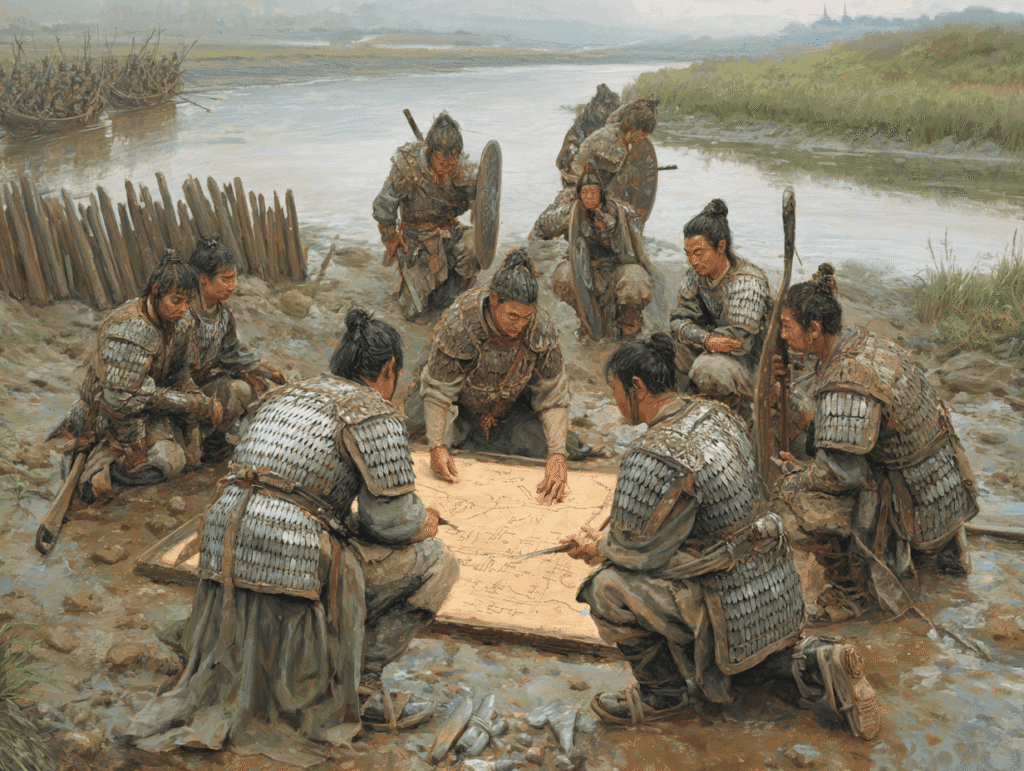
Ngo Quyen, however, anticipated their move. He prepared defenses along the Bach Dang River, a key strategic entry point to the Red River Delta. The river was broad, tidal, and treacherous for navigators unfamiliar with its currents – a perfect battleground for an audacious plan.
Ngo Quyen devised a strategy that put terrain and timing on his side. He ordered his men to plant large wooden stakes tipped with iron into the mud beneath the water at low tide. When the tide rose, the stakes disappeared beneath the surface, making the river look deceptively safe for navigation.
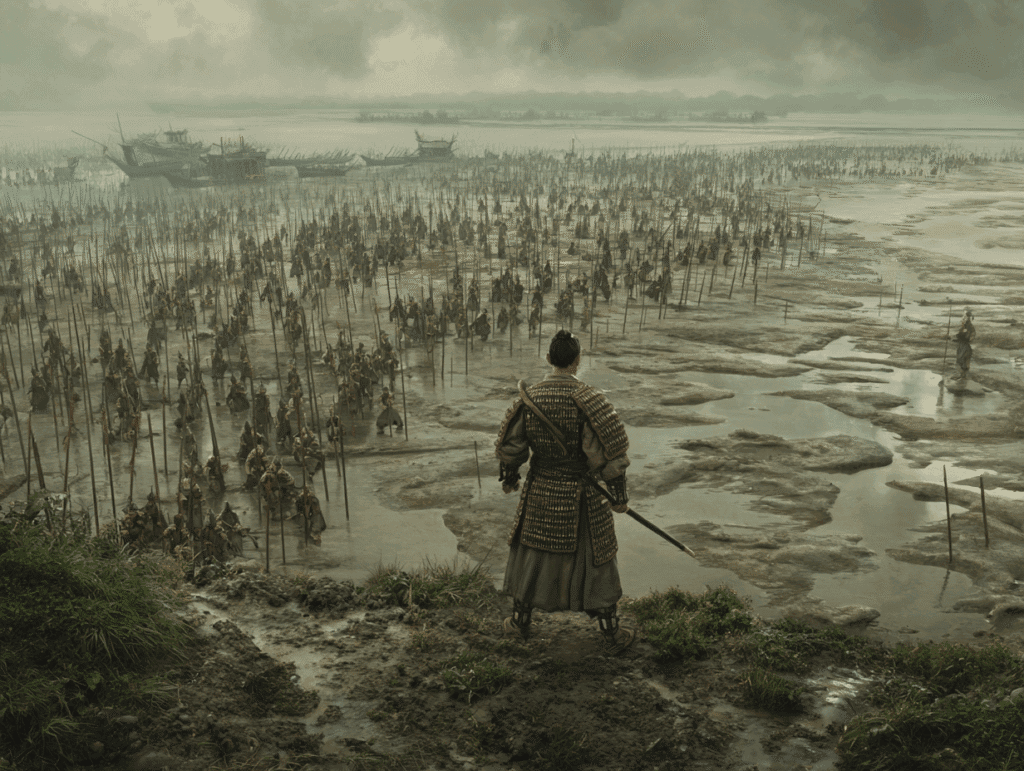
With his trap set, Ngo Quyen patiently awaited the arrival of the Southern Han fleet.
The Battle of Bach Dang (938)
As the Han navy advanced upriver, their warships moved confidently into what they thought was a straightforward river assault. Ngo Quyen deliberately allowed them to progress upriver, feigning weakness and retreat.
- Springing the trap: When the tide began to recede, the concealed wooden stakes emerged just enough to wreak havoc. Enemy ships became impaled, immobile, and entangled.
- The Vietnamese counterattack: At this decisive moment, Ngo Quyen launched his forces from both banks of the river. Swift Vietnamese boats, lighter and easier to maneuver, surrounded the stranded Han ships and pressed the attack.
- Total rout: The destruction was devastating. The Han navy was annihilated, and its commander, Liu Hongcao (the son of the Southern Han emperor), was killed during the battle.

By exploiting deep knowledge of geography and timing the tides precisely, Ngo Quyen turned nature into a weapon of war. What could have been a conventional battle instead became a legendary ambush that secured Vietnam’s independence.
Aftermath: The Dawn of Independence
The shock of the defeat reverberated throughout the Southern Han court. Emperor Liu Yan, devastated by the death of his son and the loss of his fleet, was forced to withdraw and abandon ambitions of reconquest.
For Vietnam, this meant a monumental shift. Ngo Quyen declared independence, effectively restoring Vietnam’s sovereignty after more than a thousand years of foreign domination. He established himself as king, ruling from Co Loa, a fortified stronghold near Hanoi.
Although his reign was relatively short (he died in 944), Ngo Quyen is widely regarded as the founder of the first truly independent Vietnamese dynasty. His victory at Bach Dang symbolized the beginning of Vietnam’s thousand-year journey as a nation-state navigating between powerful neighbors, always fighting to preserve its autonomy.

Cultural Memory and Symbolism
The Bach Dang River holds a near-mythical place in Vietnamese memory. It has become more than just a geographic location – it embodies the spirit of resilience, cleverness, and the unyielding desire for independence.
Historical chronicles such as Đại Việt sử ký toàn thư recount the victory with admiration while temples and monuments honor Ngo Quyen as a liberator of the Vietnamese people. Vietnamese literature, poetry, and folklore continue to invoke the imagery of the stakes in the river, representing both clever strategy and the rise of national consciousness.
The Long Shadow of Independence
While Ngo Quyen’s triumph marked independence, the centuries that followed were not without challenges. Internal divisions and rival warlords soon re-emerged after his death, plunging Vietnam into periods of instability. Yet, his victory served as a reminder of what independence meant and what could be achieved with unity and resolve.
Indeed, later dynasties, such as the Ly and Tran, would look back to Ngo Quyen as the progenitor of Vietnam’s sovereign statehood. His victory had set a precedent where independence was achievable and worth fighting for, even against seemingly insurmountable odds.
The Battle of Bach Dang in 938 was not merely a clash of fleets but a defining moment in Vietnamese history. Ngo Quyen’s ingenious use of the river and tides allowed a relatively small force to overthrow the might of a Chinese dynasty, ending centuries of foreign domination and opening the path for Vietnam to develop as an independent nation.