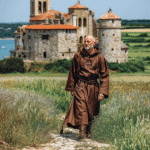
Saint Boniface, born Wynfreth around 675 in Anglo-Saxon England, emerged as a pivotal figure in the Christianization of Germania during the 8th century. His tireless efforts and unwavering dedication to spreading the Gospel earned him the title “Apostle to the Germans”.
Early Life and Call to Mission
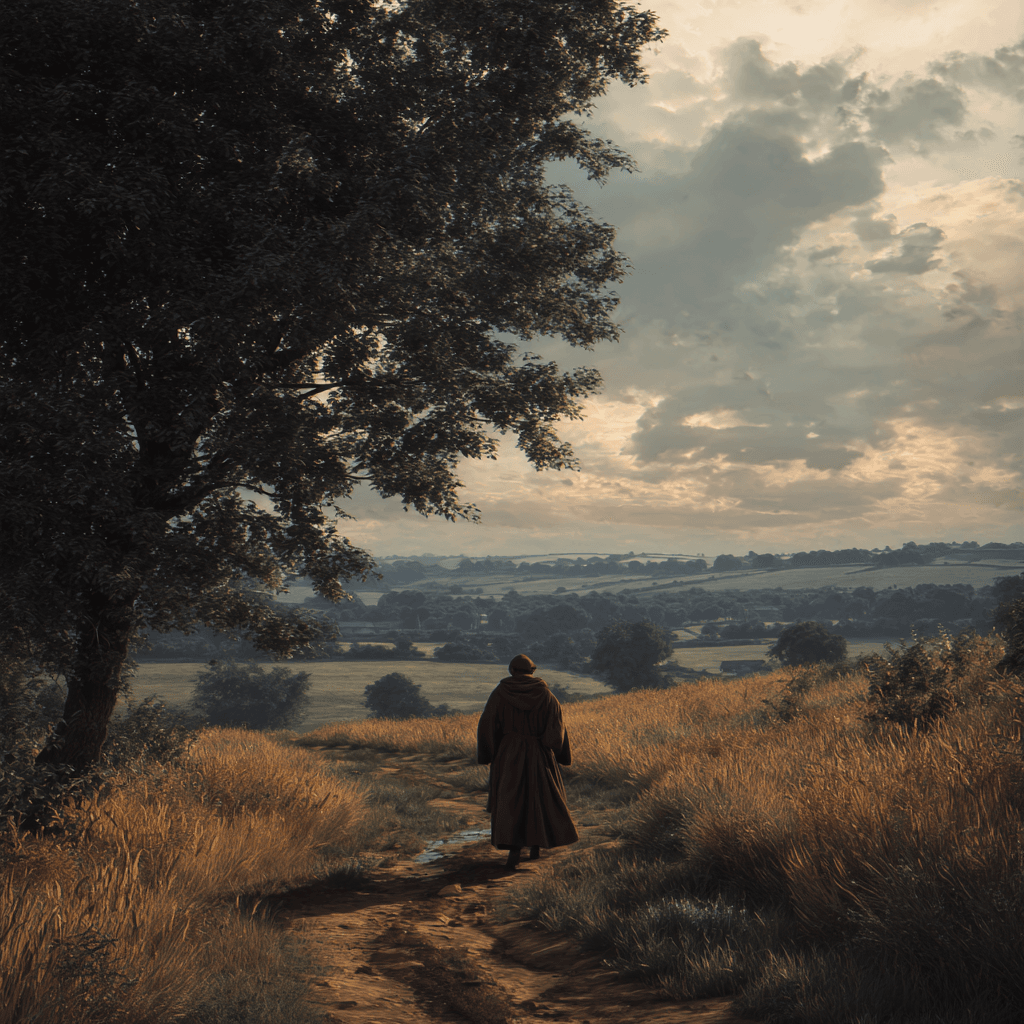
Boniface began his religious life as a Benedictine monk in England. However, his true calling lay beyond the shores of his homeland. In 716, he embarked on his first missionary journey to Frisia, modern-day Netherlands. This initial attempt was met with limited success due to the political unrest between Charles Martel and Radbod, King of the Frisians. Undeterred by this setback, Boniface returned to England, only to set out again the following year with renewed determination.
Papal Commission and New Identity
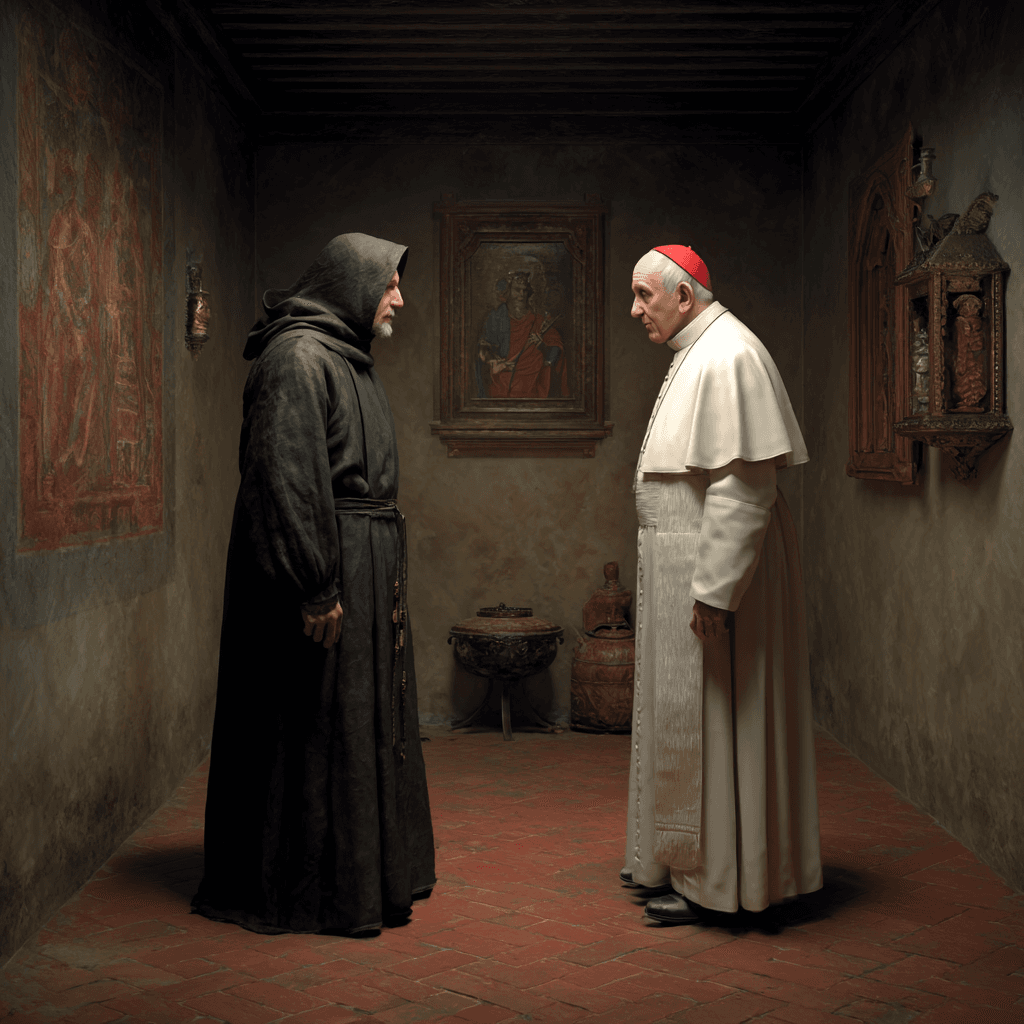
In 718, Boniface traveled to Rome to meet with Pope Gregory II. This meeting would prove to be a turning point in his life and mission. The Pope recognized Boniface’s potential and bestowed upon him a new name, changing it from Wynfreth to Boniface, after the 4th-century martyr Boniface of Tarsus. More significantly, the Pope appointed him as a missionary bishop for Germania, a vast region lacking any formal church organization.
Armed with his papal commission, Boniface returned to the continent in 719. He spent three years working alongside Willibrord, known as the “Apostle to the Frisians,” in Utrecht. This period allowed Boniface to gain valuable experience and refine his missionary techniques.
In 722, Boniface’s mission took a significant turn. Pope Gregory II consecrated him as a bishop and gave him a far-reaching papal commission to preach the Gospel to the peoples east of the Rhine. This marked the beginning of Boniface’s focused efforts in the Germanic lands.
The Felling of Thor’s Oak
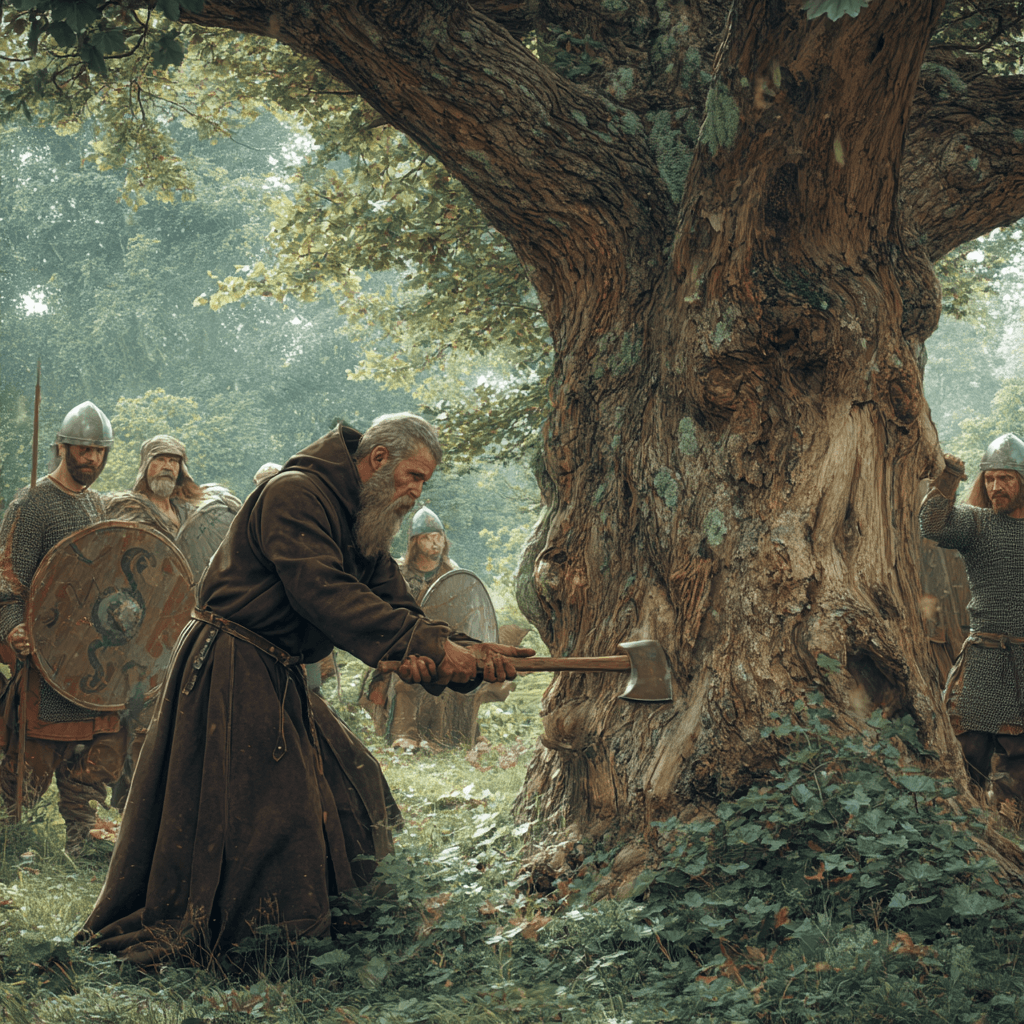
One of the most famous incidents in Boniface’s mission occurred at Geismar in Hesse. Here, Boniface took a bold and dramatic step to demonstrate the power of the Christian God over pagan deities. He felled an oak tree that was sacred to the Germanic god Thor.
This act was fraught with danger and symbolism. The local pagans believed that anyone who dared to harm the oak would be struck down by Thor’s wrath. Boniface, however, stood firm in his faith. As he began to chop down the massive oak, the gathered crowd watched in tense anticipation, expecting divine retribution at any moment.
To their astonishment, the tree fell without any supernatural intervention. This public demonstration had a profound impact on the witnesses. Many who saw this event converted to Christianity, recognizing the impotence of their former gods in the face of Boniface’s actions.
In a stroke of spiritual genius, Boniface didn’t stop at merely destroying the pagan symbol. He used the wood from the fallen oak to build a chapel dedicated to Saint Peter. This act symbolized the transformation of pagan beliefs into Christian faith and became a powerful metaphor for Boniface’s entire mission in Germania.
Establishing the Church in Germania
Boniface’s work went far beyond dramatic gestures. He systematically laid the foundations for a strong Christian presence in Germania. Under his leadership, numerous monasteries were established, staffed by English monks and nuns. These institutions served as centers of Christianity and civilization, playing a crucial role in the spread and consolidation of the faith.
Some of the notable monasteries founded during this period include: Amoneburg in Hesse, Fritzlar in Hesse and Ordruf in Thuringia. These monasteries became beacons of learning and spirituality in the newly Christianized lands.
Expanding Authority and Influence
Boniface’s success and dedication did not go unnoticed in Rome. In 732, Pope Gregory III sent him the pallium, a symbol of archiepiscopal authority. This elevated Boniface to the rank of archbishop and gave him the power to consecrate bishops for Germany beyond the Rhine.
With this increased authority, Boniface set about organizing the church structure in Germania. He founded several important bishoprics, including Erfurt, Buraburg and Wurzburg. These episcopal sees formed the backbone of the church’s administrative structure in the region, ensuring the continued growth and stability of Christianity in Germania.
Challenges and Perseverance
Despite his many successes, Boniface’s mission was far from easy. He faced numerous challenges and setbacks throughout his years in Germania. The pagan traditions were deeply ingrained in the local culture, and many converts found it difficult to fully abandon their old beliefs and practices.
Boniface’s letters to his fellow clergy in England reveal some of these struggles. He often sought advice, support, and additional missionaries to help in his work. The English church responded generously, sending books, vestments, relics, and additional missionaries to aid in the evangelization efforts.
However, political realities sometimes hindered Boniface’s progress. For instance, after Charles Martel’s defeat of the Saxons of Westphalia in 738, new opportunities for missionary work seemed to open up. But this particular opening soon closed, and it would be years later, under Charlemagne, before the Saxons were fully brought into the Christian fold.
Reform and Renewal
As Boniface’s work progressed, he recognized the need not only for initial evangelization but also for ongoing reform and renewal within the established Christian communities. In the 740s, he carried out significant reforms in the Christian communities in Gaul.
These reforms aimed to strengthen the faith of converts, eliminate lingering pagan practices, and ensure the proper conduct of clergy. Boniface was known for his strict adherence to canonical rules and his insistence on proper liturgical practices.
The Synod of Germania
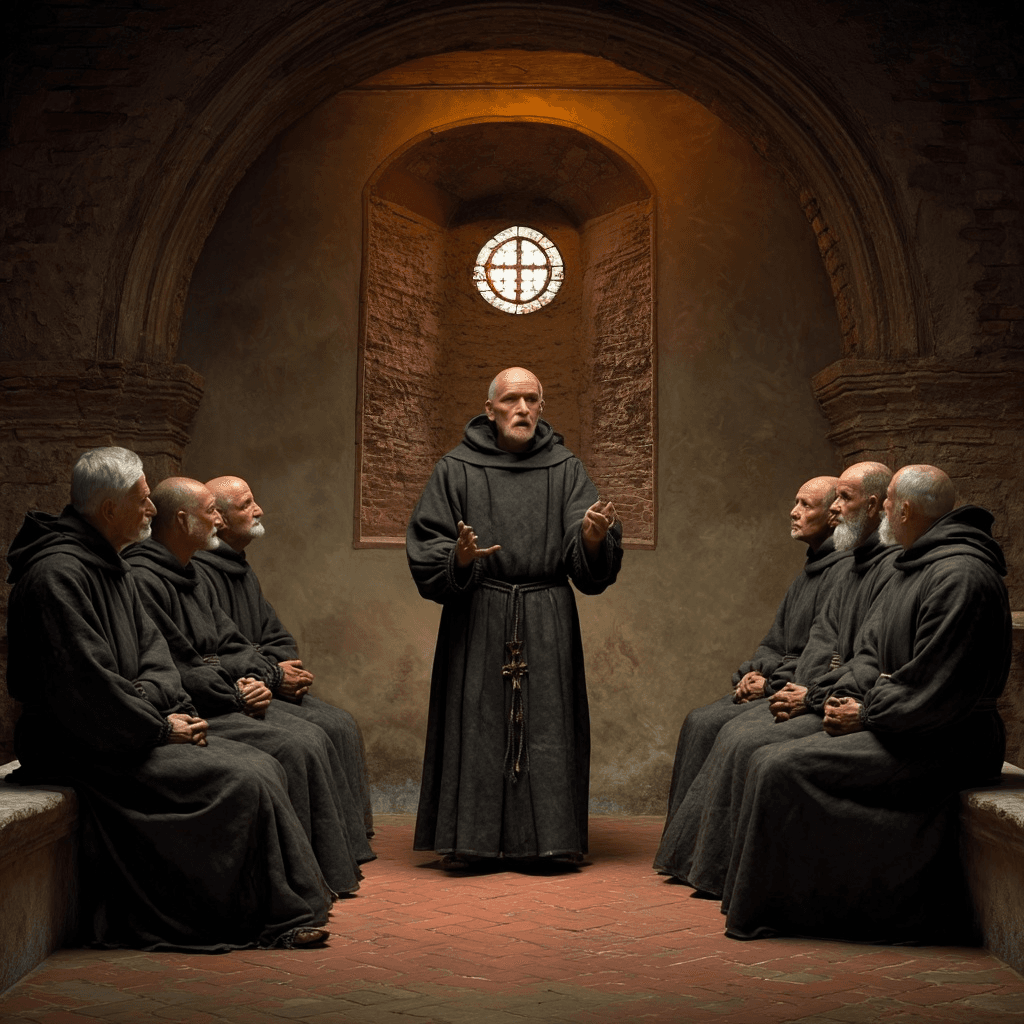
One of Boniface’s most significant contributions to the organization of the Church in Germania was the convening of the Synod of Germania. Using his authority as papal legate, Boniface summoned this synod for all Christian Germany.
The synod addressed various issues facing the young church in Germania, including: addressing problems of discipline among the clergy, combating lingering pagan practices among converts and standardizing liturgical practices.
This synod played a crucial role in unifying and strengthening the church in Germania, setting standards that would guide its development for years to come.
Later Years and Martyrdom
As Boniface entered his seventies, he might have been expected to retire from active missionary work. However, his zeal for evangelization remained undiminished. Concerned that many German converts were still clinging to pagan practices despite professing belief in Christ, Boniface decided to return to the field.
This final missionary journey took him back to Frisia, where he had begun his continental mission decades earlier. His goal was to “reconvert” those who had strayed from the true faith, emphasizing the centrality of Christ and the monotheistic nature of Christianity. Boniface had spent decades tirelessly converting pagan tribes in the Frankish realms and beyond, often risking his life to spread the Gospel in hostile territories. Yet, it was on what seemed to be a peaceful mission that he met his end.
On Pentecost Eve, he gathered with his companions near the River Borne, preparing for a mass baptism. Accounts describe a serene scene: tents pitched in a quiet field, scriptures and relics carefully arranged for the ceremony.
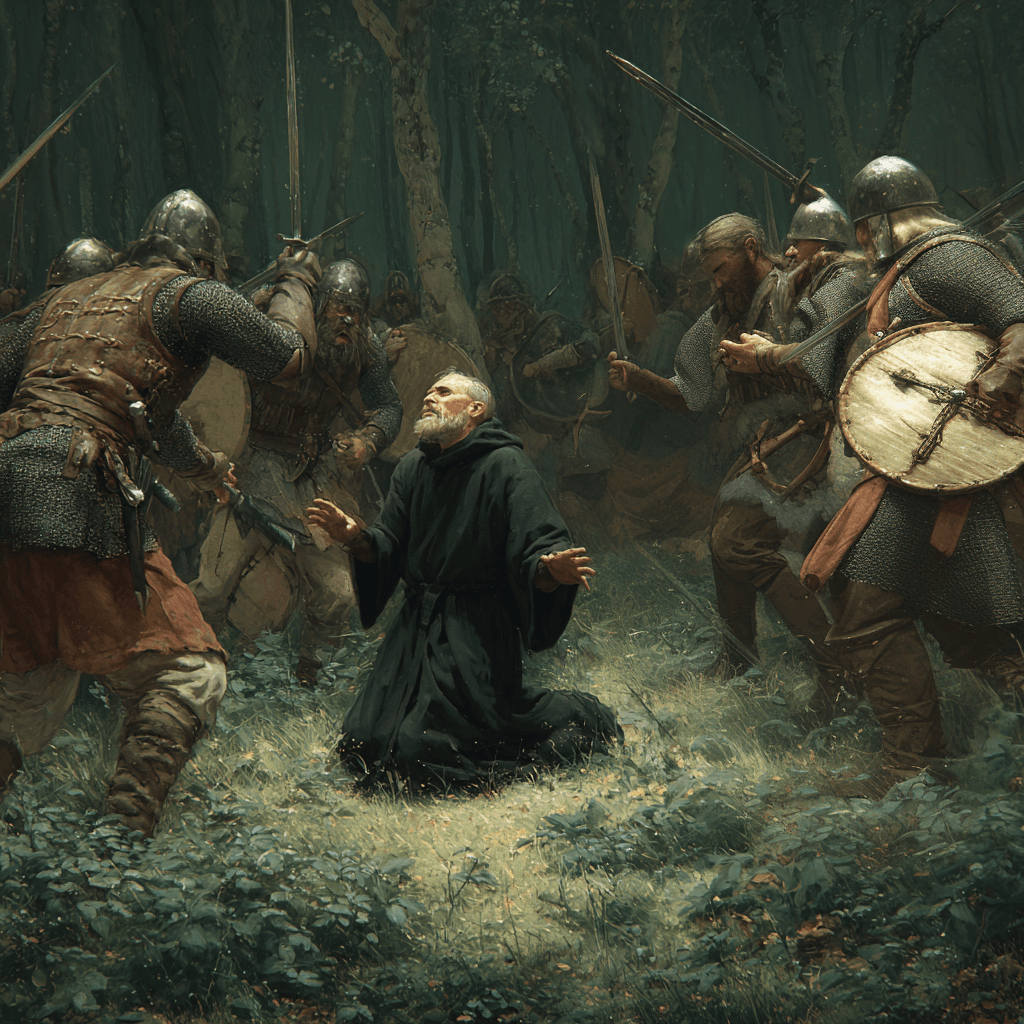
However, this peace was shattered by the arrival of a pagan raiding party. Whether driven by hostility toward Christianity, the allure of plunder, or both, the warriors attacked the camp. Boniface’s followers, many of them young clerics, offered to fight back, but the elderly bishop forbade them. “Cease your resistance,” he reportedly said, holding up a book of the Gospels as his only shield. “The battle is not ours but the Lord’s.”
The raiders showed no mercy. Boniface and his companions were slaughtered, their relics and books plundered or destroyed. The Gospels he held were later found pierced by a sword, a potent image of faith meeting violence. Yet, Boniface’s death was far from the end of his mission. News of his martyrdom spread swiftly, inspiring both grief and resolve among Christian communities in the Frankish world.
Boniface’s Legacy
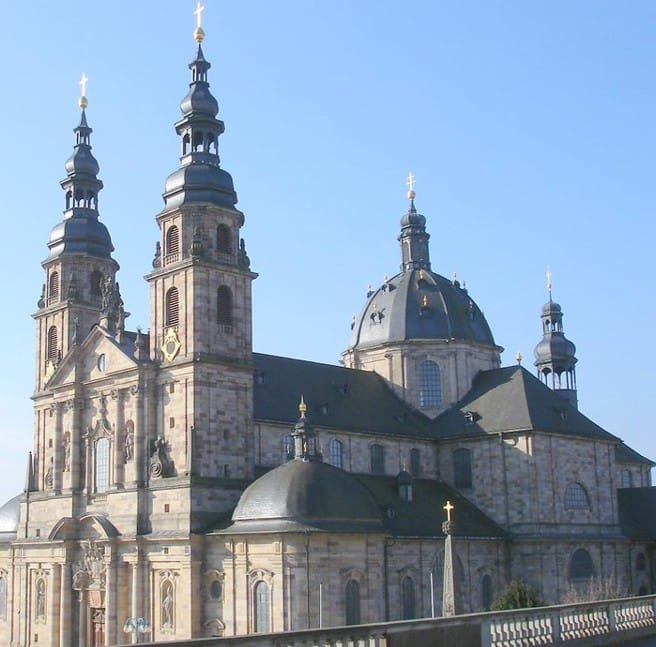
Boniface’s remains were eventually recovered and enshrined at Fulda Abbey, a monastery he had founded and that became a cornerstone of German Christianity. The relics of Boniface, alongside the stories of his life and death, became a rallying point for the Carolingian rulers, who saw his martyrdom as both a spiritual and political validation of their campaigns to Christianize the Saxons and consolidate their empire.
St. Boniface’s death stands as a poignant reminder of the challenges faced by early missionaries and the complex interplay between faith, violence, and power in dark age Europe. His legacy endures as a symbol of unshakable conviction and sacrifice in the face of overwhelming odds.
His remains still rest in a sarcophagus at Fulda Abbey – a site of pilgrimage to this day.