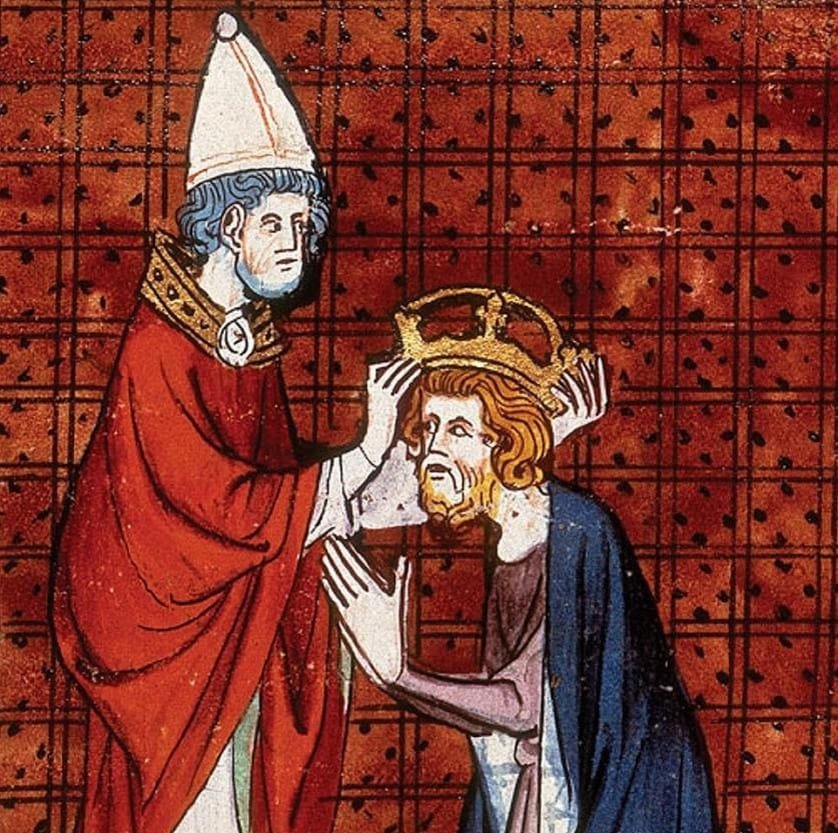
The Holy Roman Emperor title provided the highest prestige among medieval monarchs, because the empire was considered by the Catholic Church to be the only successor of the Roman Empire during the Middle Ages. Thus, in theory and diplomacy, the emperors were considered first among equals among other Catholic monarchs across Europe. But who was the first of these prestigious emperors?
Charlemagne is a towering founder figure, but he was not the first Holy Roman Emperor in the strict historical sense. That title is best reserved for Otto the Great if you mean the durable (and Germanic) medieval institution, while Frederick Barbarossa has the strongest claim if you mean the moment the empire became consciously “Holy Roman” in name and ideology.
Why Charlemagne gets the credit
The reason Charlemagne is so often called the first Holy Roman Emperor is simple: he was crowned “Emperor of the Romans” on Christmas Day 800 CE, by Pope Leo III, reviving the title more than three centuries after the fall of the Western Roman Empire. Later writers treated that coronation as the starting point of the western imperial tradition. Britannica notes that Charlemagne was the first emperor of what was later called the Holy Roman Empire, but that wording already signals the historical problem: the empire was “later called” that, not at the moment of his coronation.
In other words, Charlemagne’s achievement was real, but the label is retrospective. He was crowned at a moment when the papacy needed a powerful protector and the idea of a revived Roman emperorship in the West was politically useful. That was a grand restoration, but not yet the fully formed political structure we usually mean by the Holy Roman Empire.
Why Otto I has a stronger claim
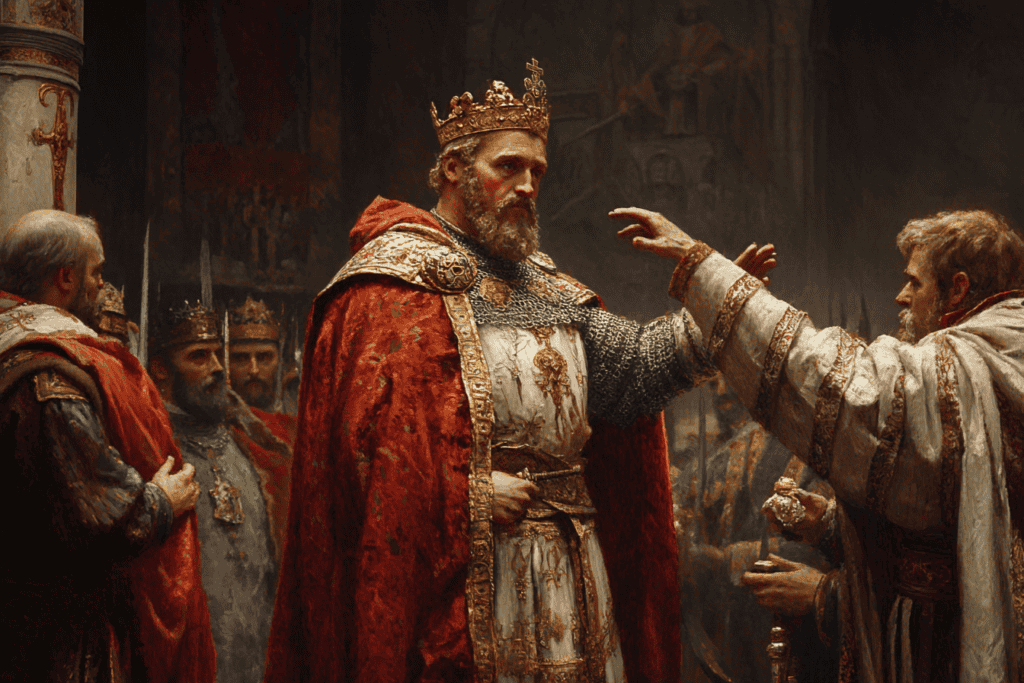
Otto the Great has a much better claim if the issue is continuity and institution. Britannica describes Otto I as Holy Roman Emperor from 962 to 973, and standard accounts of the empire’s formation place the decisive revival of the imperial title in his coronation by Pope John XII in 962.
That matters because Otto did not merely inherit Charlemagne’s memory; he re-established an imperial order that actually endured. He tied the German kingship to Italy and the papacy in a way that became the durable framework of the medieval empire, and later summaries explicitly describe 962 as the beginning of the continuous existence of the Holy Roman Empire.
Otto also better fits the political geography of the later empire. Charlemagne ruled a Frankish super-kingdom, while Otto ruled from the East Frankish/German core that would become the empire’s lasting heartland. That is why many historians see Otto’s coronation as the real foundation of the medieval imperial system, even if they still acknowledge Charlemagne as an ancestral model.
Why Barbarossa matters even more
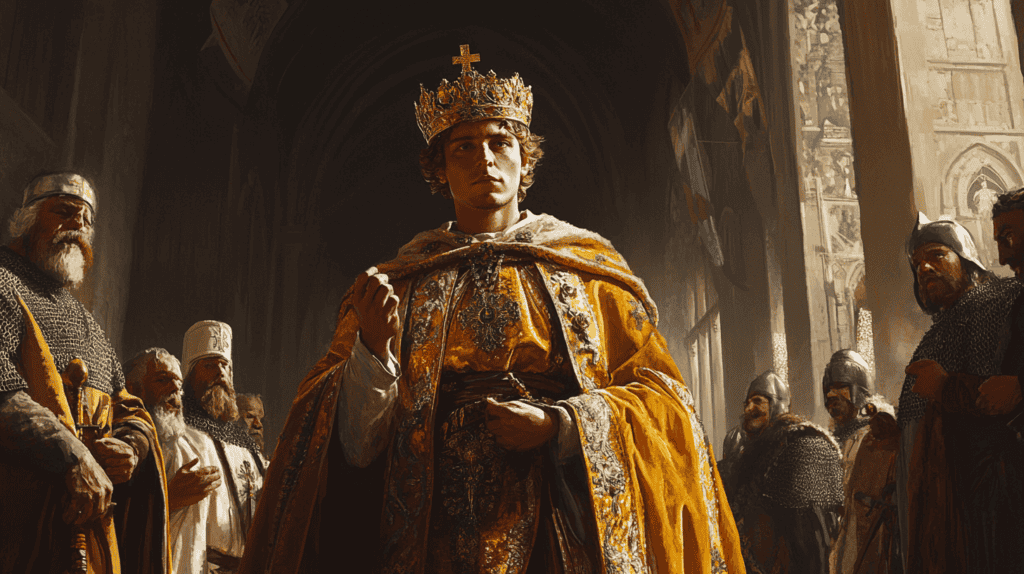
Frederick Barbarossa has a different, and in some ways even stronger, claim: not to being the first emperor, but to being the first ruler to make the “Holy Roman Empire” concept explicit and self-conscious. Barbarossa was the first German emperor to give sustained attention to the three-part imperial idea and to integrate the empire’s German, Roman, and sacred elements into a coherent political vision.
This is crucial. The famous phrase sacrum imperium appears in connection with Barbarossa’s chancery in 1157, and later the term developed into “Holy Roman Empire.” So if we are concerned about when the empire became “holy” in the ideological sense, Barbarossa is the key figure, not Charlemagne.
Barbarossa also cultivated the Charlemagne connection deliberately. He used imperial history as propaganda, linked his authority to the Carolingian past, and treated the empire not as a loose memory of Roman grandeur but as a living, German-led order with a sacred mission. That is why many historians argue he was the first emperor to fully fuse title, ideology, and political reality into what later generations recognised as the Holy Roman Empire.
The title problem
A large part of the confusion comes from the fact that medieval rulers did not use the phrase “Holy Roman Emperor” in Charlemagne’s time. The designation “Holy Roman Empire” developed later, and one source notes that the form appears only from the mid-13th century onward, while the sacred language connected with the empire first surfaces under Barbarossa in the 12th century.
So the argument is not really about who was crowned first. It is about which ruler’s coronation best matches the later historical entity we call the Holy Roman Empire. Charlemagne was first in the broader Roman-imperial revival, Otto was first in the durable medieval imperial order, and Barbarossa was first to fully articulate the empire as a “holy” political idea.
The best historical answer
If precision matters, the cleanest answer is this:
- Charlemagne was the first western emperor of the revived Roman tradition.
- Otto I was the first emperor of the medieval Holy Roman Empire in its continuous institutional form.
- Frederick Barbarossa was the ruler who most clearly shaped the empire into the consciously “Holy Roman” structure and language later associated with it.
That makes Charlemagne the symbolic grandfather of the empire, Otto its institutional founder, and Barbarossa its ideological architect. Charlemagne is the glorious beginning, Otto is the real foundation, and Barbarossa is the man who made the empire feel like the Holy Roman Empire.