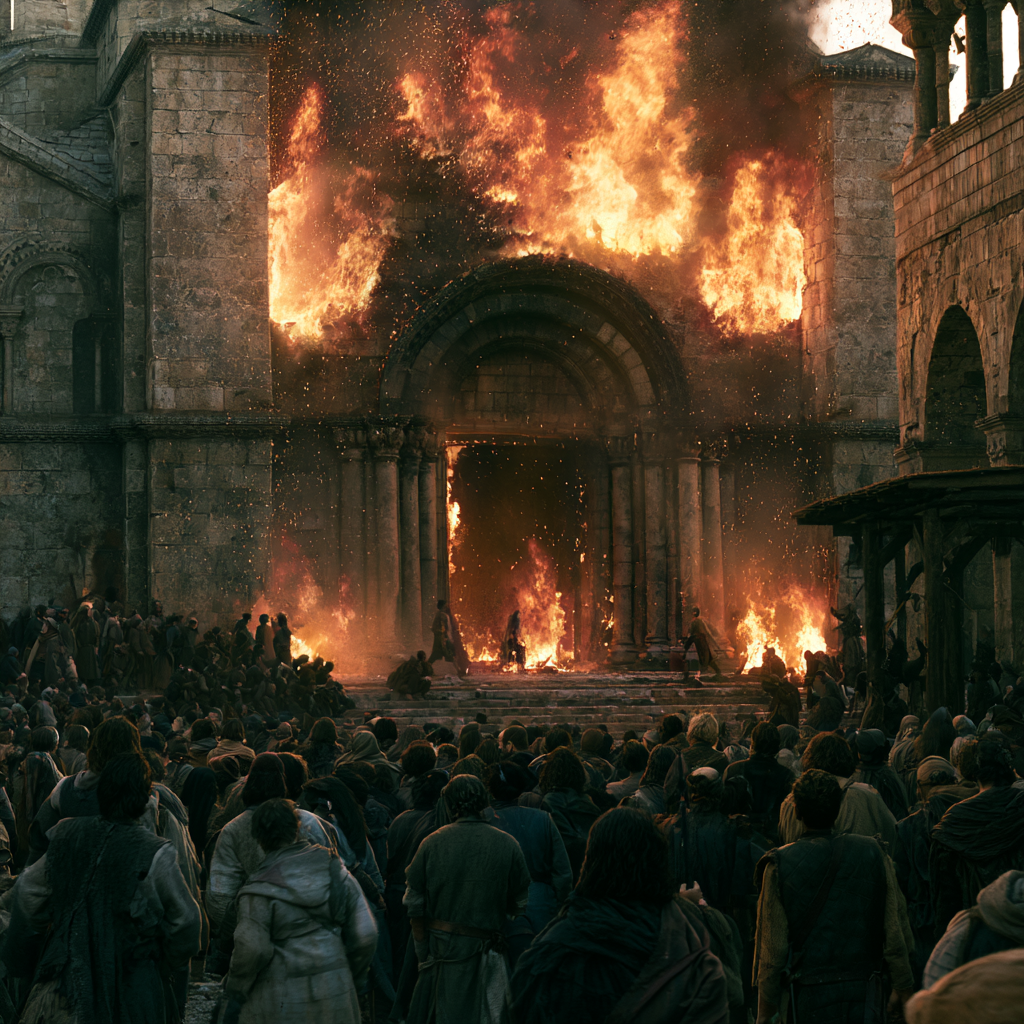
In October 1009, the Church of the Holy Sepulchre in Jerusalem – revered by Christians as the site of Christ’s crucifixion and resurrection – was torn down on the orders of the Fatimid caliph al‑Hakim bi‑Amr Allah, sending shockwaves across Christendom, and ultimately calls for holy war.
The holiest church in Christendom
By the year 1000, the Church of the Holy Sepulchre was not just another shrine; it was the beating heart of Christian pilgrimage. Built originally under Emperor Constantine in the fourth century and rebuilt after earlier damage, its complex of courtyards, chapels, and rotunda embraced both Golgotha and the believed tomb of Christ, making it a magnet for pilgrims from all over Europe and the eastern Christian world.
Under Muslim rule since the 7th century, the Holy Sepulchre had survived conquest and regime change through a mix of pragmatism and negotiation. Earlier caliphs, especially under more tolerant phases of both Umayyad and Abbasid control, generally accepted the church’s presence, taxing pilgrims and occasionally even protecting them, because pilgrimage brought money, prestige, and a measure of stability.
Al‑Hakim: the “mad caliph”
All of that changed under the Fatimid caliph al‑Hakim bi‑Amr Allah, who ruled from Cairo and quickly gained a reputation, at least among his critics, for violent unpredictability. Medieval Christian and Jewish writers later called him the “mad Caliph” or “Nero of Egypt,” painting him as a capricious figure whose policies veered from patronage to persecution.
By the first decade of the 11th century, al‑Hakim had launched a wider campaign against non‑Muslim religious buildings in his realm. Churches and synagogues in Jerusalem, Syria, and Egypt were targeted, and sacred books and ritual objects were destroyed or seized, signaling a deliberate attempt to break the religious visibility of Christians and Jews.
The order to erase the Sepulchre
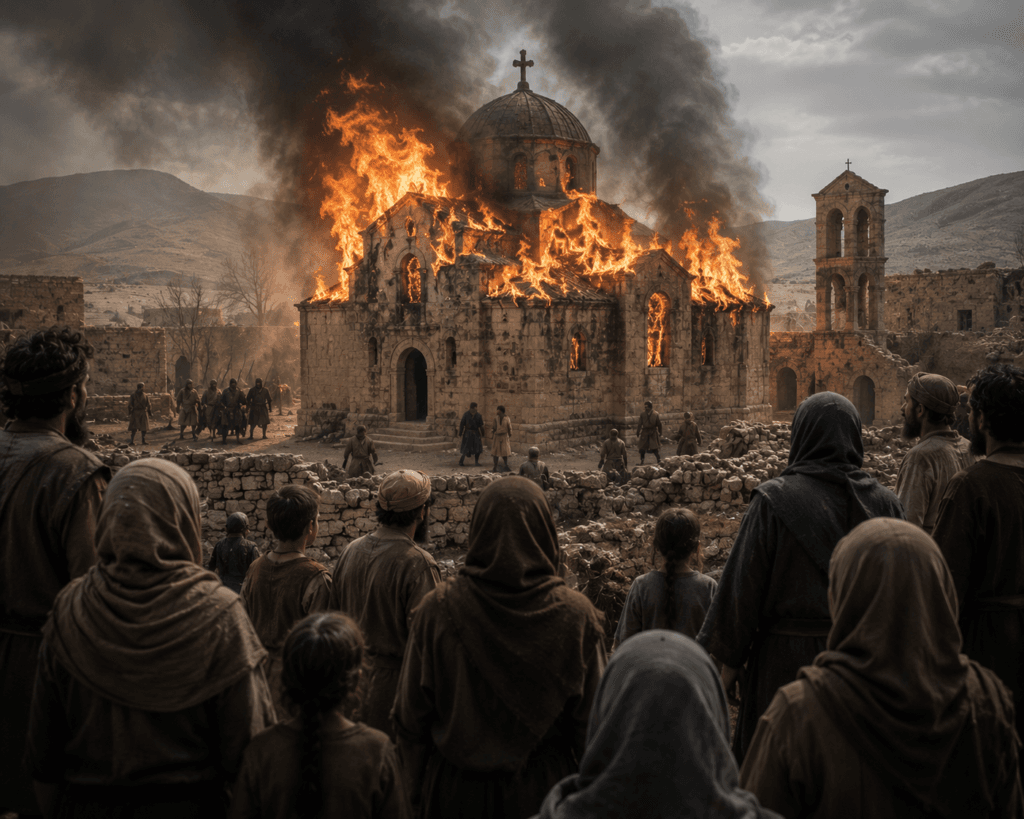
In late 1009, al‑Hakim issued the order that would sear his name into Christian memory: the destruction of the Church of the Holy Sepulchre itself. He entrusted the task to his governor in Palestine, a man known in sources as Yarukh, who, along with his son and other officials, organized teams to dismantle the sprawling complex.
The attack did not stop at tearing down walls. Crews systematically stripped away the upper structures, demolished chapels, and even damaged the rock‑cut tomb chamber so that only portions of its walls survived, leaving the heart of the shrine brutally mutilated. Contemporary accounts emphasize that other churches in the city and region were also destroyed, turning the operation into a broad assault on Christian sacred space rather than a single targeted demolition.
Stones falling, faith shaken
To Christians living in or near Jerusalem, the destruction was not only a physical catastrophe but a spiritual earthquake. The site that embodied Christ’s death and resurrection now lay in ruins, and for clergy and local believers, the message seemed unmistakable: the covenantal center of their faith had been humiliated by an Islamic ruler.
Pilgrims who arrived in the aftermath found rubble where they had expected vaulted ceilings and gleaming lamps. Chroniclers describe, in their own way, the trauma of seeing the tomb’s protective shrine smashed and the great complex reduced to a scarred, truncated space, a sight that many interpreted as a sign of the last days or of God’s mysterious judgment.
News crosses the Mediterranean
News of the Sepulchre’s destruction did not stay in Jerusalem. Monks, merchants, and returning pilgrims carried the story westward, passing it along monastery corridors, in episcopal halls, and at royal courts from Italy to France and the German lands.
Latin chroniclers in Europe, such as those writing in France and Aquitaine, began to note the catastrophe with language of horror and outrage, treating the demolition as an attack on all of Christendom, not just on the local church of Jerusalem. The idea took hold that the holiest place in the Christian world had been deliberately desecrated by a Muslim ruler, an image that would linger for generations and slowly acquire legendary exaggerations.
Papal outrage and calls for holy struggle
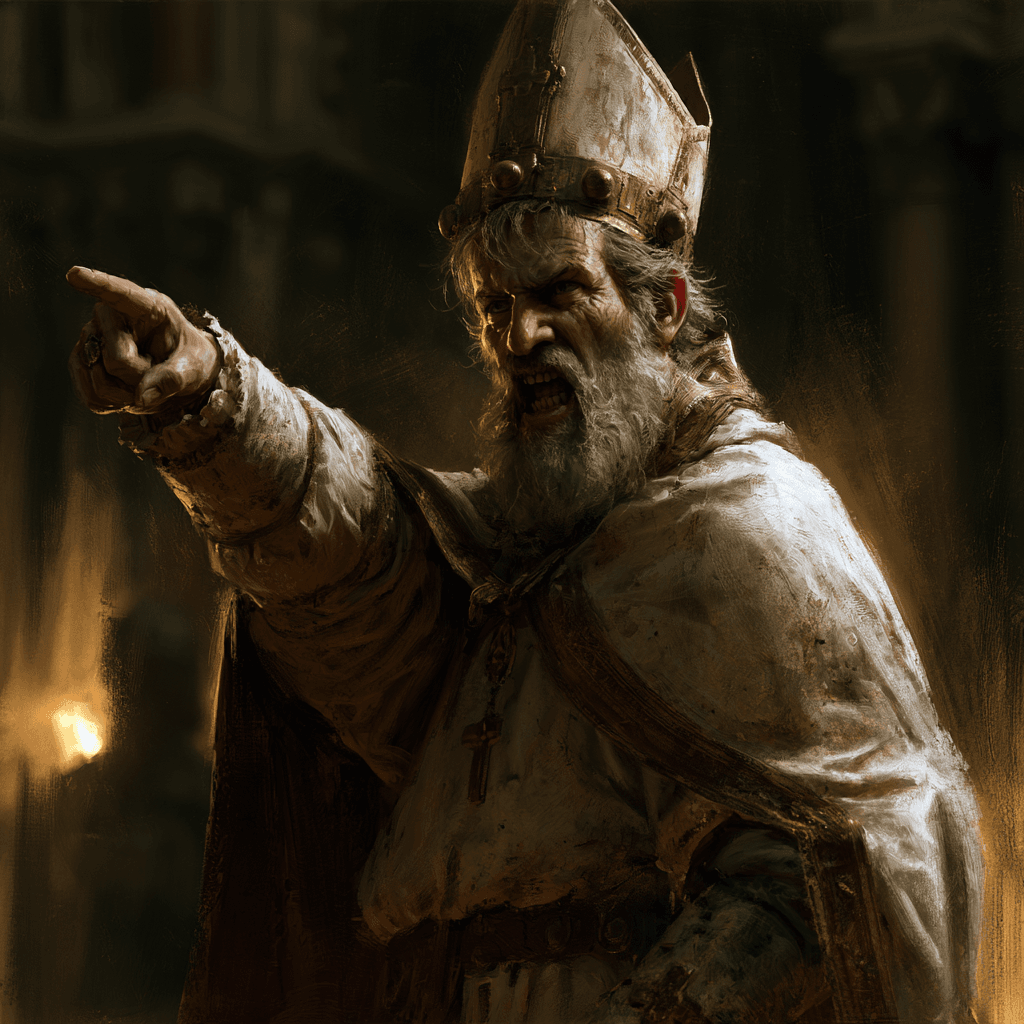
Within this climate of shock, the papacy played a key role in shaping how the event was framed. Pope Sergius IV, whose pontificate overlapped with the destruction, is associated in later tradition with a circular letter sent across Latin Christendom that condemned the razing of the Sepulchre and urged a holy response.
Although historians debate some details of this letter, medieval memory insisted that Rome had appealed to Christian rulers and peoples to defend the Holy Land and push back Islamic power. In this retelling, the wrecking of the Sepulchre became more than an unfortunate episode; it was a rallying cry that cast the conflict as sacred and framed vengeance as a pious duty.
Fury on the streets of Europe
At ground level, the story had grim consequences, especially for Jewish communities who had nothing to do with the events in Jerusalem. Some Christian writers spread the claim that Jews had encouraged or even engineered the destruction, an accusation that ignited anti‑Jewish violence in several cities.
In places like France and along the Rhine, rulers responded to the inflamed mood with coercive measures: forced conversions, expulsions, and new restrictions appeared in the wake of the outrage over Jerusalem. These actions show how an event in distant Palestine could be weaponized in European politics, turning religious shock into local persecution and deepening the habit of treating Jews as scapegoats whenever the Holy Land was threatened.
A symbol that refused to die
Over time, the destruction of 1009 became less a single historical incident and more a symbol wielded in preaching and propaganda. Monastic authors and chroniclers revisited the story to underline Christian suffering under Muslim rule, presenting the ruined Sepulchre as a visual shorthand for all the humiliations endured by the faithful in the East.
By the later 11th century, when tensions between Latin Christendom and various Muslim powers were already high, preachers could invoke the memory of the caliph who tore down Christ’s tomb to stoke emotion. This symbolic power meant that the event outlived al‑Hakim and his policies, becoming a kind of ever‑present grievance that could be revived whenever a leader needed to justify aggressive plans in the eastern Mediterranean.
From outrage to crusading rhetoric
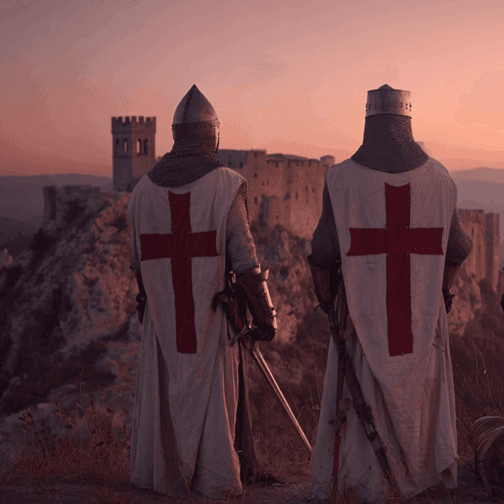
When Pope Urban II called the First Crusade at Clermont in 1095, nearly a century had passed since the Sepulchre fell, yet the memory remained potent. Accounts of his speech describe appeals to rescue eastern Christians and liberate the holy places, and medieval writers later explicitly linked this crusading summons back to the horror sparked by the destruction of 1009.
For crusade chroniclers such as William of Tyre, the story of al‑Hakim’s assault on the church became part of a longer prelude to the Crusades, proof that Muslims had shown a willingness to devastate even the most sacred Christian sites. In this narrative, the 1099 capture of Jerusalem and the re‑sanctification of the Sepulchre were not acts of conquest, but acts of cosmic payback – a delayed vengeance for the day when Christ’s tomb was torn apart.
Fatimid politics and second thoughts
Yet the story is more complicated than a simple tale of Muslim destruction and Christian revenge. After al‑Hakim’s death, his successors in the Fatimid dynasty shifted course, entering into negotiations with the Byzantine Empire that eventually allowed the rebuilding of the church.
In the 1020s, an agreement was reached between the Fatimid caliph Ali az‑Zahir and Byzantine representatives: the church could be restored, and in return the Fatimids gained concessions, including the reopening of a mosque in Constantinople. This deal shows that even after such a shocking act, diplomacy and mutual interest still mattered, and rulers could treat the Holy Sepulchre as a bargaining chip in the larger struggle for prestige and influence.
Rebuilding the shattered shrine
Actual reconstruction of the church took time and money. By the 1040s, under the Byzantine emperor Constantine IX Monomachos and the local patriarch, a new, smaller version of the church was completed, consolidating the former sprawling complex into a more compact building that in broad outline resembles what visitors see today.
The tomb chamber, badly damaged in 1009, was encased in a new shrine, and the architectural focus shifted to a combined structure rather than a loose cluster of separate buildings. While much had been lost forever – mosaics, side chapels, and the monumental character of the Constantinian complex – the very act of rebuilding sent a message that Christian presence in Jerusalem could be wounded, but not wiped away.
Crusader conquest and narrative closure
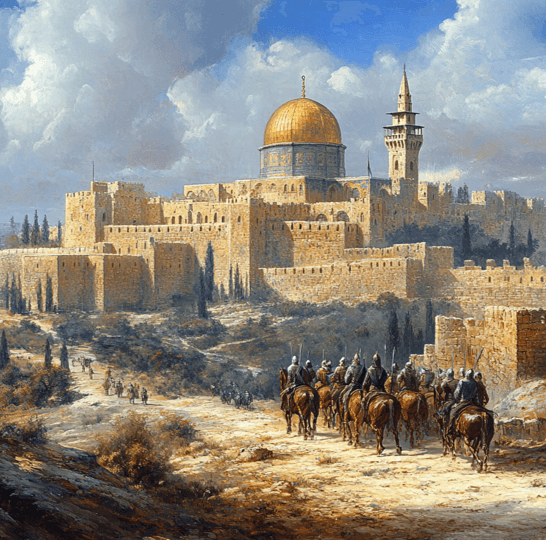
On July 15, 1099, four years after the start of the First Crusade, the walls of Muslim-held Jerusalem finally fell, and the crusaders surged forward. Crusader knights, inflamed by years of hardship and religious zeal, turned their fury upon the city’s inhabitants. Muslim and Jewish defenders were cut down in the streets. Ancient chroniclers, notably Raymond of Aguilers and Fulcher of Chartres, describe rivers of blood in the Temple Mount and alleys littered with the dead. Whether exaggerated or not, there is no doubt the massacre was terrible in scale.
Yet in the midst of that chaos, a different procession cut through the city. The leaders – Godfrey, Raymond, and Tancred – ordered their men toward the Church of the Holy Sepulchre. Bareheaded, tears staining faces chapped from the desert sun, the warriors-turned-pilgrims put aside their swords. They walked barefoot to the shrine that marked the tomb of Christ.
Inside the church, dimly lit by candles and thick with incense, the surviving crusaders knelt and wept. Chroniclers compare the scene to a second resurrection: men who had spent years drenched in blood and dust now prostrate before the place where Christ’s body had lain. For them, this was no mere victory; it was the culmination of their holy journey, the redemption of their long suffering. As they raised hymns and prayers, one priest climbed the pulpit and proclaimed what would become the enduring motto of that day: “Deus vult,” God wills it.
A thousand‑year echo
For Latin Christians, this moment offered an emotional closure that reached back to 1009: the tomb once desecrated by a Muslim caliph was again in Christian hands, now defended by knights who saw themselves as armed penitents. The story of destruction and recovery became a founding legend of the crusader states, preached in Europe to justify further expeditions and to hold up crusaders as heroes who had avenged the ultimate insult.
Today, the Church of the Holy Sepulchre stands rebuilt, reshaped by Byzantine masons, crusader architects, Ottoman restorers, and modern conservators. Visitors walking under its domes rarely see direct traces of the violence of 1009, yet that destruction still lingers in the written record as one of the defining traumas of Christian‑Muslim relations in the Middle Ages.