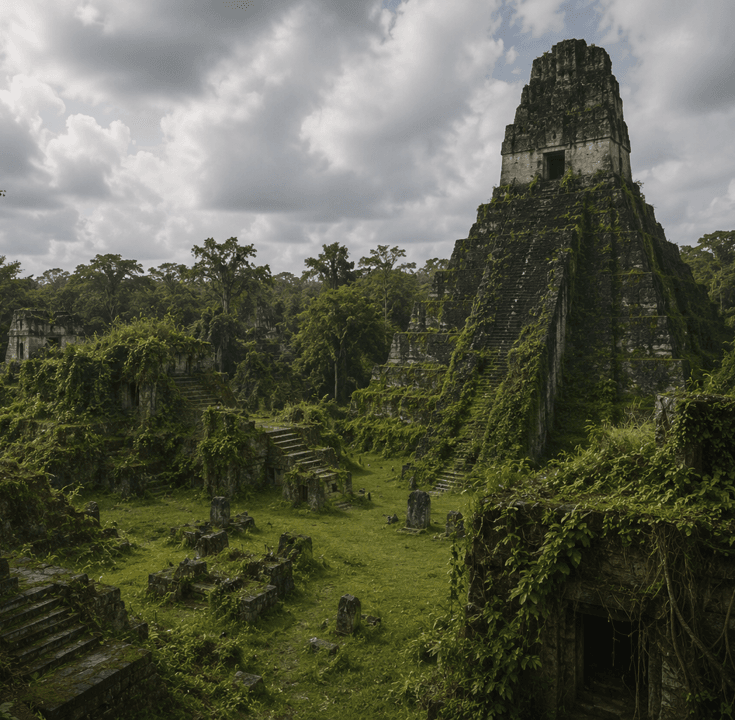
In the year 899 CE, something extraordinary happened in the dense jungles of present-day Guatemala. Nothing. No final siege. No catastrophic fire. No invading army marching through the gates. Instead, one of the greatest cities of the ancient world – Tikal, a towering metropolis of pyramids, palaces, and sacred causeways simply… fell silent.
For centuries, Tikal had been a jewel of the Maya world. Its temples rose above the rainforest canopy like stone mountains. Its rulers carved their victories into monuments that still stand today. Its population likely swelled into the tens of thousands, sustained by ingenuity, trade, and a deep understanding of their environment.
And then, within the span of a few generations, it was gone. No dramatic final act. No clear ending. Just abandonment.
So what happened?
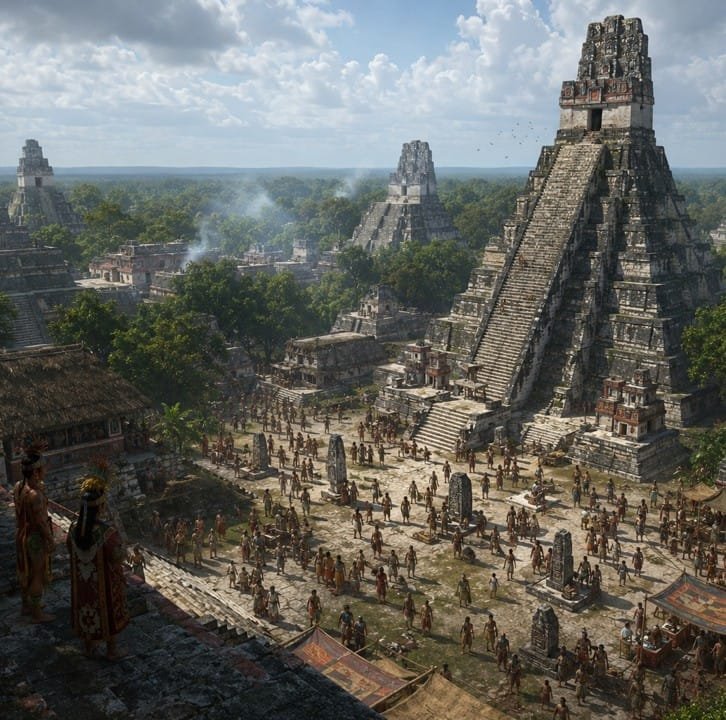
To understand the mystery of Tikal’s disappearance, you have to first step into its world at its peak.
At its height between roughly 200 and 800 AD, Tikal was not just a city – it was a superpower. It dominated vast stretches of the Maya lowlands, engaging in wars, alliances, and rivalries with other city-states like Calakmul, Copán, and Caracol. These were not peaceful kingdoms quietly tending crops; they were politically complex, often ruthless powers, led by divine kings who claimed to act as intermediaries between gods and humans.
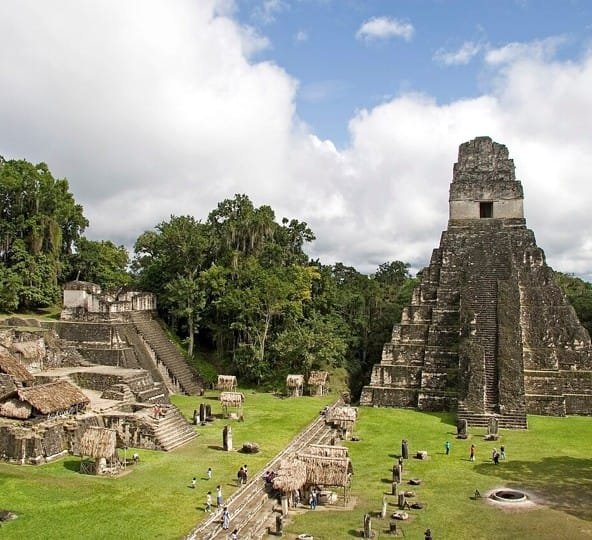
Tikal’s skyline was dominated by massive stepped pyramids – Temple I and Temple II facing each other across the Great Plaza, silent witnesses to royal ceremonies and blood rituals. These structures weren’t just architectural feats; they were statements of power. Each stone declared that Tikal was eternal.
But empires built on confidence often hide fragility beneath the surface. By the late 8th century, cracks began to appear.
The first signs were subtle. Monument inscriptions – once abundant – became rare. The carved stelae that recorded royal achievements began to dwindle. It’s as if the city’s rulers suddenly stopped telling their story.
Then came the population strain. Tikal’s success had a cost. Feeding tens of thousands of people in a tropical environment required careful management of land and water. The Maya engineered reservoirs, terraces, and agricultural systems to sustain their urban centers. But as the population grew, the pressure on the environment intensified.
Forests were cleared. Soil was overworked. Water systems became strained. Then, nature turned. Evidence from climate studies suggests that the Maya lowlands experienced a series of severe droughts in the 9th century. These weren’t brief dry spells – they were prolonged, devastating reductions in rainfall that would have crippled agriculture.
Imagine a city dependent on seasonal rains suddenly facing years of scarcity. Crops fail. Reservoirs shrink. Hunger spreads. And in a society where kings were believed to control the balance between the human world and the divine, drought wasn’t just an environmental crisis – it was a political and spiritual catastrophe.
If the rains failed, the king had failed. And when kings fail, people begin to leave.
But drought alone doesn’t explain everything.
Tikal existed in a network of rival cities, and by the 9th century, that network was destabilizing. Long-standing trade routes began to falter. Political alliances shifted or collapsed. Warfare, once a tool of expansion, may have turned increasingly destructive. There is evidence that many Maya cities experienced fortification efforts during this period – walls, defensive structures, signs of fear.
But Tikal’s end does not bear the marks of a violent destruction. Instead, it suggests something quieter – and in some ways, more unsettling.
People didn’t die in place. They moved. Gradually, families would have left the city – perhaps first the elite, seeking more stable centers of power, then the common population following resources and opportunity elsewhere. The great plazas would have grown emptier. The ceremonies fewer. The markets quieter.
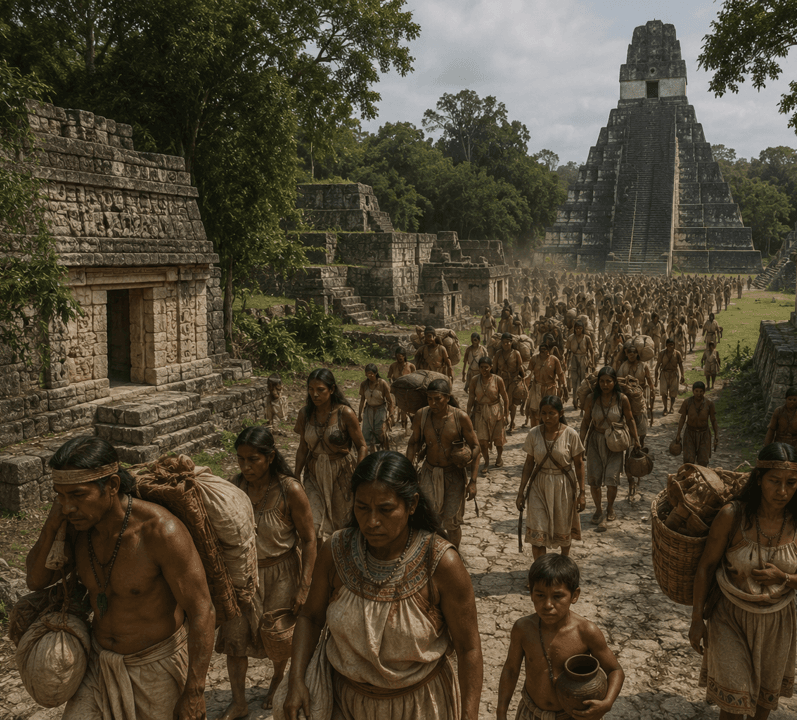
The jungle, patient and relentless, began its reclamation. Temples once echoing with ritual chants fell silent. Stone steps cracked as roots pushed through them. Vines crept over carved faces of kings who once believed themselves eternal.
Within a century, Tikal was no longer a city. It was a memory.
One of the most haunting aspects of Tikal’s collapse is precisely how undramatic it was. History often favors spectacle – battles, conquests, disasters – think about the sacking of Rome by barbarian tribes. But Tikal reminds us that civilizations can end not with a bang, but with a slow unraveling. A system stretched too far. An environment pushed beyond its limits. A belief system shaken by forces it could not control.
And perhaps most intriguingly, Tikal’s people didn’t vanish. They adapted. The collapse of Tikal was not the collapse of the Maya civilization. Maya communities continued to thrive in other regions – particularly in the northern Yucatán, where cities like Chichén Itzá rose to prominence. Culture, language, and identity endured.
What collapsed was a specific way of organizing society: the divine kingship, the massive urban centers, the intense concentration of population in fragile environments. In that sense, Tikal didn’t die – it transformed.
But its transformation left behind one of the most evocative archaeological landscapes on Earth. When European explorers and later archaeologists rediscovered Tikal centuries later, they didn’t find ruins in the usual sense. They found a city swallowed by jungle. Towers rising above treetops. Stairways leading nowhere. Entire complexes hidden beneath layers of vegetation.
It looked less like a destroyed city and more like one that had been deliberately returned to nature. And that visual – the idea of a vast, sophisticated civilization quietly stepping aside and allowing the forest to take over – is what continues to fascinate historians, archaeologists, and storytellers alike. Because it forces an uncomfortable question. Could something like this happen again?
Not in the same form, of course. Modern cities are not dependent on seasonal rains in quite the same way. Our infrastructure is more complex, our reach more global. But the underlying themes – environmental strain, political instability, loss of confidence in leadership, shifting economic networks – are not relics of the past. They are constants.
Tikal’s story is not just about a lost city. It’s about the limits of systems, the consequences of overreach, and the quiet ways in which decline can unfold. No single moment marks the end. No single event explains it. Instead, it is a process – a series of small failures, adaptations, and decisions that, over time, lead to a tipping point. And then, one day, a city that once defined an era simply no longer does.
By 899, Tikal had effectively walked off history’s stage. No grand finale. No final chapter carved in stone. Just silence. And in that silence, perhaps, the most powerful lesson of all: that even the greatest cities in the world are not guaranteed an ending worthy of their rise. Sometimes, they are simply… forgotten.