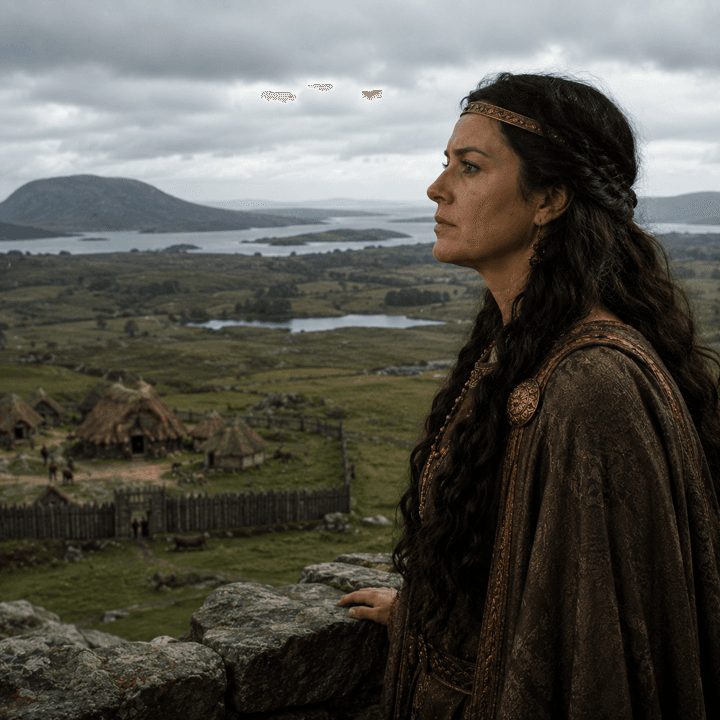
In the shadowy world of dark ages Ireland, where Viking warlords clashed with Irish kings and dynasties rose and fell with the turn of a sword, one woman stands out as both architect and antagonist of her age: Gormlaith ingen Murchada. Born into the royal house of Leinster around 960, she would become queen to three of the most powerful men in Ireland – the Viking king of Dublin, the High King of Tara, and the legendary Brian Boru himself. Yet Gormlaith is remembered less for her crowns than for her cunning: medieval chroniclers painted her as a femme fatale whose ambitions and alleged manipulations helped ignite the Battle of Clontarf in 1014, one of the bloodiest and most consequential clashes in Irish history.
A Princess of Leinster in a Viking Age
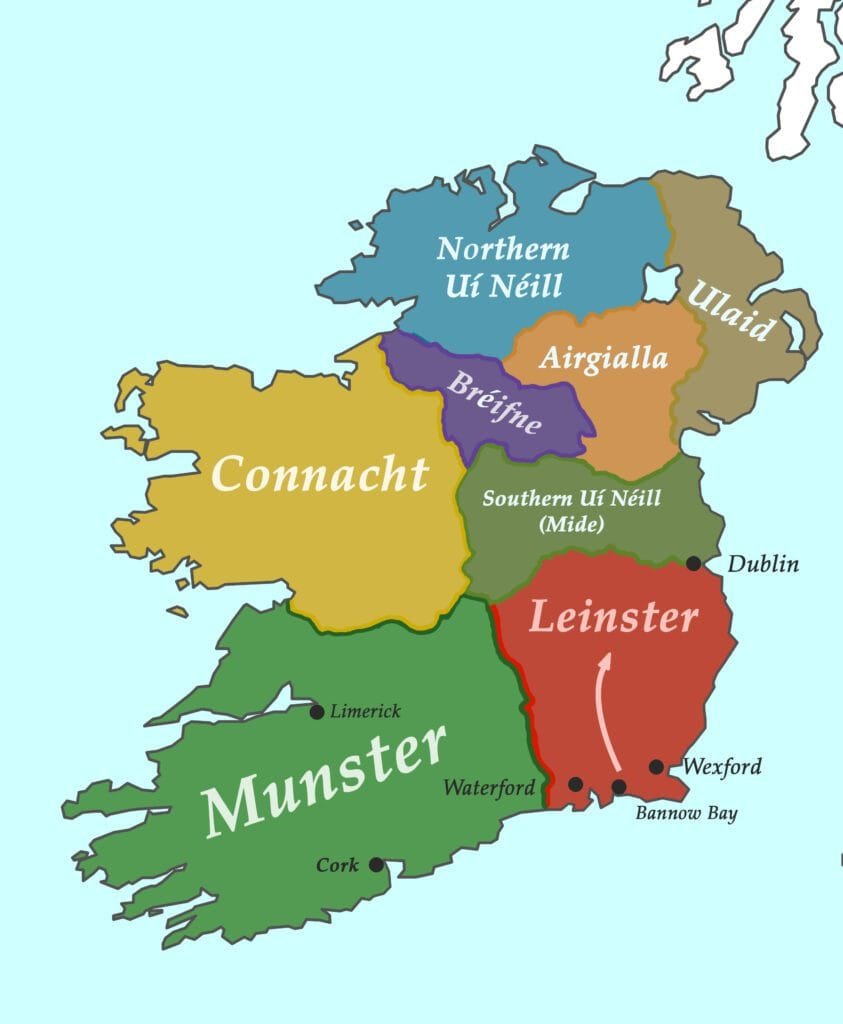
Gormlaith was born in Naas, County Kildare, the daughter of Murchad mac Finn, King of Leinster, a ruler whose dynasty – the Uí Fháeláin of northern Leinster – was deeply enmeshed in the high-stakes politics of the day. Her mother apparently came from a Connacht dynasty, giving Gormlaith connections across multiple Irish kingdoms. She had a brother, Máel Mórda, who would later become King of Leinster and a key player in the events leading to Clontarf.
This was an era when Ireland was neither unified nor peaceful. Regional kings vied for supremacy, and the Viking presence – established through decades of raiding, settlement, and intermarriage – had transformed coastal cities like Dublin, Waterford, and Limerick into wealthy, cosmopolitan power centers. Strategic marriages between Irish dynasties and Norse-Gaelic rulers were common, and Gormlaith’s life would be defined by exactly such alliances.
The Three Leaps: Queen of Dublin, Tara, and Munster
Gormlaith’s marital history reads like a political map of Ireland at the turn of the millennium. Her first marriage, contracted in the late 960s when she was in her mid-teens, was to Amlaíb Cuarán (Óláfr Sigtryggsson), the Norse-Gaelic king of Dublin and former king of York in Northumbria. This union sealed an alliance between Leinster and the Hiberno-Scandinavian dynasty that still exercised suzerainty over northern Leinster. From this marriage came a son, Sigtrygg Silkbeard, who would inherit the Dublin throne and become a central figure in the Clontarf saga.
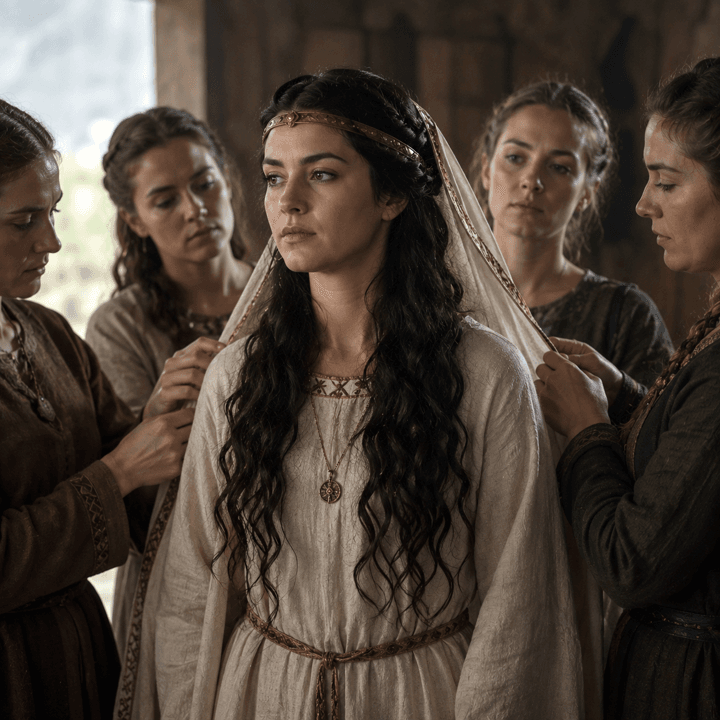
Amlaíb died in 981, and Gormlaith’s next move elevated her to the highest echelons of Irish power. She married Brian Boru, King of Munster, who would go on to become High King of Ireland and the most famous Irish monarch of the dark ages. With Brian, she bore another son, Donnchad, who would later rule as King of Munster.
A third marriage is more contentious. Some genealogical sources, particularly the famous “three leaps” poem in the 12th-century Book of Leinster, claim Gormlaith also married Máel Sechnaill mac Domnaill, High King of Tara, making her queen in Dublin, Tara, and Cashel (Munster). However, this marriage is not mentioned in the Banshenchas (a medieval catalogue of notable Irish women), and some scholars argue the “three leaps” may refer to her children rather than her marriages. Whether Gormlaith was thrice married or twice, her alliances placed her at the epicenter of Irish dynastic politics.
The Woman Behind the War: Gormlaith and Clontarf
It is Gormlaith’s role in the events leading to the Battle of Clontarf that has cemented her reputation in history and legend. The primary sources for this narrative are the Cogadh Gáedhel re Gallaibh (The War of the Irish with the Foreigners), a 12th-century propaganda text commissioned by Brian Boru’s descendant, and the Icelandic Njáls Saga, which refers to Gormlaith as Kormloð. Both texts, though written well after her death, agree on one point: Gormlaith incited the men around her to rebellion against Brian Boru.
In the Cogadh, the story goes that Máel Mórda, Gormlaith’s brother and King of Leinster, had accepted a subordinate position to Brian Boru. When Máel Mórda returned to Kincora (Brian’s palace) with timber masts as tribute, the clasp on his tunic – gifted by Brian – broke. He asked Gormlaith to mend it, and she angrily cast it into the fire, declaring it a badge of his slavery and shaming him into rebellion. Stung by her words, Máel Mórda quarreled with Brian’s son Murchad over a game of chess, stormed out, and began plotting with Viking allies to overthrow Brian.
The Njáls Saga offers a different but equally damning portrayal. There, Gormlaith – described as beautiful but evil in character – is a divorced woman filled with hatred for Brian Boru. She goads her son Sigtrygg Silkbeard to seek vengeance, promising her hand in marriage to any Viking warlord who would fight for him. She recruits Earl Sigurd of Orkney and Brodir of the Isle of Man, building a coalition of Norse and Irish forces against Brian.
Whether these accounts are historically accurate or literary embellishment is debated. Medieval chroniclers, particularly Christian monks, often viewed powerful women with suspicion and cast ambitious queens as destabilizing forces. Yet the agreement between Irish and Norse traditions on Gormlaith’s involvement suggests some basis in fact. What is clear is that the political tensions leading to Clontarf were real: Brian’s ascendancy as a non-O’Neill High King threatened traditional power structures, and Máel Mórda’s Leinster had long resisted Munster overlordship. Gormlaith, with her ties to both Dublin and Munster, was uniquely positioned to exploit these fractures.
The Battle and Its Aftermath
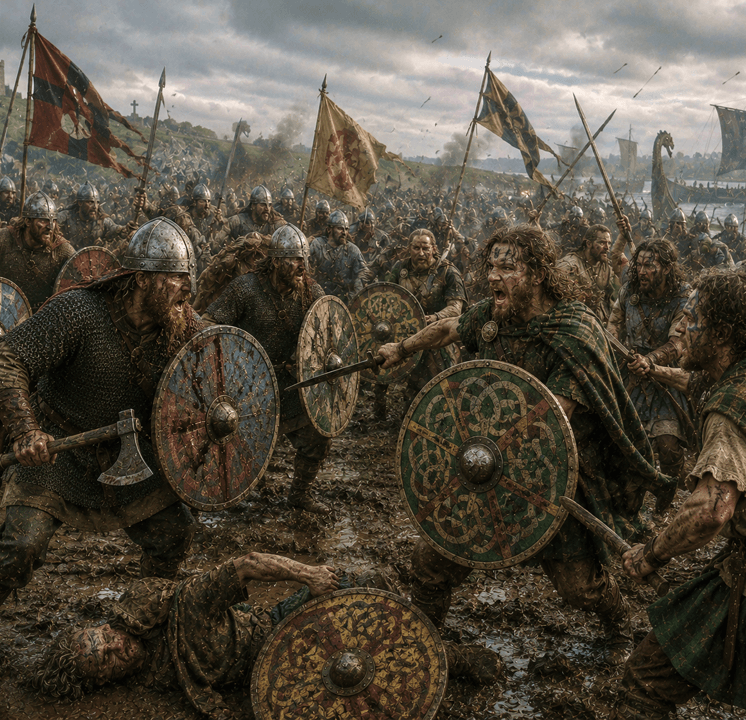
On Good Friday, 23 April 1014, the armies met at Clontarf, just north of Dublin. The battle was a slaughter. Brian Boru’s forces prevailed, but the victory was pyrrhic: Brian himself was killed in his tent by fleeing Norse warriors, and his son Murchad died fighting. Sigtrygg Silkbeard survived, but Dublin’s power was diminished, and the dream of a unified Ireland under one High King died with Brian.
Gormlaith’s fate after Clontarf is obscure. She disappears from the annals until her death in 1030, recorded in the Annals of Tigernach as “Gormlaith, daughter of Murchad, son of Finn, mother of Sitric, son of Amlaíb Cuarán, king of the Foreigners, and of Donnchad, son of Brian, king of Munster, dies.” She outlived all her husbands and both her sons’ fathers, dying in her late seventies – a remarkable lifespan for the era.
A Scapegoat or a Strategist?
The question that haunts Gormlaith’s legacy is whether she was truly the architect of Clontarf or a convenient scapegoat for chroniclers seeking to explain the catastrophe. The men around her – Brian, Máel Mórda, Sigtrygg, the Viking earls – were all ambitious warlords in their own right. The battle was fought over land, prestige, and the future of Irish kingship, not merely the grudges of a disgruntled queen.
Yet Gormlaith’s agency should not be dismissed. In a world where women’s power was often exercised through marriage, motherhood, and behind-the-scenes influence, she maximized every opportunity. She was married to kings, mother to kings, and sister to a king. She navigated the treacherous waters of Viking-Irish politics with a shrewdness that earned her both fear and infamy. The fact that later writers – 12th-century Irish propagandists to 13th-century Icelandic sagamen to 17th-century historians like Geoffrey Keating – found her a compelling villain speaks to her enduring symbolic power.
Modern historians have begun to reassess Gormlaith more sympathetically. Shauna Lawless, whose Gael Song trilogy features Gormflaith as a central character, argues that she has been unfairly judged through a Christian lens that condemned remarriage and female ambition. In reality, divorce and strategic remarriage were common in 10th-century Ireland, and Gormlaith’s actions were no more ruthless than those of the men around her. If anything, she was a product of her times – a woman who understood that in a world of kings and warriors, survival required wit as much as steel.
The Legacy of a Dark Age Queen
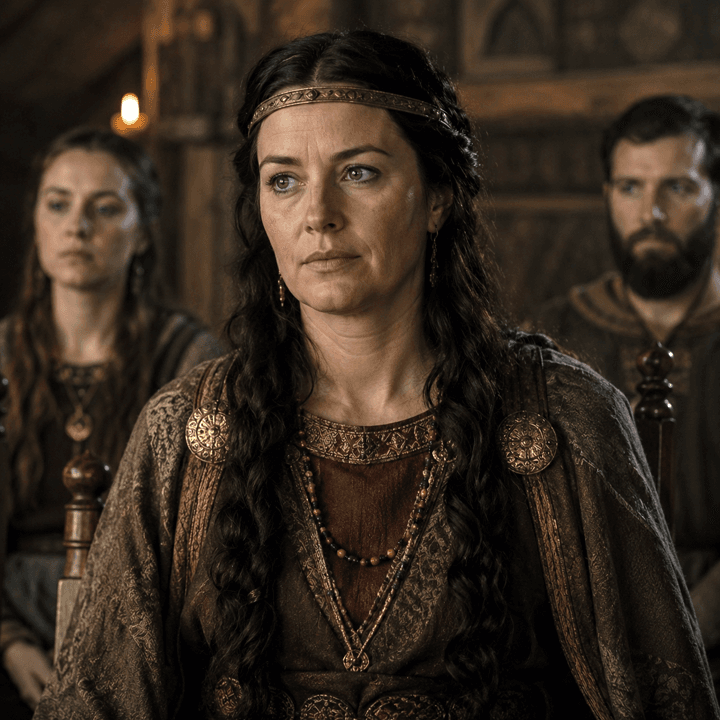
Gormlaith’s story is a window into the complex, violent, and dynamic world of Dark Age Ireland. She lived through the tail end of the Viking Age, when Norse settlers were becoming Irish kings and Irish kings were marrying Norse princesses. She witnessed the rise and fall of Brian Boru, the last great High King to unite Ireland before the Norman invasion. And she became, in the words of one historian, “the femme fatale of Clontarf” – a figure of intrigue, ambition, and tragedy.
Today, Gormlaith is remembered in multiple ways: as a historical queen whose marriages shaped the political landscape of Ireland; as a literary figure whose alleged manipulations helped bring about one of the most famous battles in Irish history; and as a symbol of female agency in a male-dominated world. Her name appears in annals, sagas, genealogies, and modern novels – a testament to her enduring fascination.
For those who visit Naas, her birthplace, or walk the fields of Clontarf, Gormlaith’s presence lingers – not as a ghost, but as a reminder that history is shaped not only by kings and warriors, but by the women who stood beside them, whispered in their ears, and sometimes, turned the wheels of fate themselves.