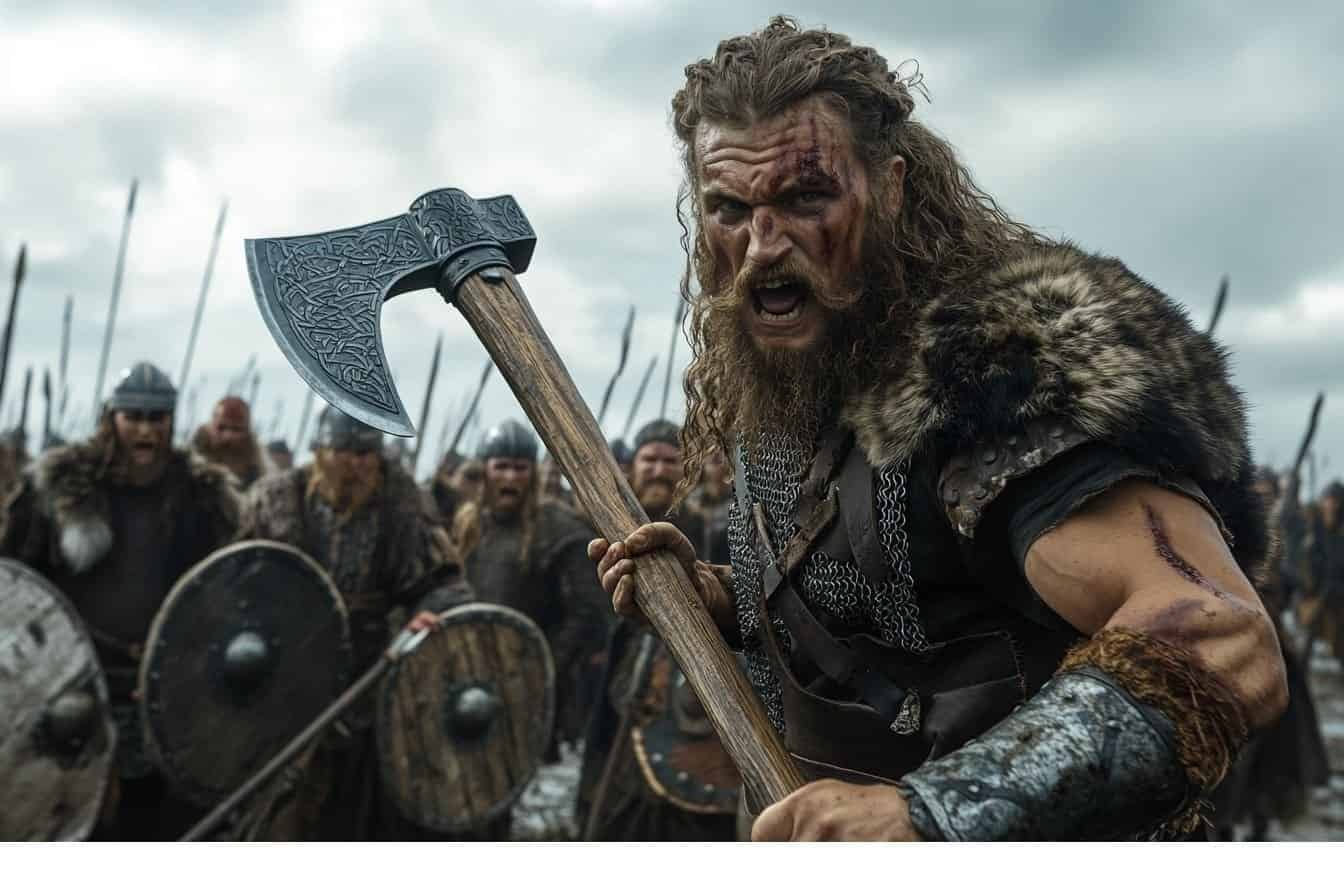
Wars could decide who ruled a kingdom, which religion dominated a region, whether an invading army survived, or whether an emerging state became a major European power. Among the countless battles fought during the dark ages, four stand out for their extraordinary consequences: Vouillé in 507, Tours in 732, Lechfeld in 955, and Stamford Bridge in 1066.
They were fought centuries apart and involved very different enemies. Yet together, they tell a remarkable story: the rise of the Franks, the consolidation of Christian Europe, the end of the great Magyar raids, and finally the disappearance of the Viking threat to England.
1. The Battle of Vouillé, 507: The Franks Rise to Power
At the beginning of the sixth century, the Roman Empire in the West was already gone. In its place stood a collection of Germanic kingdoms occupying former Roman territories.
One of the most important was the Frankish kingdom in northern Gaul, ruled by Clovis I.
Clovis was ambitious. He had already defeated rival Frankish leaders and expanded his territory, but one great obstacle remained: the Visigothic Kingdom.
The Visigoths controlled a huge territory stretching across much of southern Gaul and into Spain. Their king, Alaric II, was one of the most powerful rulers in western Europe.
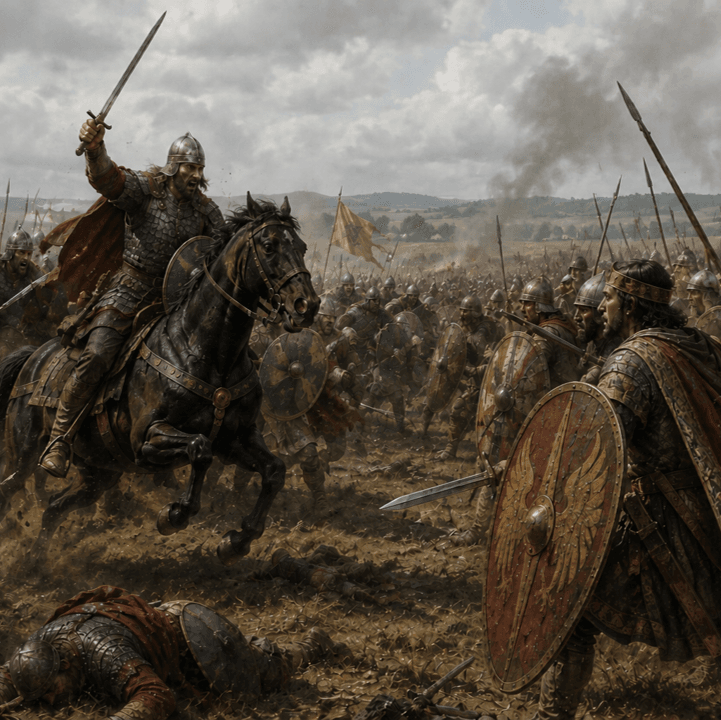
The confrontation came in 507 near Vouillé, close to modern Poitiers.
Clovis marched south with his army and confronted the Visigoths. The battle was fierce, but the Franks ultimately prevailed. According to contemporary accounts, Clovis himself killed Alaric II during the fighting. The death of the Visigothic king transformed the political map of Gaul.
Much of the Visigothic territory north of the Pyrenees fell under Frankish control. The Visigoths retained their Spanish kingdom, but the Franks had emerged as the dominant power in Gaul.
Why was Vouillé so important?
Because it helped determine which kingdom would inherit the political legacy of Roman Gaul.
The Franks were not merely another Germanic people occupying former Roman lands. Under Clovis and his successors, they developed into the most powerful kingdom in western Europe.
There was another crucial factor: religion.
Clovis had converted to Catholic Christianity, traditionally dated to around 496. This gave him an important relationship with the Catholic bishops and Gallo-Roman population of Gaul. The Visigoths, by contrast, were predominantly Arian Christians, following a theological tradition regarded as heretical by the Catholic Church.
Clovis could therefore present himself not simply as a conqueror but as a defender of Catholic Christianity.
The victory at Vouillé strengthened the Frankish monarchy and helped create the political foundations upon which later rulers – including Charlemagne – would build.
In a sense, Vouillé was one of the battles that later made medieval France possible. It marked a decisive step in the transformation of Gaul from a former Roman province into the heartland of a powerful Frankish kingdom.
2. The Battle of Tours, 732: Charles Martel and the Frankish Ascendancy
More than two centuries later, the Franks faced another major challenge.
By the eighth century, the Umayyad Caliphate controlled an enormous territory stretching from the Middle East across North Africa and into the Iberian Peninsula (now Spain and Portugal).
Muslim forces had conquered much of the Iberian Peninsula beginning in 711 and had subsequently crossed into Gaul.
The extent and purpose of these campaigns are debated by historians. They were not necessarily part of a single grand plan to conquer all of Europe. Raiding, political alliances, territorial expansion, and regional warfare all played roles.
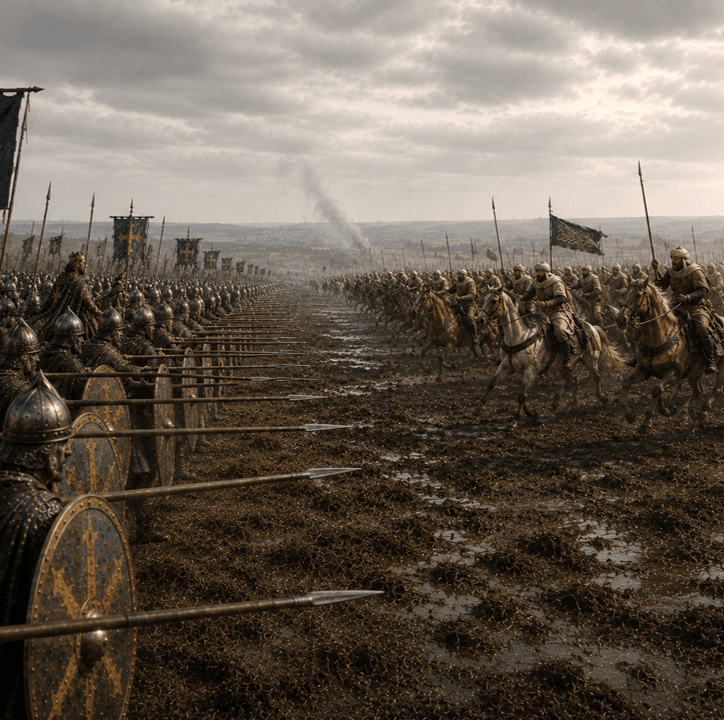
Nevertheless, in 732, a major Muslim army advanced into Frankish territory. Standing in its way was Charles Martel, the powerful Frankish military leader.
The armies met somewhere between Tours and Poitiers. The exact location remains uncertain, and even the size of the armies is unknown. Later medieval writers dramatically exaggerated the scale of the battle. But its consequences were real.
Charles Martel’s forces held their position and defeated the invading army. The Umayyad commander, Abd al-Rahman al-Ghafiqi, was killed.
The Muslim army withdrew south.
Did Tours “save Europe”?
For centuries, popular histories portrayed Tours as the battle that saved Christian Europe from an Islamic conquest. That interpretation is too simplistic.
There was no certainty that a Muslim victory at Tours would have resulted in the conquest of France, let alone the rest of Europe. The Umayyad forces were operating in a complex political environment, and Muslim expansion into Gaul had already encountered logistical and political difficulties.
Nevertheless, the battle was enormously important.
It strengthened Charles Martel’s position and helped establish the power of the Carolingian dynasty. Charles’s son, Pepin the Short, eventually became king of the Franks. His son was even more famous: Charlemagne. Charlemagne would conquer vast territories and, in 800, be crowned emperor in Rome.
Thus, Tours belongs to the chain of events that transformed the Franks from a powerful Germanic kingdom into the dominant political force in western Europe.
The battle also illustrates something important about early medieval warfare: battles rarely matter only because of what happened on the battlefield.
Their greatest significance often lies in what they make possible afterward.
Tours helped Charles Martel consolidate power. That power was inherited by his descendants. Those descendants built an empire that reshaped Europe.
3. The Battle of Lechfeld, 955: The End of the Magyar Raids
By the tenth century, western and central Europe faced a very different threat.
For decades, mounted warriors from the Hungarian plain had been terrifying European kingdoms. These were the Magyars, ancestors of the modern Hungarian people.
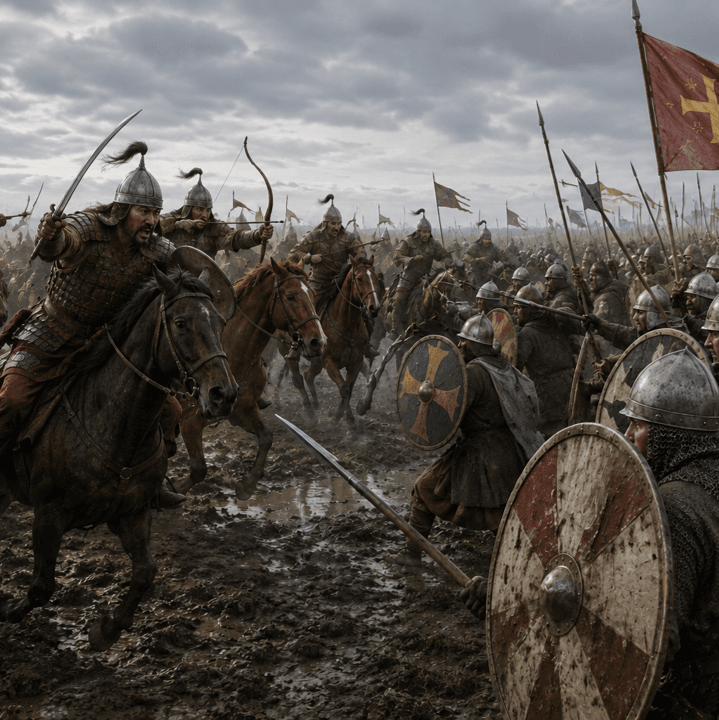
Beginning in the late ninth century, Magyar armies launched repeated raids across central and western Europe. Their mobility made them particularly dangerous. They were expert horsemen, skilled with the bow, and capable of covering enormous distances rapidly. Monasteries, villages, towns, and armies could all become targets.
To many Europeans, the Magyar raiders represented the terrifying world beyond the settled Christian kingdoms. But by the middle of the tenth century, the political situation was changing.
In 955, a large Magyar force invaded the lands of Otto I, king of the East Franks. Otto gathered his forces and marched to meet them near Augsburg, on the River Lech.
The resulting Battle of Lechfeld became one of the defining battles of the tenth century. Otto’s army managed to defeat the Magyars decisively.
The battle was brutal. The Magyars suffered enormous losses, and several of their leaders were captured and later executed. More importantly, the psychological and political impact was enormous.
The end of the Magyar threat
After Lechfeld, the great Magyar raids into western Europe effectively came to an end.
The Magyars increasingly abandoned their earlier raiding lifestyle and became a settled Christian kingdom. Their ruler Stephen I was later crowned king, traditionally in the year 1000 or 1001. The Hungarian Kingdom became an established part of Christian Europe.
So Lechfeld did not simply destroy an army. It helped change the relationship between Hungary and the rest of Europe.
For Otto, the victory was equally important. His reputation soared, and his authority over the German territories was strengthened. In 962, Otto was crowned emperor in Rome, creating what became known as the Holy Roman Empire.
This makes Lechfeld particularly significant. It stands at the intersection of two transformations: the Magyar transformation from raiders into a Christian kingdom, and Otto’s transformation into the most powerful ruler of central Europe.
The battle also demonstrated the growing military strength of the East Frankish kingdom.
The age of Viking and Magyar raids was beginning to give way to something new: more centralized kingdoms capable of defending their territories and projecting power.
4. The Battle of Stamford Bridge, 1066: The Last Great Viking Invasion
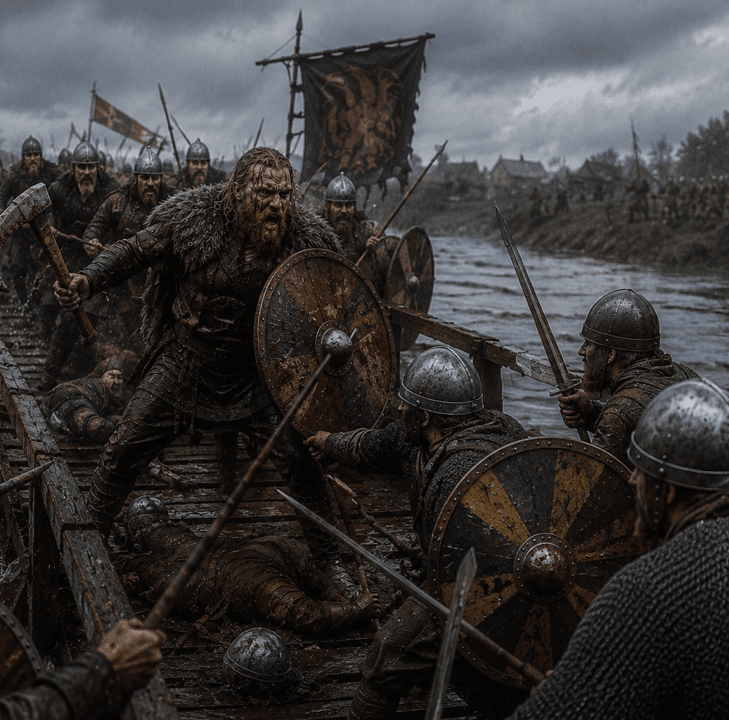
If Lechfeld helped close the age of Magyar raids, Stamford Bridge helped close the age of Viking invasions. And it happened in one of the most dramatic years in European history: 1066.
England was ruled by the Anglo-Saxon Harold Godwinson, who had only recently become king. But Harold faced a serious challenge from across the North Sea. The Norwegian king, Harald Hardrada, believed he had a claim to the English throne.
Hardrada was an extraordinary figure: a veteran warrior who had fought across Europe and served in the Byzantine Empire’s Varangian Guard. He invaded Northern England with a large army.
Harold Godwinson responded with remarkable speed. He marched his army north, covering hundreds of miles in a short period. Then, in September 1066, the English army suddenly appeared near Stamford Bridge in Yorkshire.
The Norwegians were reportedly caught off guard, and largely unarmored. The resulting battle was savage.
Harald Hardrada fought at the front of his army and was eventually killed by an arrow to the throat. His death shattered Norwegian resistance.
The English had won a spectacular victory. But Harold’s triumph came at a terrible price. His army had suffered casualties and was exhausted after the long march north.
And there was another army waiting.
William of Normandy
While Harold was fighting the Norwegians in northern England, William, Duke of Normandy, had assembled an invasion fleet across the Channel.
William claimed that Harold had promised him the English crown.
Now William had landed in southern England. Harold had almost no time to recover. He marched his army south once again.
Only a few weeks after Stamford Bridge, Harold’s weakened army faced William at the Battle of Hastings. This time, Harold lost.
He was killed, traditionally depicted as being struck by an arrow in the eye, although the exact circumstances of his death are uncertain.
William became king of England. The Norman Conquest transformed English history.
Why Stamford Bridge matters
At first glance, Stamford Bridge looks like a victory that ultimately didn’t matter. Harold won – and then lost England.
But that misses the enormous significance of the battle. Stamford Bridge marked the end of the great Scandinavian attempts to conquer England.
The Vikings had been raiding and settling in Britain for centuries. Danish kings had ruled England, and Scandinavian armies had repeatedly threatened the English monarchy.
After 1066, that era was effectively over. The political and cultural future of England instead became increasingly connected to Normandy and continental Europe.
And Stamford Bridge indirectly contributed to this transformation. Harold’s exhausting victory in Yorkshire left him badly positioned for the confrontation with William. It was a close defeat and undoubtedly the losses incurred against the Norwegians made the difference when facing William’s Normans.
The events of 1066 therefore demonstrate one of history’s great ironies:
Harold Godwinson won the battle he needed to win – and lost the battle that decided his kingdom.
Four Battles, One Transformation
What makes these four battles particularly fascinating is that they are not isolated events. Together, they form a story about the transformation of Europe.
Vouillé helped establish the Franks as the dominant power in Gaul.
Tours strengthened the Frankish dynasty that would eventually produce Charlemagne and the Carolingian Empire, and ended Muslim aspirations in Western Europe.
Lechfeld helped establish Otto I as the dominant ruler of central Europe while ending the hugely destructive Magyar raids.
Stamford Bridge brought the age of major Viking invasions of Britain to a dramatic conclusion.
Each battle therefore represents a different stage in the emergence of medieval Europe.
At Vouillé, the remnants of the Roman world were being divided among new Germanic kingdoms.
At Tours, those kingdoms were becoming more centralized and politically powerful.
At Lechfeld, Christian monarchies were increasingly capable of defeating highly mobile external raiders.
At Stamford Bridge, one of the last great Scandinavian invasions of England collapsed.
And after 1066, Europe was entering a new era.
Castles became increasingly important. Feudal political structures developed further. Powerful dynasties consolidated their territories. The Norman Conquest connected England more closely to France. The Holy Roman Empire dominated central Europe. Hungary became a Christian kingdom. France and Germany continued developing as major political entities.
The world was no longer the fragmented landscape that had emerged from the collapse of Rome. It was becoming medieval Europe.
Battles do not change history simply because thousands of people fight and die on a particular field. They matter because of what happens afterward.