Paulinus of Pella stands as one of the most poignant chroniclers of the late Western Roman Empire. His autobiographical poem, Eucharisticos (“Thanksgiving”), offers a rare, personal window into the collapse of Roman order in Gaul, the struggles of a Gallo-Roman aristocrat, and the endurance of faith amid loss and upheava. Born into privilege and ending his days in penury, Paulinus’s life encapsulates the fate of his class and the world they once ruled.
Early Life: Born to Privilege
Paulinus was born in 376 at Pella in Macedonia, during his father Thalassius’s tenure as vicarius of the province. His family was distinguished: his grandfather was the renowned poet Ausonius, tutor to the future emperor Gratian, and his father held high office, later becoming proconsul of Africa. Paulinus’s infancy was marked by travel, as his father’s career took the family from Macedonia to Carthage, then to Rome, and finally to Bordeaux in Gaul, the family’s ancestral seat.
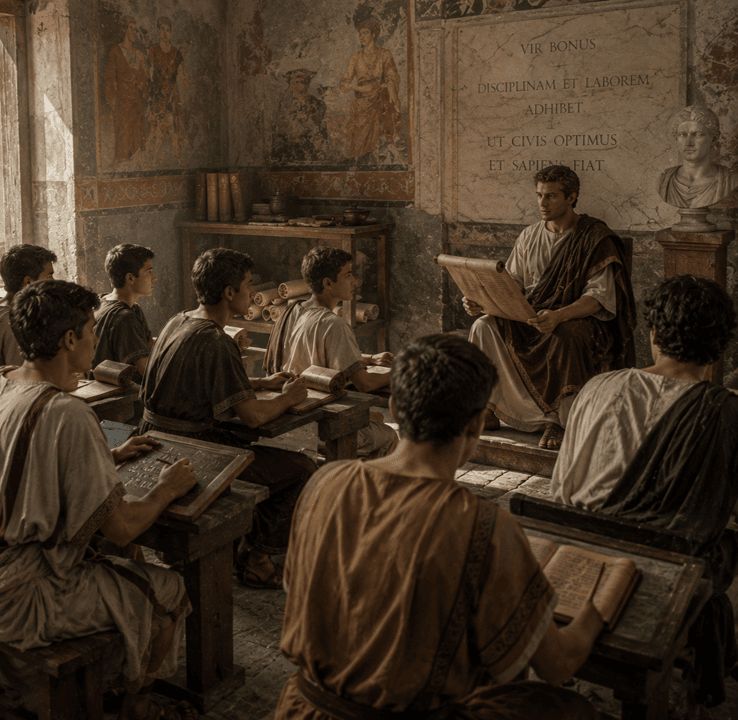
In Bordeaux, Paulinus received an elite education. He was taught Greek from an early age and struggled with Latin, finding Virgil particularly challenging. His early years were spent in the lap of luxury on the family’s vast estates, surrounded by the trappings of Roman civilization: libraries, villas, hunting grounds, and servants.
Youthful Indulgence and Family Expectations
Despite his parents’ hopes, Paulinus was not a studious youth. He confesses in his poem to abandoning serious study for the pleasures of country life – horses, hounds, and hunting. His parents arranged a marriage with a Gallo-Roman heiress, further consolidating the family’s wealth and status. The union, though arranged, was typical for his class, and Paulinus soon found himself responsible for managing the sprawling family estates.
The Gathering Storm: Invasion and Upheaval
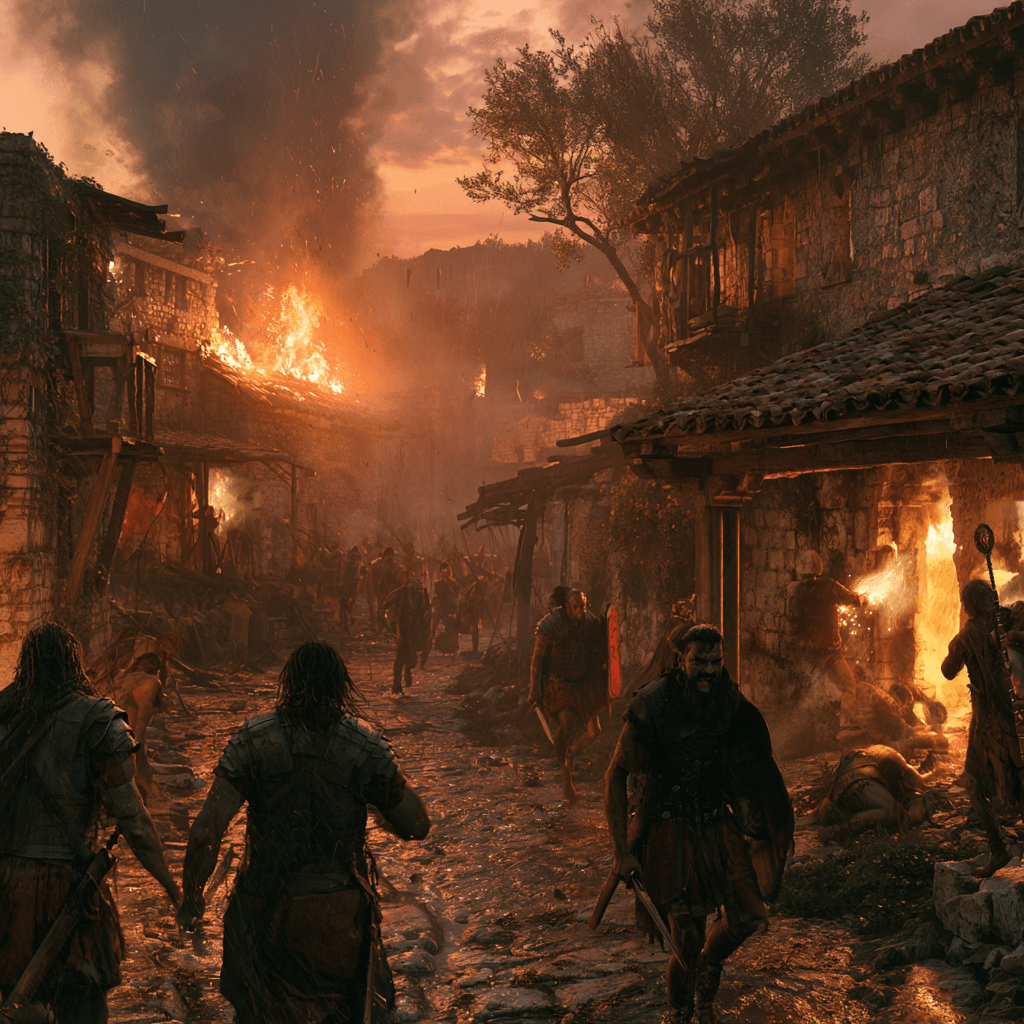
The death of Paulinus’s father marked a turning point. No sooner had he assumed control of the estates than the world around him began to unravel. The early fifth century saw the Western Empire beset by internal strife and barbarian invasions. In 406, waves of Vandals, Suebi, and Alans crossed the Rhine, plunging Gaul into chaos. The Visigoths, under Ataulf, soon followed, and Bordeaux – Paulinus’s home – became a battleground.
Paulinus’s estates were first plundered by the invaders, then by bands of desperate locals, runaway slaves, and even his own brother. The social order that had sustained his family for generations was collapsing. Amid this turmoil, Paulinus was reluctantly drawn into politics, accepting the post of Comes privatae largitionis (Count of the Private Largesses) under the puppet emperor Priscus Attalus, who ruled at the pleasure of the Visigoths.
Siege and Survival: The Ordeal at Bazas
In 414, as the Visigoths and their Alan allies besieged Bordeaux, Paulinus and his family fled to the fortified town of Bazas. There, they endured a harrowing siege. Paulinus claims credit for ending the standoff by negotiating with the Alans – possibly their king Goar or one of his commanders – convincing them to abandon the Visigoths, which forced the latter to lift the siege. This act, recounted with pride in his poem, was one of the few moments where Paulinus could exert agency amid the chaos.
Loss and Exile: The Aftermath
The respite was brief. Bordeaux and its environs were devastated. Paulinus’s properties had been ravaged not only by foreign invaders but also by local brigands and even family members. With his income gone, he was forced to sell off land to survive. The prospect of starting anew in Macedonia, where his mother still owned estates, was thwarted by his wife’s refusal to leave Gaul.
Personal tragedy soon compounded material loss. Over the next years, Paulinus lost his mother, mother-in-law, wife, and both sons. Only his daughter, who had married and moved to North Africa, may have survived him. Alone and impoverished, Paulinus relocated to a small property near Marseille, only to lose even this last refuge to debt. Salvation came when a wealthy Visigoth purchased the property, paying enough to spare Paulinus from utter destitution in his final years.
Faith Amid Ruin: The Writing of the Eucharisticos
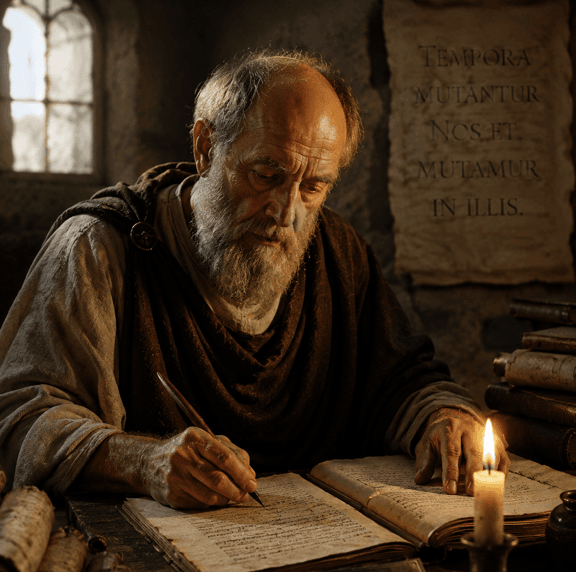
At the age of eighty-three, Paulinus composed his Eucharisticos, a poem of just over 600 lines, reflecting on his tumultuous life. Despite its title, the work is less a hymn of thanksgiving than a chronicle of loss, illness, and danger. Yet, throughout, Paulinus maintains a tone of gratitude to God, seeing in his survival a sign of divine providence.
The poem is remarkable for its candor and detail. Paulinus does not shy away from describing his own failings, the bitterness he felt at times toward his wife, or the despair that led him to contemplate monastic life. He recounts his attempts at penance, his struggles to find meaning in suffering, and his ultimate acceptance of his fate. The Eucharisticos provides historians with a vivid portrait of life in late Roman Gaul, the decline of aristocratic fortunes, and the endurance of Christian faith.
Legacy and Historical Significance
Paulinus of Pella’s life and work are invaluable to historians. His account is one of the few first-person narratives from the period, offering insights into the social, economic, and psychological impact of Rome’s decline. Through his eyes, we see the transformation of Gaul from a Roman province to a patchwork of barbarian kingdoms, the erosion of old loyalties, and the struggle to preserve dignity and faith amid ruin.
His Eucharisticos is also a literary artifact, bridging the worlds of classical Latin poetry and Christian autobiography. While critics have noted its uneven style, the poem’s sincerity and emotional depth have ensured its survival. The very fact that the author’s name survives only through later manuscript tradition underscores the fragility of memory in times of upheaval.
Conclusion
Paulinus of Pella’s story is not merely that of a single man, but of a civilization in transition. Born into the security and splendor of the late Roman aristocracy, he witnessed the world he knew swept away by war, betrayal, and loss. Yet, in his old age, he found solace in faith and the act of remembrance. His Eucharisticos remains a testament to the endurance of the human spirit at the end of an age.
“I give thanks to God, who, though he has taken from me all that I once possessed, has left me life and faith, and the memory of what once was.”
— Paraphrase from Paulinus’s Eucharisticos