

The Byzantine Empire survived where the Western Roman Empire collapsed because the eastern half of the Roman world had richer cities, stronger defenses, better finances, and a more adaptable political system. It was not simply luck or “better emperors”; it was a structural advantage built over centuries. The East inherited the most valuable provinces of the Roman world, especially Egypt, Syria, and Asia Minor, and those regions gave Constantinople the resources to endure crisis after crisis.
A tale of two Romes
By the fourth century, the Roman Empire was already split into two very different worlds. The West was more rural, less urbanized, and more exposed to migration pressure along its frontiers. The East, by contrast, contained the old Hellenistic cities of the Mediterranean east, densely populated areas, and trade routes that tied Europe to the wealth of the Near East. When the imperial system came under strain, the East had more revenue, more manpower, and more administrative depth to draw upon.
This difference mattered enormously. An empire can survive many problems if it can still pay soldiers, repair walls, feed cities, and replace losses. The East could do these things longer than the West. The western government increasingly could not.
Constantinople’s advantage
The greatest single reason for Byzantine survival was Constantinople itself. Built on a peninsula and protected by water on several sides, the city was far easier to defend than Rome or Ravenna ever were. Its land walls later became legendary, but even before those fortifications were perfected, the site gave the eastern empire an extraordinary strategic advantage.
Constantinople was also a commercial powerhouse. It sat at the crossroads of trade between the Black Sea, the Aegean, the Balkans, and the eastern Mediterranean. Goods, taxes, customs revenues, and food supplies all flowed through or toward the city. That made it not just a capital, but an economic engine. When enemies threatened, the East could concentrate resources around a single fortified center. The West had no equivalent.
A capital city is not just a symbol. It is the heart of administration, logistics, and decision-making. Constantinople allowed the eastern government to survive pressure that would have shattered a less secure capital. The city did not make the empire invincible, but it made collapse much harder.

Money and the tax base
The Byzantine Empire survived because it could still raise money. That sounds simple, but it was the core of imperial power. Armies, roads, forts, diplomats, courtiers, and grain shipments all depended on tax revenue. The eastern provinces were more productive and more urban than the western ones, which meant they generated more taxable wealth.
Egypt was especially important for grain and revenue. Syria and Asia Minor contributed heavily as well. These regions were more developed than much of western Europe, where wealth was often concentrated in a smaller number of great estates and where state structures were weakening. The eastern state remained better at collecting taxes because its bureaucracy was more continuous and more intact.
The West suffered a vicious cycle. As it lost provinces, it lost revenue. As it lost revenue, it could no longer defend provinces. As defense weakened, more provinces were lost. Once this process started in earnest, the western imperial government could not reverse it. The East, while damaged by war and crisis, had a stronger fiscal foundation and could recover more often.
A stronger state machine
The eastern Roman government was more centralized and more resilient. It inherited the Roman tradition of professional administration, but it also adapted it more effectively than the West did. Officials in Constantinople managed taxation, appointments, military logistics, and diplomatic relations with a level of continuity that western courts increasingly lacked.
This matters because empires do not fall only in battle; they fall when state machinery breaks. In the West, repeated usurpations, short reigns, and civil wars weakened the political system. Loyalty often shifted from the imperial center to local strongmen, warlords, or federate commanders. The East had its own crises, but it generally preserved a more stable chain of authority.
Byzantine emperors also understood that survival required flexibility. They did not cling to one rigid model of rule. They could negotiate with enemies, divide opponents, subsidize one threat against another, and reform institutions when needed. This pragmatism was not glamorous, but it was effective.
Military flexibility
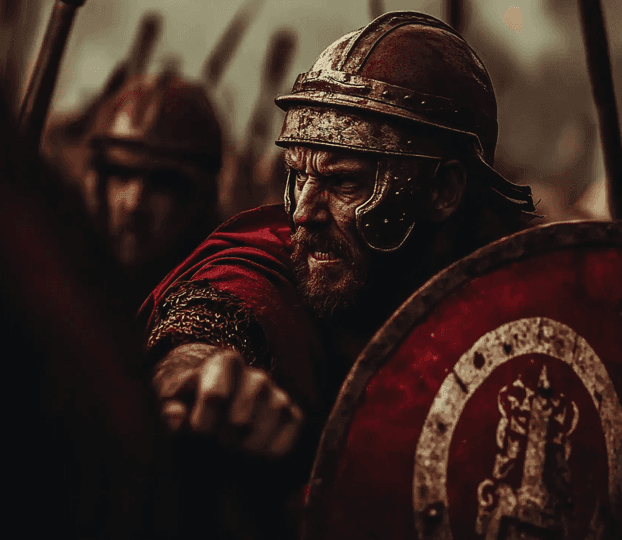
The Byzantine army was not always stronger than the West’s armies in a simple sense, but it was usually better integrated into the state. The eastern empire combined professional troops, frontier forces, naval power, and diplomacy in a way that gave it more options. It did not have to rely on a single heroic battle to decide its fate.
The East was also better placed to use strategy instead of desperation. Because it possessed greater resources, it could repair walls, hire mercenaries, maintain garrisons, and shift forces between fronts. It could also survive defeats that would have been fatal in the West.
The Western Roman Empire, by the fifth century, often depended on federate armies and commanders whose loyalty was unstable. Many of these forces were necessary because the state could no longer support a fully robust imperial army on its own. That created a dangerous dependency. When such allies turned against the imperial center, the West had little room to recover.
By contrast, the Byzantine Empire increasingly became a state that thought in terms of defense, endurance, and adaptability. Its military history is full of retreats, recoveries, and negotiated survival. That is one reason it lasted so long.
Diplomacy as a weapon
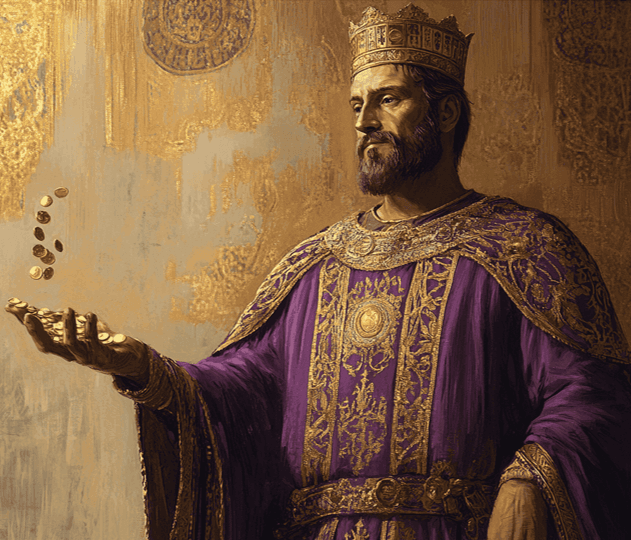
The Byzantines were masters of diplomacy. They understood that not every threat had to be met with direct confrontation. Sometimes the best way to survive was to divide enemies, redirect pressure, or buy time. Gold could be cheaper than war. Marriage alliances, tribute, embassies, and carefully staged displays of power all played a role in imperial strategy.
This diplomatic culture was partly born of necessity. Constantinople faced Persians, Avars, Slavs, Arabs, Bulgars, and later Turks and Crusaders. It could not defeat all of them permanently by force. So the empire learned to survive through negotiation as much as battle.
The West lacked this same level of diplomatic coherence. Its courts were often more fragmented, its politics more regional, and its resources more limited. As a result, western rulers had fewer tools to shape threats before they became catastrophes. The East did not eliminate danger, but it managed danger more effectively.
The western weakness spiral
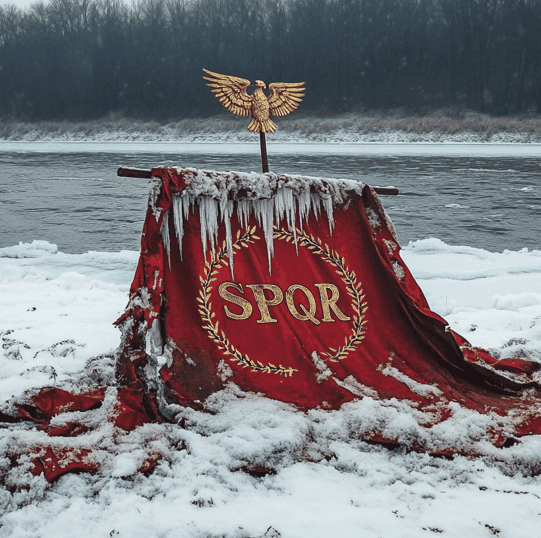
The fall of West Rome was not a single event but a long unraveling. The western imperial court became increasingly dependent on military strongmen, many of them of non-Roman origin, because the western state could no longer supply enough manpower and funding on its own. At the same time, internal rivalries weakened imperial authority. Emperors came and went quickly, and the court often seemed unable to command the loyalty of its own generals.
This was compounded by the loss of revenue-producing territories. North Africa, a crucial source of tax income and grain, was seized by the Vandals in the fifth century. That was catastrophic. Once Africa was lost, the West’s fiscal collapse accelerated. Without Africa, the western government had less money, less food security, and fewer ways to maintain an effective military system.
The western provinces were also more vulnerable to local breakdown. When central power weakened, local elites often made accommodations with new rulers rather than restoring imperial control. In some cases, that was practical; in others, it reflected the simple fact that Rome no longer had the means to enforce its authority. The western empire didn’t just fall to outsiders. It hollowed out from within.
The East was not safe either
It is important not to romanticize the Byzantine Empire as if it simply “won” while the West failed. The East endured immense crises. It faced wars with Persia, invasions by the Huns and Avars, the rise of Islam, devastating plague, internal religious conflict, and repeated territorial losses. At several points, the empire seemed on the verge of destruction.
And yet it kept adapting. That is the key difference. The East lost territories and still survived as a state. It could shrink and remain alive. It could absorb shocks and continue. The West, once its core fiscal and military systems broke, could not do the same.
This is one of the most important lessons of late antique history. Survival is not about avoiding catastrophe altogether. It is about having enough resilience to absorb catastrophe and continue functioning afterward. The Byzantine Empire had more of that resilience.
Religion and identity
The eastern empire also developed a stronger sense of continuity around Constantinople, Christianity, and Roman imperial identity. Even as the language and culture of the East changed, the idea of the empire remained powerful. The Byzantines did not think of themselves as “Byzantines” in the modern sense; they thought of themselves as Romans. That identity gave the state a strong ideological core.
Religion helped reinforce that identity. The emperor was not just a political ruler but a divinely favored guardian of the Christian order. That did not prevent conflict, and in some cases religious disputes were highly destructive. But it did give the empire a unifying framework that helped legitimize authority.
The West, after the loss of imperial structures, became a patchwork of successor kingdoms in which Roman, Germanic, and Christian traditions blended in new ways. That was not necessarily a cultural collapse, but it was a political transformation. The eastern empire retained a single imperial center far longer.
Why survival mattered
The survival of Byzantium shaped the entire medieval world. It preserved Roman legal, administrative, and diplomatic traditions. It shielded the eastern Mediterranean from complete collapse. It influenced the Slavs, the Balkans, Russia, and the Islamic world. It also acted as a bridge between classical antiquity and the later medieval period.
In the West, Roman civilization did not vanish, but it was reorganized through new kingdoms and new elites. In the East, Roman statehood continued. That difference is why the Byzantine Empire is so important. It was not just the eastern half of Rome lingering on. It was a resilient political civilization that adapted to a changing world and lasted nearly a thousand years after the western imperial court disappeared.
The real answer
So why did Byzantium survive while West Rome fell? Because the East had the money, the walls, the bureaucracy, the capital, and the adaptability to keep going when conditions turned hostile. The West had been stronger once, but by the fifth century it had become too exposed, too fragmented, and too underfunded to hold together.
In the end, the Byzantine Empire survived not because it avoided disaster, but because it was built to endure it. The Western Empire collapsed when its supports failed. The Eastern Empire kept rebuilding its supports, again and again, long after others would have given up.


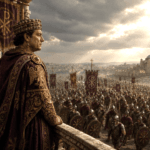
Yet when it fell, it disappeared totally. The West retained its respect for Roman tradition law and Christianity. Byzantium was in constant retreat before the Arabs and completely destroyed by the Turks.