If you were to design the most misleading name in history, you’d struggle to beat the “Holy Roman Empire.” It sounds grand. Sacred. Ancient. Imperial in the mold of Caesar and Augustus. A divinely sanctioned superstate ruling Europe with iron discipline and Roman continuity.
Except… it wasn’t really holy, barely Roman, and only sometimes an empire. So what on earth was it?
To answer that, we need to peel back a thousand years of myth, propaganda, political improvisation – and a fair bit of medieval chaos.
The Name That Launched a Thousand Misconceptions
The phrase “Holy Roman Empire” didn’t even fully crystallize until centuries after the entity began. What we’re dealing with is a political organism that evolved, shape-shifted, and occasionally contradicted itself from its inception in the 10th century to its demise in 1806 CE.
At its core, the empire was a loose confederation of territories in Central Europe, largely corresponding to modern Germany, Austria, parts of Italy, and beyond. It claimed to be the successor to the Western Roman Empire, which had collapsed in 476. It also claimed divine sanction, positioning its ruler as the protector of Christendom.
But claims are cheap. Reality is messier. Let’s break down the three boldest claims in its title.
Was It “Holy”?
On paper, absolutely.
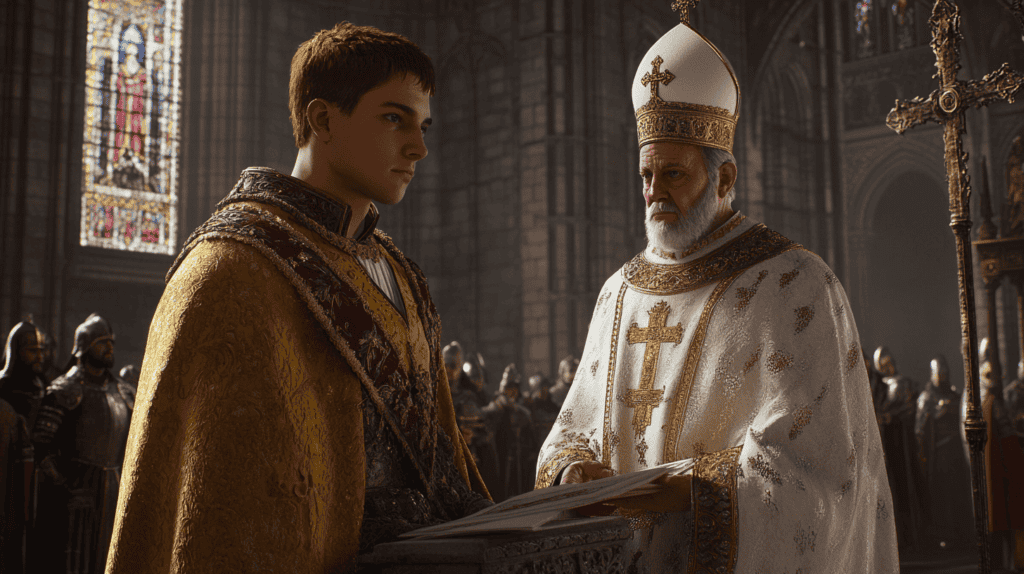
The emperor was crowned (at least initially) by the Pope, and the empire presented itself as a Christian political order ordained by God. Its rulers were styled as defenders of the faith, tasked with maintaining religious unity across Europe.
In theory, this made the empire a kind of earthly counterpart to the divine order: a political body infused with spiritual legitimacy.
In practice? It was often anything but holy.
The empire was frequently wracked by internal conflict, power struggles, and outright warfare between Christian rulers. Some of the most infamous episodes include:
- The Investiture Controversy (11th-12th centuries), where emperors and popes bitterly fought over who had the right to appoint bishops.
- The Thirty Years’ War (1618-1648), one of the most destructive conflicts in European history, fought largely within imperial territory and fueled by religious division.
- Endless feuds between princes, dukes, and cities, many of whom cared more about local power than any grand Christian mission.
Even emperors themselves were not paragons of sanctity. They schemed, waged wars of ambition, and frequently clashed with the very Church that supposedly legitimized them.
The “holy” label was less a reflection of moral reality and more a piece of ideological branding. It was a claim to divine approval – one that both emperors and popes weaponized when it suited them. In other words, “holy” was aspirational at best, propaganda at worst.
Was It “Roman”?
This is where things get even more interesting.
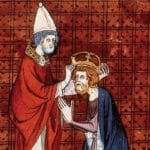
The Holy Roman Empire traced its origins to Charlemagne, crowned “Emperor of the Romans” by Pope Leo III in 800. This was a deliberate attempt to revive the Western Roman imperial title centuries after its fall.
Later emperors, particularly from the Ottonian dynasty in the 10th century, leaned heavily into this Roman legacy. They adopted Roman symbols, invoked Roman law, and styled themselves as successors to Caesar.
But geographically and culturally, the empire was overwhelmingly Germanic.
Its political heartland lay in what we now call Germany and Austria. Its rulers spoke German dialects. Its institutions evolved from Frankish and later German traditions, not Roman ones.
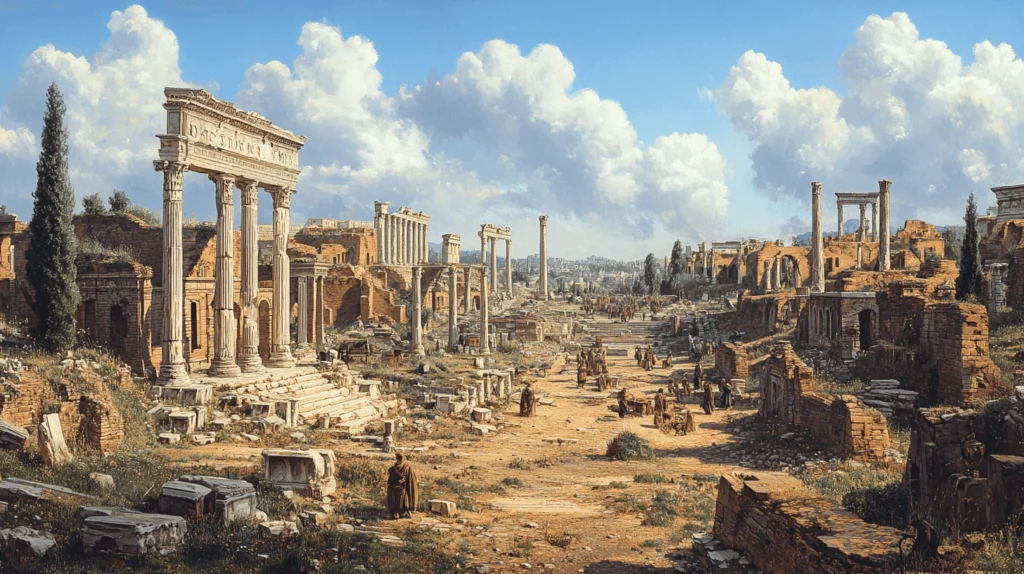
Italy – once the core of the Roman Empire – was only partially and inconsistently under imperial control. Southern Italy, for example, often lay outside imperial reach, while northern Italian cities frequently resisted imperial authority.
So why cling to the Roman label?
Because “Rome” still meant something.
Even centuries after its fall, the Roman Empire remained the gold standard of political legitimacy. To claim Roman heritage was to assert universal authority, prestige, and continuity with a golden age of order and power.
The Byzantines (Eastern Romans) certainly thought so – and they vehemently rejected the Holy Roman emperors’ claim to the Roman title.
From their perspective, there was only one Roman Empire, and it was centered in Constantinople.
This led to centuries of diplomatic tension and ideological rivalry. Two empires, both claiming to be Roman, both denying the other’s legitimacy.
From a modern historical standpoint, calling the Holy Roman Empire “Roman” is more about symbolism than substance. It was a successor state in name and aspiration, not in direct institutional continuity.
Was It an “Empire”?
Now we reach the most debated – and arguably most misunderstood – part of the name. What is an empire, anyway?
Typically, we think of a centralized state with a strong ruler exercising direct control over vast territories. Think of the Roman Empire at its height, or later the Ottoman or British Empires. The Holy Roman Empire was… not that. It was a patchwork. A mosaic of hundreds of semi-independent entities:
- Duchies
- Principalities
- Bishoprics
- Free imperial cities
- Knightly territories
Each had its own laws, customs, and degrees of autonomy. Some were powerful states in their own right; others were little more than glorified towns.
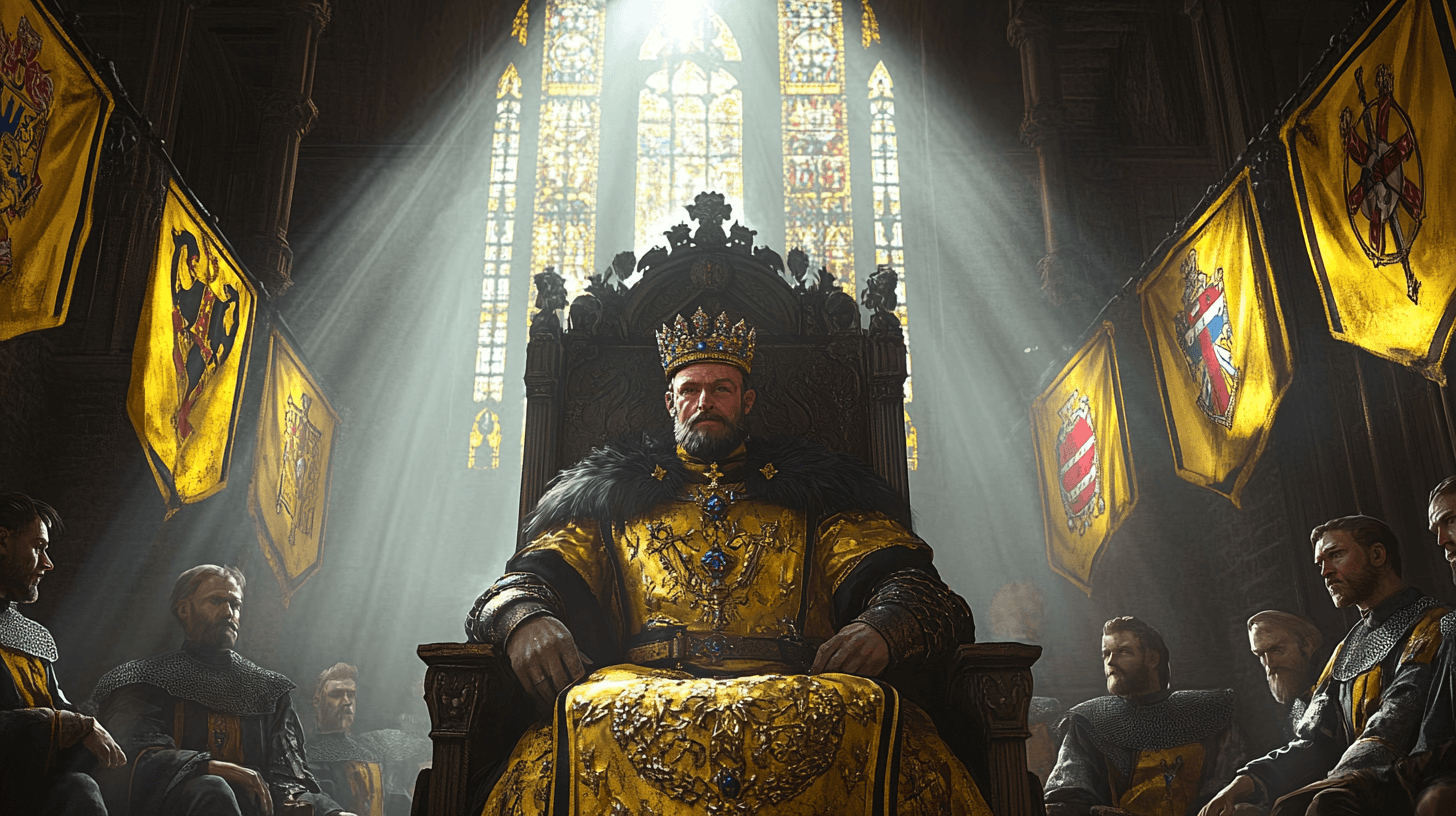
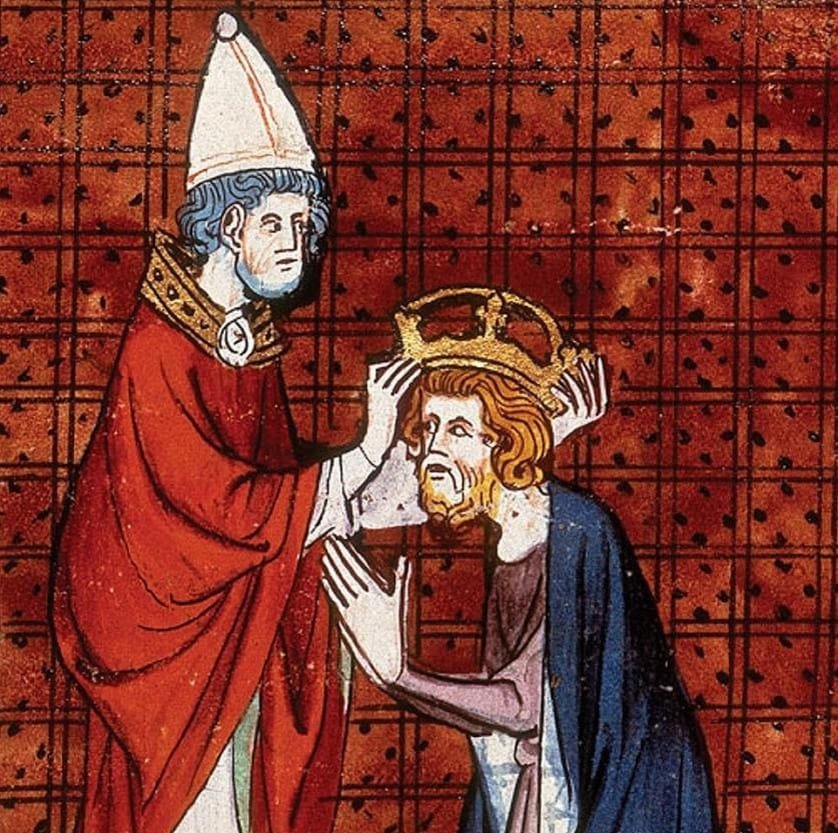
The emperor, elected by a group of powerful princes known as electors, was more of a “first among equals” than an absolute monarch. His authority varied wildly depending on the period and his personal power base. Some emperors, like Frederick Barbarossa or Charles V, wielded considerable influence. Others struggled to assert even nominal control over rebellious princes.
To govern, the empire relied on institutions like the Imperial Diet (Reichstag), a deliberative assembly where princes, bishops, and city representatives negotiated policies. Decisions were often slow, contentious, and compromised.
This decentralized structure made the empire remarkably durable – it lasted for over a millennium in some form – but also notoriously unwieldy.
Voltaire famously quipped that it was “neither holy, nor Roman, nor an empire.”
He wasn’t entirely wrong. But he also wasn’t entirely right.
The Empire That Refused to Behave Like One
Calling the Holy Roman Empire “not an empire” risks missing what made it unique. It didn’t fit the mold of a centralized imperial state – but that doesn’t mean it lacked imperial qualities. It had:
- An emperor recognized (at least in theory) as a supreme authority.
- A shared legal framework, including imperial courts.
- A sense of collective identity, especially among elites.
- A role as a major political actor in European affairs.
Rather than a top-down empire, it functioned more like a negotiated political order – a complex web of relationships, obligations, and privileges. In some ways, it resembles a proto-federal system. Power was distributed, negotiated, and constantly contested.
This flexibility allowed it to survive for centuries in a politically fragmented landscape where more centralized states might have fractured under pressure. But it also meant that the emperor’s power was always limited – and often challenged.
The Church and the Crown: A Dysfunctional Partnership
One of the defining features of the Holy Roman Empire was its uneasy relationship with the Church.
On the one hand, the emperor’s authority was deeply tied to religious legitimacy. Being crowned by the Pope (at least in earlier centuries) was a crucial ritual that reinforced the idea of divine sanction.
On the other hand, emperors and popes frequently found themselves at odds. The Investiture Controversy is the most famous example. At stake was a seemingly technical question: who gets to appoint bishops? But beneath that lay a much larger issue – who holds ultimate authority in Christendom? The emperor? Or the pope?
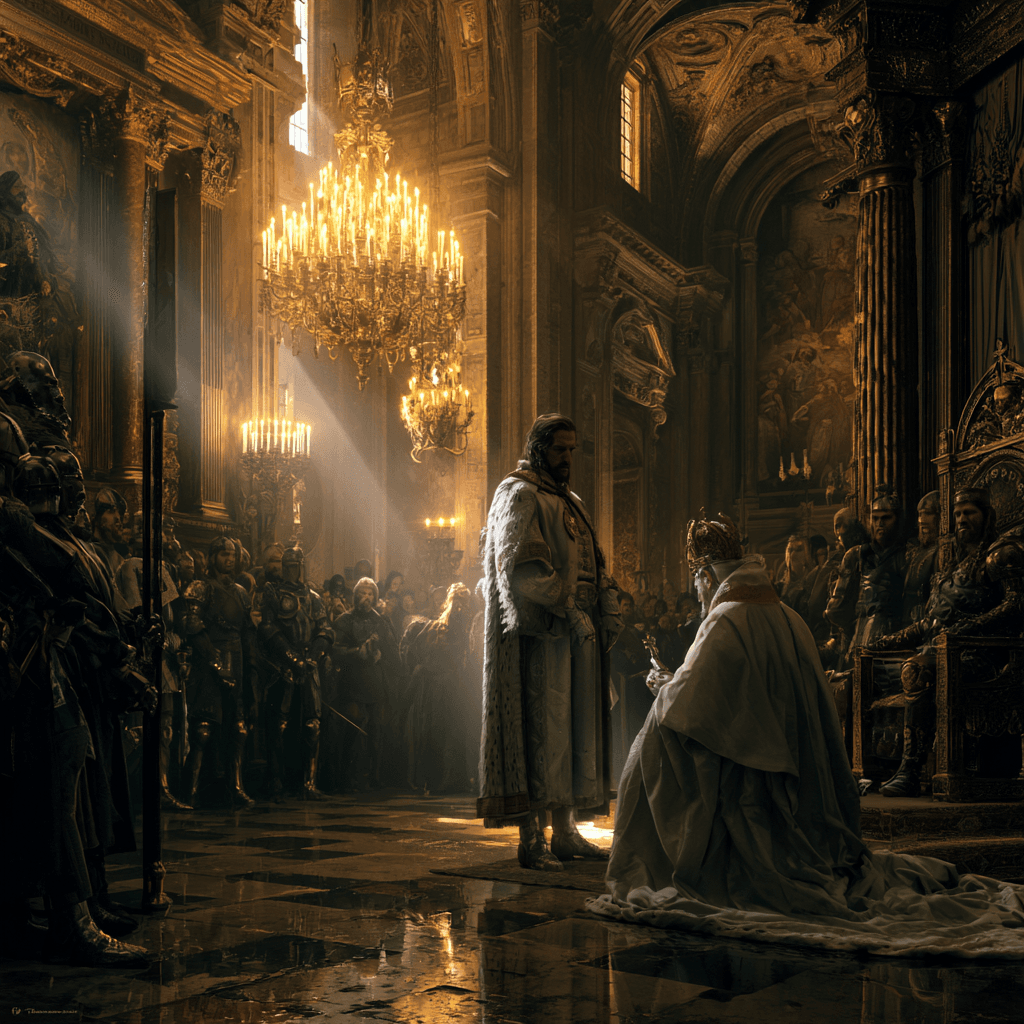
The conflict led to dramatic scenes, including Emperor Henry IV standing barefoot in the snow at Canossa in 1077, seeking absolution from Pope Gregory VII. It’s one of the most iconic moments of medieval power struggle – and a vivid reminder that “holy” unity was often anything but harmonious.
A Realm of Contradictions
By the early modern period, the empire had become even more fragmented.
The Peace of Westphalia in 1648, which ended the Thirty Years’ War, effectively granted significant sovereignty to its constituent states. Princes could determine their own religion and conduct foreign policy to a degree. This further weakened the emperor’s authority and pushed the empire toward a looser confederation. And yet, it persisted.
It remained a recognized political entity, a framework for diplomacy, law, and identity across Central Europe. It was neither fully unified nor entirely disjointed. Neither purely symbolic nor fully functional. It was, in many ways, a contradiction made permanent.
So… What Was It, Really?
If the Holy Roman Empire wasn’t truly holy, Roman, or an empire in the conventional sense, how should we understand it?
Think of it as a medieval and early modern experiment in shared sovereignty. It was an attempt – imperfect, evolving, and often chaotic – to create a political order that balanced:
- Universal ideals (Roman legacy, Christian unity)
- Local autonomy (princes, cities, regional identities)
- Dynastic ambition (powerful ruling families like the Habsburgs)
It never fully resolved these tensions. But it didn’t collapse under them either – at least not for a very long time. When it finally did end in 1806, dissolved under pressure from Napoleon, it had already been transformed beyond recognition from its medieval origins.
The Verdict: Misnamed, Not Meaningless
Voltaire’s famous jab sticks because it captures a real truth: the Holy Roman Empire doesn’t fit neatly into the categories its name suggests. But dismissing it entirely misses the point. The name wasn’t a literal description – it was a claim. A statement of ambition, legitimacy, and identity.
“Holy” signaled divine sanction.
“Roman” invoked the prestige of a lost empire.
“Empire” asserted a kind of overarching authority, however limited in practice.
These weren’t facts. They were aspirations. And in that sense, the Holy Roman Empire is less a failed version of Rome and more a window into how medieval Europeans understood power, legitimacy, and the past.
It was messy. Contradictory. Often frustrating. But it was also one of the most fascinating political creations in history – a thousand-year attempt to hold together a world that refused to be neatly unified.